



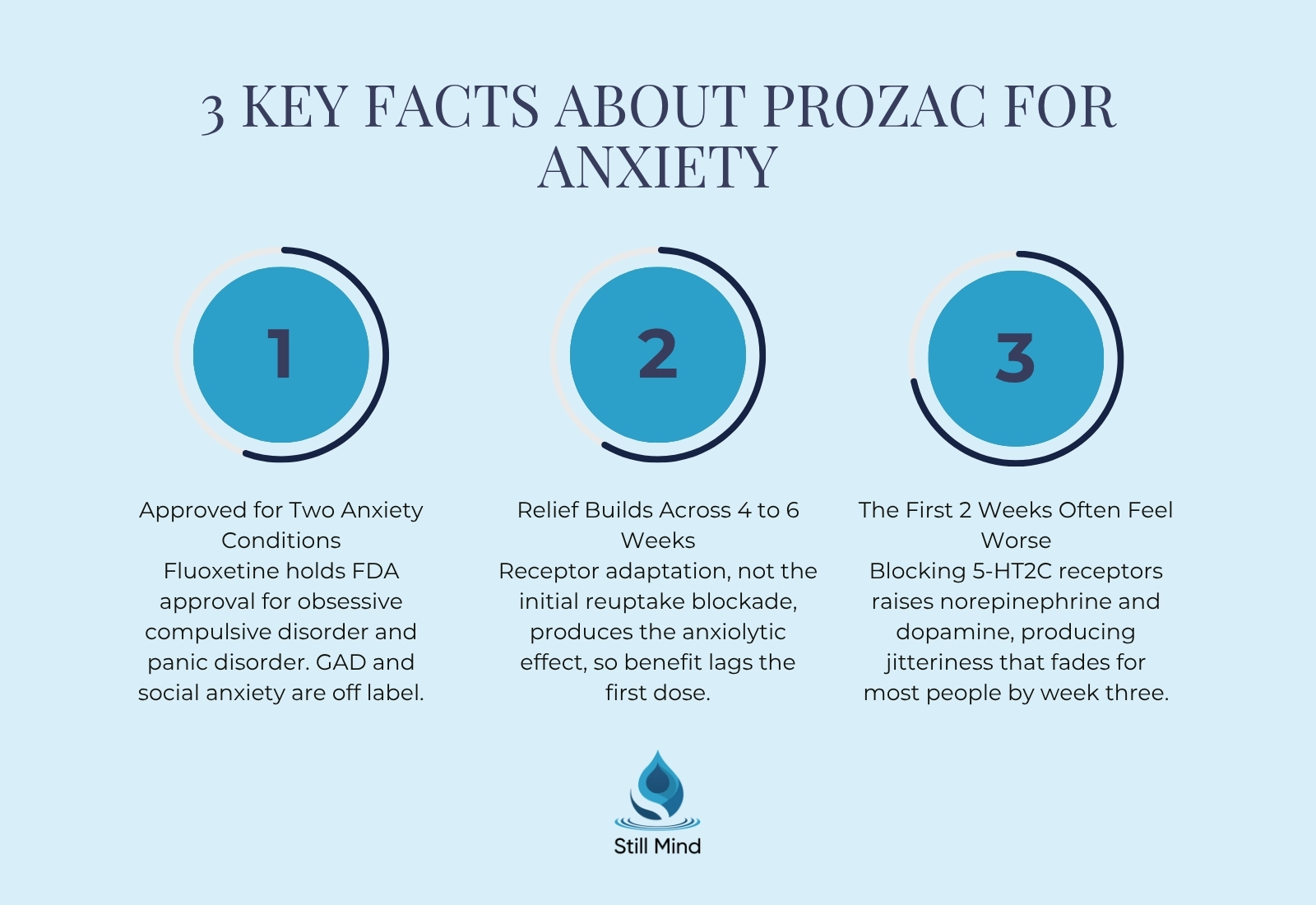
Prozac does help with anxiety, though it carries official approval for only two anxiety related conditions and gets prescribed off label for the rest. Fluoxetine, the generic name for Prozac, holds FDA approval for obsessive compulsive disorder and panic disorder.
Doctors also prescribe it off label for generalized anxiety and social anxiety, where the evidence is real but more modest. Relief builds slowly rather than instantly, usually across four to six weeks.
The first two weeks often feel worse instead of better, which is the most common reason people stop the medication too early. Knowing what that early window looks like decides whether the drug ever gets a fair trial.
Key Takeaways
- The FDA label for Prozac covers obsessive compulsive disorder and panic disorder among anxiety conditions. Generalized anxiety disorder and social anxiety disorder remain off label uses, which is legal and common practice.
- Michelson and colleagues randomized 243 patients in the American Journal of Psychiatry in 1998 and found 20 mg daily produced significantly greater improvement than placebo across panic frequency and functional impairment.
- The FDA label lists a fluoxetine half life of four to six days with chronic dosing and a norfluoxetine half life of four to sixteen days. That length lowers withdrawal severity.
- The National Center for Health Statistics reported that 11.4% of U.S. adults took prescription medication for depression in 2023.
- KFF data show that 32.3% of Florida adults reported symptoms of an anxiety or depressive disorder in February 2023, and 23.6% who needed counseling in May 2022 did not receive it.
What Is Prozac and Which Anxiety Conditions Does It Treat?
Prozac is the brand name for fluoxetine, a selective serotonin reuptake inhibitor that the FDA approved in 1987 and that treats several anxiety related diagnoses.
FDA Approved Uses of Fluoxetine
The fluoxetine label lists specific approved diagnoses, and only two of them sit inside the anxiety category.
- Obsessive compulsive disorder: Fluoxetine holds approval for OCD in adults and in children aged seven and older, which makes it a first line option for intrusive thought conditions such as harm OCD.
- Panic disorder: The label covers panic disorder with or without agoraphobia, and what triggers panic attacks determines how aggressively a prescriber titrates the dose.
- Major depressive disorder: Approval covers adults and children aged eight and older.
- Bulimia nervosa: Fluoxetine reduces binge and purge frequency at a higher dose than depression requires.
- Premenstrual dysphoric disorder: Fluoxetine carries approval for PMDD under the brand name Sarafem rather than Prozac.
- Combination use: Fluoxetine paired with olanzapine holds approval for treatment resistant depression and for bipolar I depression.
Off Label Anxiety Uses
Off label prescribing means a physician uses an approved drug for a diagnosis outside the label, which the FDA permits and clinical guidelines support.
- Generalized anxiety disorder: Prescribers use fluoxetine for GAD, though the trial evidence supporting it stays thinner than the evidence for escitalopram or venlafaxine.
- Social anxiety disorder: Mitsui and colleagues analyzed antidepressant trials for social anxiety disorder in 2022 and confirmed SSRI benefit, with paroxetine showing the most robust effect across network comparisons.
- Post traumatic stress disorder: Fluoxetine reduces PTSD symptoms off label, while sertraline and paroxetine carry the formal approvals.
- Anxiety without depression: Prescribers treat primary anxiety with SSRIs regularly, and questions about taking antidepressants without depression reflect a legitimate and well established practice.
Anxiety Disorders in DSM-5-TR
DSM-5-TR groups the anxiety disorders that prescribers weigh when selecting between fluoxetine and an alternative.
- Generalized anxiety disorder: Excessive worry persists at least six months across multiple domains.
- Social anxiety disorder: Fear of negative evaluation dominates social and performance situations.
- Panic disorder: Recurrent unexpected panic attacks generate persistent fear of the next one.
- Agoraphobia: Avoidance covers crowds, transit, and enclosed spaces.
- Specific phobia: One object or situation triggers intense fear, and medication plays a smaller role than exposure does.
How Prozac Works on Anxiety in the Brain
Prozac reduces anxiety by blocking serotonin reabsorption, which gradually retunes the brain circuits that generate threat responses.
What Drives Anxiety Symptoms
Anxiety disorders arise from converging brain, genetic, developmental, and comorbid pathways rather than from a single cause.
- Overactive threat detection: The amygdala fires at ordinary triggers, then recruits the hypothalamic pituitary adrenal axis, which releases cortisol and produces racing heart and chest tightness.
- Weakened top down control: Reduced prefrontal cortex regulation lowers the brain’s ability to override a false alarm once it starts.
- Inherited vulnerability: Hettema and colleagues reported in the American Journal of Psychiatry that genetic factors account for roughly 30% of generalized anxiety disorder risk.
- Early environment: Adverse childhood experiences keep the stress response calibrated for danger into adulthood.
- Co-occurring depression: Anxiety and major depressive disorder share serotonin pathway disruption, which explains why one medication class targets both.
- Hormonal contributors: Cyclical estrogen and progesterone shifts intensify symptoms in premenstrual dysphoric disorder, which is why fluoxetine carries a PMDD approval.
How Fluoxetine Changes Serotonin Signaling
Fluoxetine binds the serotonin transporter and blocks reuptake, which raises serotonin availability between neurons.
- Transporter blockade: Fluoxetine occupies the serotonin transporter, known as SERT, and prevents serotonin from returning into the sending neuron.
- Receptor adaptation: Sustained serotonin exposure desensitizes 5-HT1A autoreceptors across two to four weeks, which finally permits steady serotonin output.
- Delayed benefit explained: That receptor adaptation, not the initial reuptake blockade, produces the anxiolytic effect, which is why relief lags dosing by weeks.
- Circuit level change: Steadier serotonin signaling dampens amygdala reactivity and strengthens prefrontal regulation over time.
Why Fluoxetine Feels Activating at First
Fluoxetine carries a more stimulating profile than most SSRIs because of a second receptor action.
- 5-HT2C antagonism: Fluoxetine blocks 5-HT2C receptors, which raises norepinephrine and dopamine release in the prefrontal cortex.
- Early jitteriness: That extra stimulation produces restlessness, insomnia, and sharper anxiety during the first one to two weeks.
- Clinical advantage: The same activating quality helps patients whose anxiety arrives alongside heavy fatigue and low motivation.
- Dosing response: Prescribers start panic disorder patients at 10 mg daily specifically to limit this activation.
What Norfluoxetine Does
Fluoxetine converts into norfluoxetine, an active metabolite that extends the drug’s effect long after the last dose.
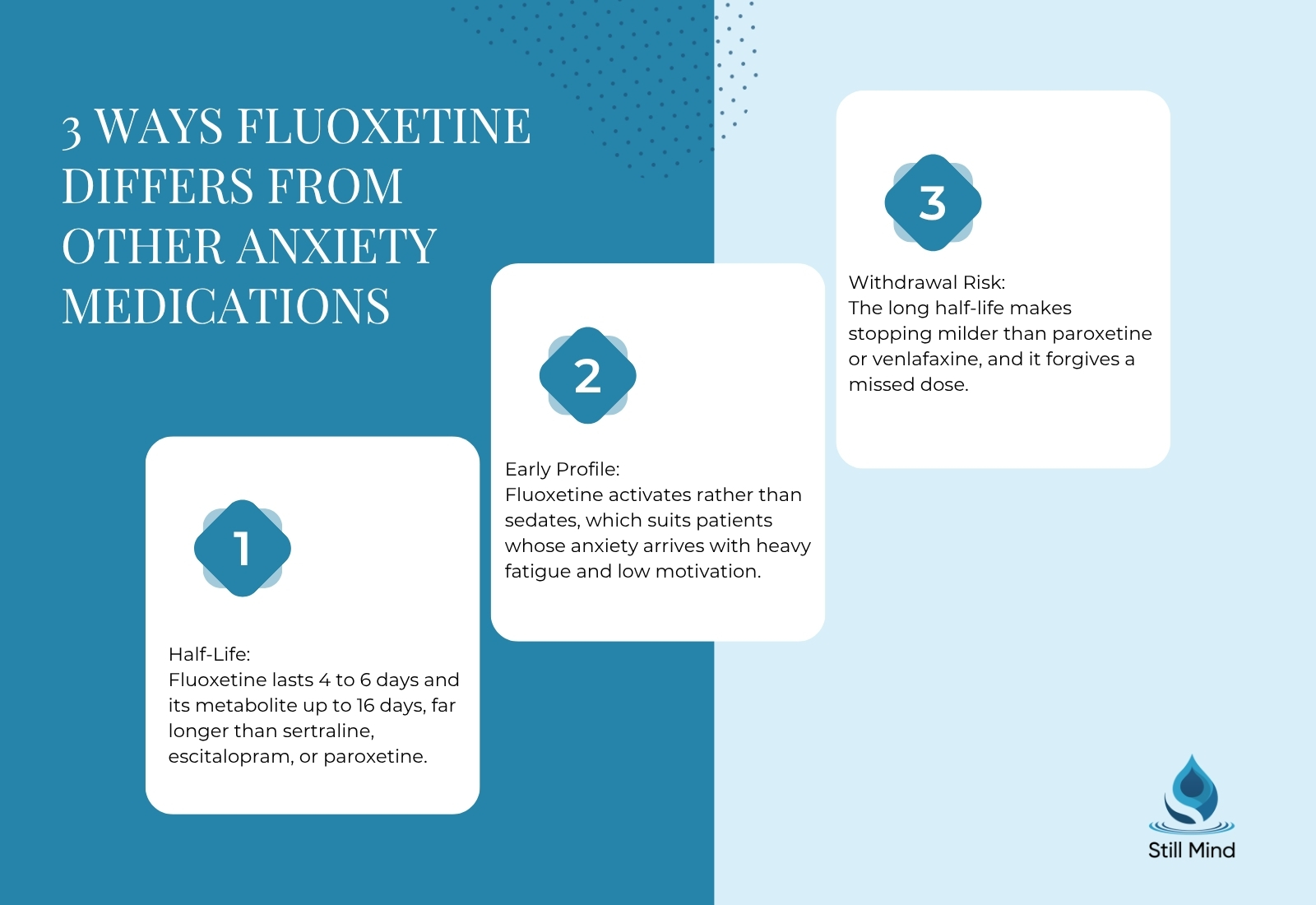
- Extended half life: The FDA label lists norfluoxetine elimination at four to sixteen days, compared with four to six days for fluoxetine itself during chronic dosing.
- Missed dose tolerance: That persistence keeps blood levels steady when a dose gets skipped, which few other antidepressants manage.
- Slow washout: Full clearance takes weeks, so prescribers require a five week gap before starting a monoamine oxidase inhibitor.
How Long Prozac Takes to Work for Anxiety
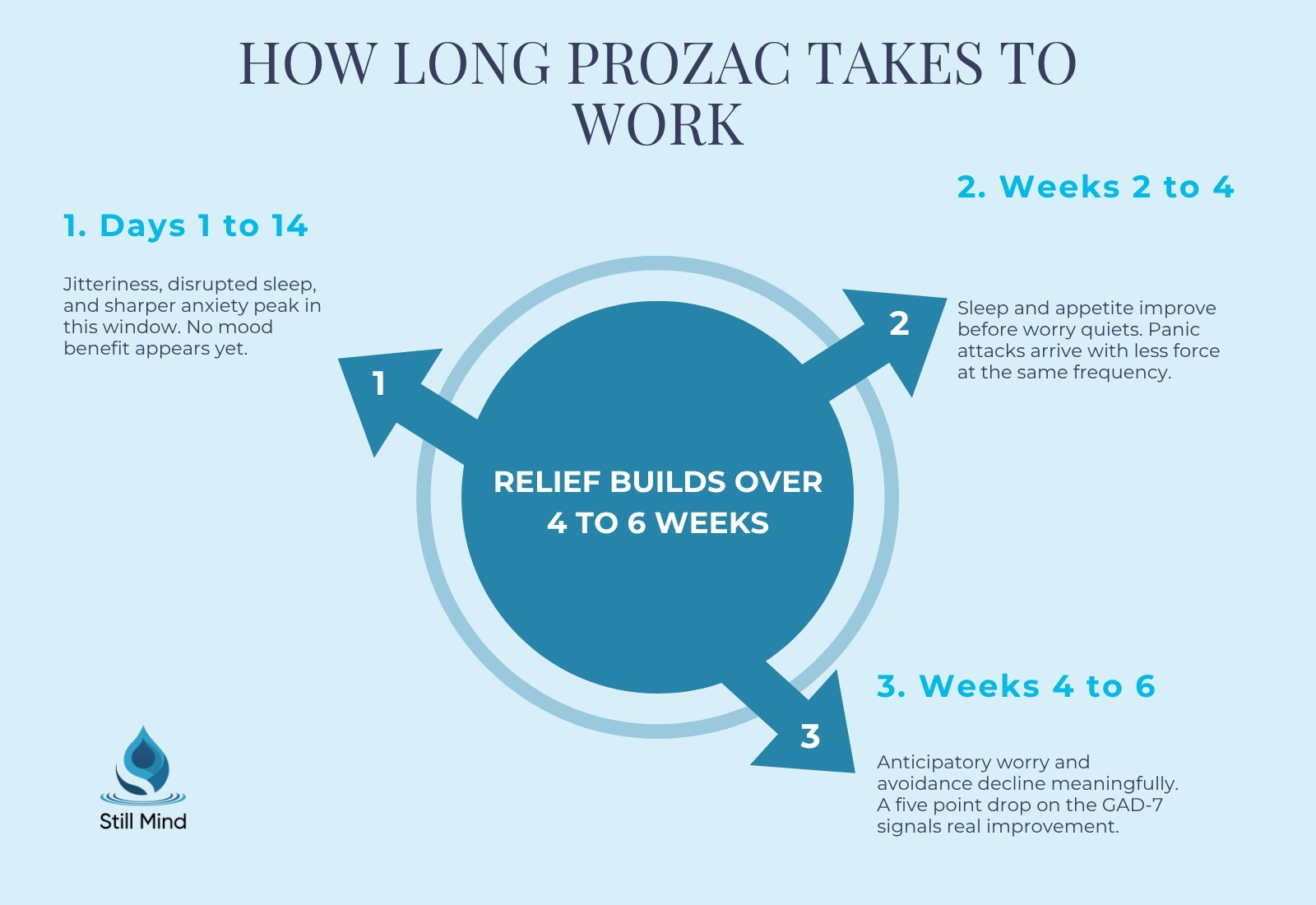
Prozac produces measurable anxiety relief across four to six weeks, with the first two weeks frequently feeling worse than baseline.
Days 1 to 14
The opening fortnight brings side effects before benefit, which catches most patients off guard.
- Activation symptoms: Jitteriness, disrupted sleep, and sharper anxiety peak during this window and then fade.
- Digestive effects: Nausea, appetite loss, and loose stools appear early and usually settle within two weeks.
- No mood benefit yet: Receptor adaptation has not completed, so anxiety scores rarely move in either direction.
Weeks 2 to 4
Weeks two through four deliver the first partial signals that the medication is engaging.
- Sleep and appetite shift first: Physical symptoms improve before worry itself quiets.
- Reduced symptom intensity: Panic attacks arrive with less force even when frequency has not dropped.
- Side effects recede: Early activation resolves for most patients by week three.
Weeks 4 to 6
Weeks four through six mark the standard window for judging whether fluoxetine is working.
- Core symptom relief: Anticipatory worry, avoidance, and panic frequency decline meaningfully at an adequate dose.
- Dose decisions: Prescribers raise the dose at this point when response stays partial rather than switching medications immediately.
- Measured response: A drop of five points or more on a validated anxiety scale signals clinically meaningful improvement.
Weeks 8 to 12
Weeks eight through twelve determine full response and whether a switch becomes necessary.
- Full effect: Obsessive compulsive disorder often needs the full twelve weeks and a higher dose than panic disorder requires.
- Switch threshold: Minimal benefit after twelve weeks at an adequate dose justifies moving to another agent.
- Maintenance planning: Most guidelines support continuing an effective dose for at least six to twelve months after remission.
Prozac Dosage for Anxiety
Fluoxetine dosing for anxiety conditions ranges from 10 mg to 60 mg daily, with an 80 mg ceiling and a deliberately low starting point for panic disorder.
Starting and Target Doses
Starting doses differ by diagnosis because activation risk differs by diagnosis.
- Panic disorder: The label directs starting at 10 mg daily, increasing to 20 mg after one week, with a range extending to 60 mg.
- Obsessive compulsive disorder: Treatment begins at 20 mg daily with a typical effective range of 20 mg to 60 mg.
- Off label anxiety use: Prescribers commonly begin at 10 mg for generalized or social anxiety to limit early jitteriness.
- Maximum dose: The label sets 80 mg daily as the ceiling for adults.
Timing and Administration
Timing choices reduce the two side effects patients report most often.
- Morning dosing: Taking fluoxetine in the morning limits insomnia caused by its activating profile.
- With food: Food reduces nausea without lowering absorption meaningfully.
- Weekly formulation: A delayed release once weekly capsule exists, made possible by the long half life of norfluoxetine.
Prozac Side Effects for Anxiety Patients
Fluoxetine produces mild early side effects in most patients and rare serious reactions that require immediate attention.
Common Side Effects
Common side effects appear early, stay mild, and usually resolve within two to four weeks.
- Sleep disruption: Insomnia and vivid dreams follow from the activating 5-HT2C effect.
- Digestive upset: Nausea, diarrhea, and reduced appetite rank among the most frequently reported effects.
- Jitteriness: Restlessness, tremor, and sweating mimic anxiety itself during the first two weeks.
- Sexual side effects: Reduced libido and delayed orgasm persist longer than the other effects and often require a dose or drug change.
- Headache and fatigue: Both appear early and usually resolve without intervention.
Severe Side Effects That Require Immediate Care
Severe reactions occur rarely and demand urgent medical evaluation rather than watchful waiting.
- Serotonin syndrome: Agitation, fever, muscle rigidity, twitching, rapid heart rate, and confusion together signal a medical emergency, and risk rises when fluoxetine combines with triptans, tramadol, or another serotonergic drug.
- Suicidal thoughts: The label carries a boxed warning about increased suicidal thinking in patients under 25, and any such thought warrants immediate contact with a prescriber or the 988 Suicide and Crisis Lifeline.
- Abnormal bleeding: Fluoxetine reduces platelet aggregation, which raises bleeding risk alongside NSAIDs, aspirin, or anticoagulants.
- Low sodium: Hyponatremia presents as headache, confusion, and weakness, and older adults face the highest risk.
- Manic switch: Undiagnosed bipolar disorder can convert to mania on an antidepressant, which is why prescribers screen for prior manic episodes first.
Long Term Risks and Considerations
Long term fluoxetine use raises separate considerations from its early side effect profile.
- Drug interaction burden: Fluoxetine strongly inhibits the CYP2D6 enzyme, which raises blood levels of many other medications, and a CYP2D6 poor metabolizer accumulates higher fluoxetine levels still.
- Emotional blunting: Some patients describe reduced emotional range, which typically responds to a dose reduction.
- Discontinuation profile: The long half life of norfluoxetine makes withdrawal symptoms milder than with paroxetine or venlafaxine, and clinicians use fluoxetine substitution to help taper those harder drugs.
- Contraindicated combinations: Monoamine oxidase inhibitors, thioridazine, and pimozide must not overlap with fluoxetine.
How Clinicians Measure Whether Prozac Is Working
Prescribers track response with validated rating scales instead of relying on general impressions.
- Hamilton Anxiety Rating Scale (HAM-A): This clinician rated scale scores 14 symptom groups and serves as the primary endpoint in most anxiety medication trials.
- Generalized Anxiety Disorder 7-item scale (GAD-7): This self report screen scores worry severity from 0 to 21, and a score of 10 or higher indicates clinically significant anxiety.
- Liebowitz Social Anxiety Scale (LSAS): This scale rates fear and avoidance across 24 social and performance situations in social anxiety disorder trials.
- Clinical Global Impression scale (CGI): This brief measure rates overall severity and overall change, which the Michelson panic disorder trial used alongside functional impairment scoring.
Prozac vs Other Anxiety Medications
Fluoxetine differs from other anxiety medications on three practical points: which diagnoses it is approved for, how long it stays in the body, and whether it stimulates or sedates.
Side by Side SSRI and SNRI Comparison
This comparison separates the five most prescribed antidepressants for anxiety across the factors prescribers actually weigh.
| Medication | Class | FDA approved anxiety indications | Half life | Early profile | Withdrawal difficulty |
|---|---|---|---|---|---|
| Fluoxetine (Prozac) | SSRI | OCD, panic disorder | 4 to 6 days, metabolite 4 to 16 days | Activating | Low |
| Sertraline (Zoloft) | SSRI | OCD, panic disorder, social anxiety disorder, PTSD | About 26 hours | Neutral | Moderate |
| Escitalopram (Lexapro) | SSRI | Generalized anxiety disorder | About 30 hours | Neutral to calming | Moderate |
| Paroxetine (Paxil) | SSRI | OCD, panic disorder, social anxiety disorder, generalized anxiety disorder, PTSD | About 21 hours | Sedating | High |
| Venlafaxine ER (Effexor XR) | SNRI | Generalized anxiety disorder, social anxiety disorder, panic disorder | About 5 hours, metabolite 11 hours | Activating | High |
When Prescribers Choose Fluoxetine Over Alternatives
Fluoxetine wins selection in specific clinical situations rather than as a default first choice.
- Adherence problems: The long half life forgives missed doses that would trigger withdrawal on paroxetine or venlafaxine.
- Fatigue with anxiety: The activating profile suits patients whose anxiety pairs with low energy and heavy sleep.
- Existing OCD: Approval in both OCD and panic disorder covers patients who carry both diagnoses.
- Broader anxiety labeling elsewhere: Escitalopram, paroxetine, and venlafaxine carry generalized anxiety approvals that fluoxetine lacks, and a related option such as Pristiq for anxiety symptoms may fit better when SNRI coverage matters.
Prozac vs Benzodiazepines
Fluoxetine and benzodiazepines address anxiety on opposite timescales and carry opposite risk profiles.
- Onset differs: Alprazolam and clonazepam calm symptoms within an hour, while fluoxetine needs four to six weeks.
- Dependence differs: Benzodiazepines produce tolerance and physical dependence, while SSRIs produce neither.
- Role differs: Prescribers use benzodiazepines as a short bridge during SSRI titration, not as maintenance treatment.
- Function differs: Fluoxetine treats the disorder over time, while a benzodiazepine suppresses an episode in the moment.
Early Worsening vs Treatment Failure
Increased anxiety during the first two weeks reflects normal activation rather than proof the medication failed.
- Activation timing: Jitteriness and insomnia that begin within days and ease by week three indicate activation, not failure.
- Failure timing: Absent benefit after six weeks at an adequate dose indicates non response and justifies a change.
- Symptom overlap: Activation mimics anxiety closely, and telling a panic attack apart from an anxiety attack helps patients report what actually changed.
- Management approach: Prescribers lower the dose, slow the titration, or add short term coverage rather than abandoning the drug.
Treatment Beyond Medication for Anxiety Disorders
Anxiety disorders respond best to a four tier approach in which fluoxetine occupies one tier rather than the whole plan.
First Line Therapies
Psychotherapy matches or exceeds medication for several anxiety diagnoses and produces more durable results.
- Cognitive behavioral therapy: CBT restructures catastrophic predictions and dismantles safety behaviors, and applied behavioral therapy techniques turn those shifts into daily practice.
- Exposure and response prevention: ERP stands as the leading psychological treatment for obsessive compulsive disorder.
- Interoceptive exposure: Interoceptive exposure deliberately provokes physical sensations so panic disorder patients stop fearing their own heartbeat.
- Acceptance and commitment therapy: ACT builds willingness to act while anxiety remains present instead of waiting for it to disappear.
First Line Medications
First line pharmacotherapy for anxiety draws from two antidepressant classes.
- Selective serotonin reuptake inhibitors: Fluoxetine, sertraline, escitalopram, and paroxetine all reduce anxiety symptoms across four to six weeks.
- Serotonin norepinephrine reuptake inhibitors: Venlafaxine and duloxetine cover several anxiety diagnoses and suit patients who fail an SSRI trial.
- Class selection: Prescribers match the drug to the specific diagnosis, prior response history, and side effect tolerance.
Second Line and Adjunct Options
Second line agents address residual symptoms when an SSRI produces partial response.
- Buspirone: This non sedating anxiolytic augments an SSRI for persistent generalized worry.
- Hydroxyzine: This antihistamine relieves acute anxiety without dependence risk.
- Propranolol: This beta blocker blunts tremor and racing heart before a specific performance situation.
- Short term benzodiazepines: Clonazepam or lorazepam bridge the first weeks of SSRI titration under close monitoring.
Emerging and Investigational Treatments
Several newer treatments target anxiety, and each carries a different regulatory status worth stating plainly.
- Transcranial magnetic stimulation: TMS holds FDA clearance for depression and obsessive compulsive disorder and remains off label for other anxiety disorders.
- Esketamine: This agent holds approval for treatment resistant depression and stays investigational for primary anxiety disorders.
- Virtual reality exposure therapy: Simulated feared situations deliver repeatable exposure with growing evidence in social anxiety disorder and specific phobia.
- Prescription digital therapeutics: FDA cleared app based programs deliver structured CBT between sessions as adjuncts rather than replacements.
Anxiety Treatment at Still Mind Florida
Still Mind Florida treats generalized anxiety disorder, social anxiety disorder, panic disorder, and obsessive compulsive presentations at its Fort Lauderdale facility, combining psychiatric prescribing with therapy.
Psychiatric Evaluation and Medication Management
Medication decisions at Still Mind Florida begin with a full psychiatric evaluation rather than a prescription.
- Diagnostic clarification: Assessment separates generalized anxiety disorder, panic disorder, social anxiety disorder, and depression before any drug selection occurs.
- Bipolar screening: Providers screen for prior manic episodes, because an antidepressant can trigger a manic switch in undiagnosed bipolar disorder.
- Structured monitoring: Follow up appointments track response and side effects across the four to six week onset window rather than leaving patients unsupervised.
- Provider roles: Understanding the division between psychiatry and counseling clarifies which clinician manages prescribing and which manages therapy.
Therapy Alongside Medication
The clinical program pairs prescribing with evidence based psychotherapy rather than treating medication as standalone care.
- Cognitive behavioral therapy: Therapists target the predictions that sustain avoidance while medication lowers baseline arousal.
- Exposure and response prevention: ERP addresses compulsions and reassurance rituals that medication alone leaves intact.
- Dialectical behavior therapy skills: Distress tolerance modules give patients usable tools during the difficult first weeks of a new prescription.
Residential Care for Severe Anxiety
Residential treatment suits patients whose anxiety symptoms already disrupted work, school, or daily functioning.
- Continuous supervision: On site clinical staffing monitors early medication reactions closely during titration.
- Structured environment: A fixed therapeutic schedule removes the unpredictability that sustains symptoms.
- Level of care matching: Clinicians weigh symptom severity and impairment when deciding whether residential treatment fits better than outpatient care.
“The patients who succeed on fluoxetine are almost always the ones who understood in advance that weeks one and two would feel rough. When nobody prepares them for that, they stop the medication right before it starts working.” Dr. Gladys Martinez, Clinical Director, Still Mind Florida
Frequently Asked Questions
What does Prozac feel like when it starts working?
Most people describe a widening gap between a trigger and their reaction. Worries still arrive, but they lose urgency and fade faster. Sleep and appetite normalize first, then avoidance loosens. The change feels gradual rather than sudden, and family members often notice it before the patient does.
Should I take Prozac in the morning or at night?
Morning dosing suits most patients, because fluoxetine raises alertness and frequently disrupts sleep when taken late. Patients who feel sedated instead may switch to evening dosing with a prescriber’s approval. Consistency matters more than timing, so pick one time and hold it.
Can I drink alcohol while taking Prozac?
Prescribers advise against it. Alcohol worsens anxiety through rebound the following day and amplifies fluoxetine’s sedative and cognitive effects. Regular drinking also undermines the medication’s benefit, which delays response. Discuss any current drinking pattern honestly before starting, because it changes both dosing and monitoring decisions.
Is Prozac safe for teenagers with anxiety?
Fluoxetine holds pediatric approval for obsessive compulsive disorder from age seven and for depression from age eight. The label also carries a boxed warning about increased suicidal thinking in patients under 25. Prescribers therefore monitor adolescents closely during the first weeks and after every dose change.
Does Prozac cause weight gain?
Fluoxetine tends to reduce appetite early, and short term weight loss occurs more often than gain. Modest weight gain sometimes develops over a year or more of use. Paroxetine and mirtazapine carry higher weight gain risk, which is one reason prescribers select fluoxetine for weight sensitive patients.
What happens if I miss a dose of Prozac?
Very little, which sets fluoxetine apart. Norfluoxetine persists for up to sixteen days, so blood levels stay near steady after one skipped dose. Take the missed dose when you remember, unless the next one falls due soon. Never double up to compensate.
Can Prozac stop working over time?
Yes, and clinicians call this tachyphylaxis. Symptoms return despite consistent adherence in a minority of patients. Prescribers respond by verifying adherence, ruling out new stressors or thyroid problems, then raising the dose, augmenting, or switching agents. Returning symptoms rarely mean treatment has permanently stopped working.
Is Prozac addictive?
No. Fluoxetine produces no craving, no euphoria, and no tolerance requiring escalating doses. Stopping abruptly can still produce discontinuation symptoms, though its long half life makes those milder than with most antidepressants. Physical adaptation differs from addiction, and SSRIs are not controlled substances.
Can you take Prozac for anxiety without depression?
Yes. Prescribers routinely treat primary anxiety disorders with SSRIs regardless of whether depression is present. Fluoxetine’s panic disorder and obsessive compulsive disorder approvals apply independently of mood symptoms. Dosing for anxiety often starts lower than for depression, specifically to limit early activation.
References
- U.S. Food and Drug Administration. (2017). Prozac (fluoxetine hydrochloride) prescribing information. Eli Lilly and Company.
- Michelson, D., Lydiard, R. B., Pollack, M. H., Tamura, R. N., Hoog, S. L., Tepner, R., Demitrack, M. A., & Tollefson, G. D. (1998). Outcome assessment and clinical improvement in panic disorder: Evidence from a randomized controlled trial of fluoxetine and placebo. American Journal of Psychiatry, 155(11), 1570–1577.
- Mitsui, N., Asakura, S., Shimizu, Y., Fujii, Y., Toyomaki, A., Kako, Y., & Kusumi, I. (2022). Antidepressants for social anxiety disorder: A systematic review and meta-analysis. Neuropsychopharmacology Reports, 42(4).
- American Psychiatric Association. (2022). Diagnostic and statistical manual of mental disorders (5th ed., text rev.). American Psychiatric Association Publishing.
- Hettema, J. M., Neale, M. C., & Kendler, K. S. (2001). A review and meta-analysis of the genetic epidemiology of anxiety disorders. American Journal of Psychiatry, 158(10), 1568–1578.
- Hamilton, M. (1959). The assessment of anxiety states by rating. British Journal of Medical Psychology, 32(1), 50–55.
- Spitzer, R. L., Kroenke, K., Williams, J. B. W., & Löwe, B. (2006). A brief measure for assessing generalized anxiety disorder: The GAD-7. Archives of Internal Medicine, 166(10), 1092–1097.
- National Institute of Mental Health. (2024). Any anxiety disorder. U.S. Department of Health and Human Services, National Institutes of Health.
- National Center for Health Statistics. (2025). Characteristics of adults age 18 and older who took prescription medication for depression: United States, 2023 (NCHS Data Brief No. 528). Centers for Disease Control and Prevention.
- KFF. (2023). Mental health and substance use state fact sheets: Florida.