

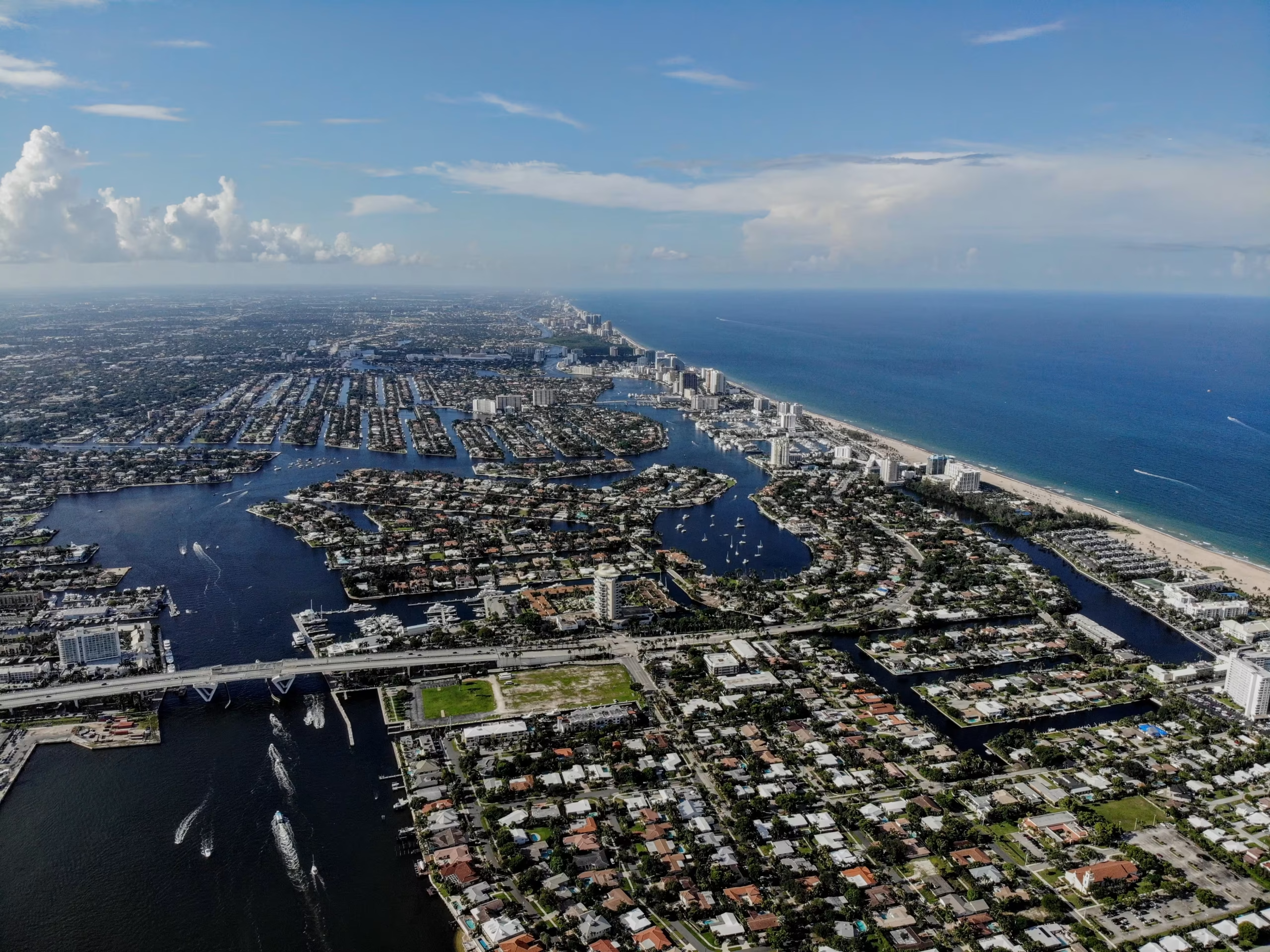
Panic Disorder Treatment · Fort Lauderdale, Florida
Panic Disorder Treatment in Fort Lauderdale, FL
Still Mind is a residential panic disorder treatment center in Fort Lauderdale, Florida, for adults 18+ whose panic attacks and avoidance have outpaced outpatient care. Residential treatment interrupts the panic cycle that weekly outpatient sessions cannot. Our stabilization-first model pairs 7-day psychiatric coverage with formal exposure-based therapy.
LOCUS 5 highest-acuity care on admission
7-day psychiatric coverage
CBT with interoceptive exposure
On-site brain mapping & TMS
If you or someone with you is in immediate danger, call 911 or the 988 Suicide & Crisis Lifeline at 988.
Verify Your Insurance Benefits
Free & confidential. Takes about 60 seconds, no obligation.
Before anything else
Take One Breath With Us
If you have landed here, today is probably heavy. Before you read about programs and insurance, try one guided breath cycle, the same paced breathing our clinicians teach on day one. In for four. Hold for four. Out for six.
Ready
Tap begin when you are
Stabilization Comes First
How does Still Mind treat panic disorder?
Still Mind treats panic disorder with a stabilization-first residential model: 7-day psychiatric coverage, SSRI-based medication management, formal CBT with interoceptive exposure, and on-site brain mapping and TMS. Most clients are admitted at LOCUS Level 5 acuity, with an average 42-day length of stay.
Stabilization-first panic care
Sleep, medication consistency, and daily structure are rebuilt first. Panic attacks lose their grip once baseline arousal comes down.
7-day psychiatric coverage
A board-certified psychiatrist is on-site every weekday and on-call around the clock on weekends. SSRIs are the first-line medication for panic disorder, and daily review shortens the titration period.
CBT with interoceptive exposure
Interoceptive exposure reproduces the physical sensations that set off panic, so the body relearns that a racing heart is not a heart attack.
Formal DBT distress-tolerance skills
Dialectical behavior therapy supplies the skills that shorten an attack in progress. Six hours of group therapy run daily, plus weekly individual and family sessions.
On-site brain mapping & TMS
Quantitative EEG brain mapping and transcranial magnetic stimulation are administered on-site, which is rare at the residential psychiatric level.
Integrated dual-diagnosis care
Alcohol and benzodiazepine use frequently begin as panic self-management. Both conditions are treated inside the same program, not referred out to a separate one.
Primary Program
Residential Mental Health Treatment
24/7 stabilization-first psychiatric care for adults 18+ whose panic attacks and avoidance have taken over daily life. Includes 7-day psychiatric coverage, formal CBT and DBT, and on-site brain mapping and TMS.
See the residential program → When Substance Use Is Also PresentCo-Occurring Disorders / Dual Diagnosis
Alcohol and benzodiazepines quiet panic in the short term and worsen it between doses. This program treats both conditions within one integrated plan.
See the dual-diagnosis program →Understanding the Condition
What is panic disorder?
Panic disorder is an anxiety disorder defined by recurrent unexpected panic attacks plus at least one month of persistent worry about the next attack or behavior change to avoid one. A panic attack peaks within 10 minutes.
Panic disorder reorganizes a life around a body. It changes where a person will drive, how far from home they will go, and how closely they monitor their own heartbeat. Anxiety and trauma conditions make up roughly 30% of Still Mind's residential admissions.
During a panic attack:
Pounding heart or palpitationsSweatingTrembling or shakingShortness of breathChest painDizziness or faintnessChills or heat sensationsNumbness or tinglingDerealization or detachmentFear of dying
Between attacks:
Persistent worry about the next attackAvoidance of places and activitiesFear of leaving home alone
Is a panic attack the same as panic disorder?
No. A panic attack is one episode. Panic disorder is the diagnosis given when attacks recur unexpectedly and a month or more of anticipatory worry or avoidance follows. A single panic attack is common and does not amount to a diagnosis.
How do you stop a panic attack?
Paced breathing shortens a panic attack in progress: in for 4 seconds, hold for 4, out for 6. The attack peaks within 10 minutes and subsides on its own. The goal is to stop fighting the surge rather than to abort it. The breathing exercise above uses that same pattern.
Panic attacks produce chest pain, breathlessness, and a conviction of dying. If you are having chest pain for the first time, treat it as a medical emergency and call 911. If you are having thoughts of suicide, call or text 988.
Two Minutes · Private · Nothing Is Stored
Is residential care the right level of care?
Residential care is the right level of care when panic attacks recur despite outpatient therapy and medication, when avoidance has narrowed daily life, and when 24/7 psychiatric supervision would be safer than managing alone. Six questions below indicate whether that applies.
Level-of-Care Self-Check
This self-check is educational, not a diagnosis or medical advice. Only a licensed clinician can determine the right level of care. Your answers never leave this page.
The Diagnosis It Travels With
What is the difference between panic disorder and agoraphobia?
Panic disorder is defined by recurrent unexpected panic attacks. Agoraphobia is defined by fear of two or more situations where escape feels difficult, lasting at least 6 months. The two are separate DSM-5 diagnoses that frequently occur together.
Agoraphobia attaches to five situation types: public transportation, open spaces, enclosed spaces, crowds or standing in line, and being outside the home alone. Fear of two or more of them, sustained for 6 months, meets the threshold. When agoraphobia follows panic disorder, the map of safe places shrinks until some people become housebound.
Panic disorderAgoraphobiaPublic transportationOpen spacesEnclosed spacesCrowds and linesOutside the home aloneNocturnal panic attacks
That narrowing is where outpatient care stops working: a person who cannot leave the house cannot attend a weekly appointment, and graded in vivo exposure needs daily repetition. Avoidance severity, not attack frequency, is the clearest signal for residential mental health treatment.
What are nocturnal panic attacks?
Nocturnal panic attacks wake a person from sleep with the full physical surge and no identifiable trigger. They fragment sleep, and sleep loss lowers the threshold for the next daytime attack. Residential care breaks that loop by rebuilding a protected sleep schedule under nightly supervision.
Panic attacks also occur inside other conditions. Where attacks arrive as part of generalized worry rather than out of the blue, the diagnosis is usually anxiety disorder instead.
Admissions team standing by right now
Panic disorder is treatable
Panic attacks convince the body it is dying and shrink a life to a few safe rooms. With the right stabilization-first care, that reverses. Our admissions team is available now for a confidential conversation about whether Still Mind's residential panic disorder program in Fort Lauderdale fits your situation.
✓ Confidential & HIPAA-compliant
✓ Insurance verified at no cost
✓ Out-of-state admissions welcome
✓ Joint Commission accredited
Causes & Risk Factors
What causes panic disorder?
Panic disorder has three main contributors: genetics, an oversensitive fear circuit in the brain, and environmental stressors. First-degree family history raises risk. Stimulants, alcohol withdrawal, sleep loss, and trauma trigger attacks. Catastrophic misreading of normal body sensations sustains the cycle.
Biological & geneticA first-degree relative with panic disorder raises risk several times over. The amygdala-centered fear circuit fires at ordinary interoceptive signals, so a normal post-caffeine heartbeat registers as a threat.
Chemical & physiological triggersCaffeine and stimulants, alcohol withdrawal, nicotine, and sleep deprivation each provoke attacks. Onset clusters between late adolescence and the mid-30s, often after a period of sustained stress.
The catastrophic-misinterpretation cycleReading a racing heart as a heart attack converts a sensation into an attack. Avoidance prevents the correction, and vigilance guarantees the next sensation gets noticed. Interoceptive exposure dismantles this cycle.
Alcohol and benzodiazepines are the two substances most often recruited to manage panic, and both make it worse between doses. Read how the program approaches dual diagnosis treatment when panic disorder and substance use happen together.
Prognosis
Is panic disorder curable?
Panic disorder is among the most treatable psychiatric conditions. CBT with interoceptive exposure combined with SSRI medication produces remission for most people, meaning no attacks and no avoidance. Residential treatment restores that trajectory when outpatient care has not held.
Remission is the realistic target, not symptom management. Per APA practice guidelines, exposure-based cognitive behavioral therapy and SSRI treatment are both first-line for panic disorder, Residential care compresses months of weekly exposure work into a supervised 42-day stay, then hands it off through a step-down plan so the tolerance built inside holds outside.
LOCUS 5Highest voluntary acuity level on admission
7 daysWeekly psychiatric coverage
~42 daysAverage length of stay
30 bedsShared residential community
Broward County, Florida
How to find a panic disorder treatment center near Fort Lauderdale, FL
Look for four things in a panic disorder treatment center: a board-certified psychiatrist on staff, residential licensing, CBT with exposure work rather than talk therapy alone, and accreditation. Still Mind meets all four and verifies insurance before admission.
Still Mind sits at 208 SE 8th St, Fort Lauderdale, FL 33316, minutes from downtown and the airport. Admission is straightforward for Broward County and nearby communities including Hollywood, Pompano Beach, Plantation, and Davie.
Travel is its own obstacle in panic disorder, because flying, driving, and crowded terminals are frequently the avoided situations. The admissions team coordinates arrival, lodging, and transportation around that, and physician-initiated one-to-one monitoring covers the first days if arrival itself triggers attacks.
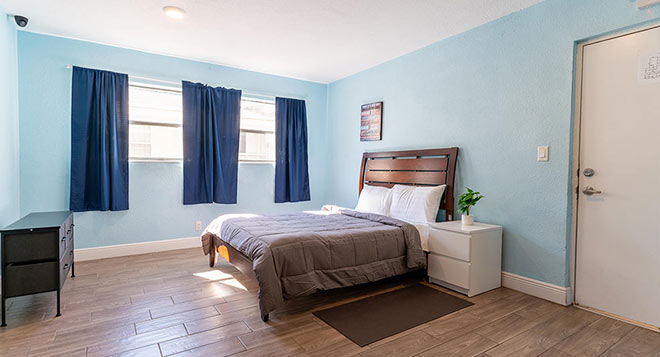
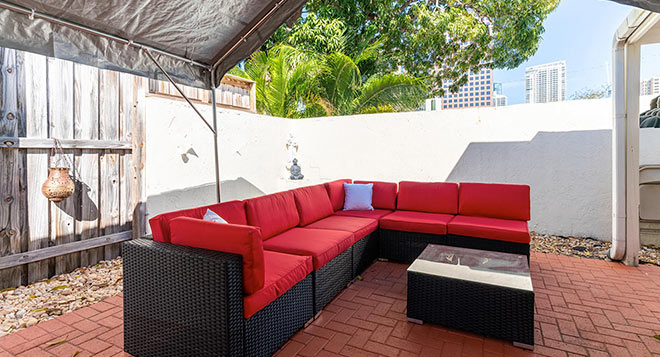
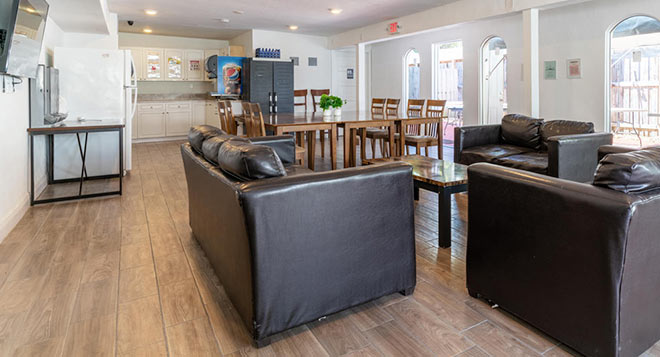
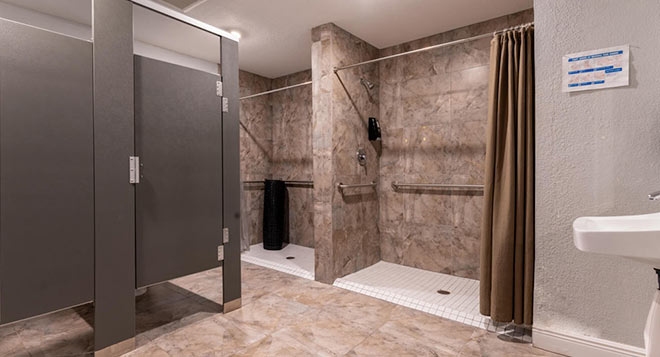
Inside Still Mind
Tour our Fort Lauderdale facility
A 30-bed residential community with shared rooms, green space, and calm indoor areas.
Coverage Varies by Plan
Does insurance cover treatment for panic disorder?
Many plans include residential mental health benefits that cover panic disorder treatment. Still Mind's admissions team verifies your specific coverage at no cost before admission, with no obligation. Still Mind also holds an active Tricare contract.
Often Seen Alongside
What conditions occur with panic disorder?
Panic disorder rarely appears alone. It most often co-occurs with other anxiety disorders, major depression, bipolar disorder, PTSD, and alcohol or benzodiazepine use. These are the conditions Still Mind most frequently treats alongside panic disorder in Fort Lauderdale.
Anxiety DisorderThe parent category panic disorder sits inside, and its most common companion
DepressionFollows the loss of work, driving, and social life to avoidance
Bipolar DisorderPanic attacks cluster inside depressive and mixed episodes
Borderline Personality DisorderShares the physiological surge, though triggered relationally rather than out of the blue
Post-Traumatic Stress DisorderTrauma reminders produce cued attacks, including nocturnal ones
Psychotic BreakDerealization during an attack is often mistaken for the onset of psychosis
Common Questions
Panic disorder treatment FAQ
What is panic disorder?
Panic disorder is an anxiety disorder defined by recurrent unexpected panic attacks plus at least one month of persistent worry about the next attack or behavior change to avoid one. A panic attack peaks within 10 minutes.
How do you stop a panic attack?
Paced breathing shortens a panic attack in progress: in for 4 seconds, hold for 4, out for 6. The attack peaks within 10 minutes and subsides on its own. The goal is to stop fighting the surge rather than to abort it.
What is the difference between panic disorder and agoraphobia?
Panic disorder is defined by recurrent unexpected panic attacks. Agoraphobia is defined by fear of two or more situations where escape feels difficult, lasting at least 6 months. The two are separate DSM-5 diagnoses that frequently occur together.
What are nocturnal panic attacks?
Nocturnal panic attacks wake a person from sleep with the full physical surge and no identifiable trigger. They fragment sleep, and sleep loss lowers the threshold for the next daytime attack.
What causes panic disorder?
Panic disorder has three main contributors: genetics, an oversensitive fear circuit in the brain, and environmental stressors. First-degree family history raises risk. Stimulants, alcohol withdrawal, sleep loss, and trauma trigger attacks. Catastrophic misreading of normal body sensations sustains the cycle.
How is panic disorder treated at Still Mind?
Still Mind treats panic disorder with a stabilization-first residential model: 7-day psychiatric coverage, SSRI-based medication management, formal CBT with interoceptive exposure, and on-site brain mapping and TMS. Most clients are admitted at LOCUS Level 5 acuity, with an average 42-day length of stay.
Is panic disorder curable?
Panic disorder is among the most treatable psychiatric conditions. CBT with interoceptive exposure combined with SSRI medication produces remission for most people, meaning no attacks and no avoidance. Residential treatment restores that trajectory when outpatient care has not held.
Is there panic disorder treatment in Fort Lauderdale, FL?
Yes. Still Mind provides residential panic disorder treatment in Fort Lauderdale, Florida, at 208 SE 8th St. The program serves adults 18+ from Broward County, across Florida, and out of state, with 7-day psychiatric coverage and insurance verified before admission.
Does insurance cover residential treatment for panic disorder?
Many plans include residential mental health benefits that cover panic disorder treatment. Still Mind's admissions team verifies your specific coverage at no cost before admission, with no obligation. Still Mind also holds an active Tricare contract. Call (561) 782-1672 or use the verification form above.