


Borderline Personality Disorder Treatment · Fort Lauderdale, Florida
Borderline Personality Disorder Treatment in Fort Lauderdale, FL
Still Mind is a residential borderline personality disorder treatment center in Fort Lauderdale, Florida, for adults 18+ whose emotional crises, self-harm risk, or collapsing relationships have outpaced weekly therapy. Dialectical behavior therapy anchors the program, taught as formal skills training, alongside 7-day psychiatric coverage.
LOCUS 5 highest-acuity care on admission
Formal DBT skills training
7-day psychiatric coverage
Physician-ordered 1:1 monitoring
If you or someone with you is in immediate danger, call 911 or the 988 Suicide & Crisis Lifeline at 988.
Verify Your Insurance Benefits
Free & confidential. Takes about 60 seconds, no obligation.
Before anything else
Take One Breath With Us
If you have landed here, today is probably heavy. Before you read about programs and insurance, try one guided breath cycle. Paced breathing is a distress tolerance skill, the first one our clinicians teach. In for four. Hold for four. Out for six.
Ready
Tap begin when you are
DBT Is the Anchor
How does Still Mind treat borderline personality disorder?
Still Mind treats borderline personality disorder with dialectical behavior therapy as the anchor: formal DBT skills training, 7-day psychiatric coverage, and physician-initiated 1:1 safety monitoring. Most clients are admitted at LOCUS Level 5 acuity, and the average length of stay is about 42 days.
Formal DBT skills training
Mindfulness, distress tolerance, emotion regulation, and interpersonal effectiveness are taught as four structured modules with homework and diary cards, not general talk therapy.
7-day psychiatric coverage
A board-certified psychiatrist is on-site every weekday and on-call around the clock on weekends. Doses are adjusted against observed behavior, not a monthly self-report.
Safety monitoring for self-harm risk
Physician-initiated one-to-one monitoring covers self-harm and suicidal thoughts, released only by a doctor, never by convenience.
Six hours of daily skills practice
Skills are rehearsed in six hours of daily group therapy plus weekly individual and family sessions, then tested in a 30-bed shared community where the friction is real.
On-site brain mapping & TMS
Quantitative EEG brain mapping and transcranial magnetic stimulation are administered on-site for co-occurring depression, rare at the residential psychiatric level.
Integrated dual-diagnosis care
Alcohol and substance use that accompanies impulsive episodes is treated in the same program, not referred out.
What medication is used for borderline personality disorder?
No medication is approved to treat borderline personality disorder itself. Medication at Still Mind targets the conditions that travel with it: depression, anxiety, sleep disruption, and impulsivity. Skills carry the core treatment, which is why Dialectical Behavior Therapy (DBT) holds the center of the program.
Primary Program
Residential Mental Health Treatment
24/7 stabilization-first psychiatric care for adults in emotional crisis. Includes formal DBT skills training, 7-day psychiatric coverage, and physician-ordered safety monitoring.
See the residential program → When Substance Use Is Also PresentCo-Occurring Disorders / Dual Diagnosis
Impulsive substance use is one of the nine diagnostic criteria for borderline personality disorder. This program treats both conditions inside one plan instead of two.
See the dual-diagnosis program →Understanding the Condition
What is borderline personality disorder?
Borderline personality disorder is a personality disorder defined by pervasive instability in emotions, relationships, self-image, and impulse control. Mood shifts last hours to a few days and are usually triggered by interpersonal events. Diagnosis requires 5 of 9 DSM-5 criteria.
Diagnosis also requires a pattern that began by early adulthood and appears across contexts: work, home, and every close relationship. One difficult year does not meet the threshold. It is also the personality disorder most often mistaken for a mood disorder.
The 9 DSM-5 criteria:
Fear of abandonmentUnstable relationshipsUnstable self-imageImpulsivitySelf-harm or suicidal behaviorEmotional instability lasting hours to daysChronic emptinessIntense inappropriate angerTransient paranoid ideation or dissociation
What is splitting in BPD?
Splitting is all-or-nothing thinking about people. Someone with borderline personality disorder moves from idealizing a partner, friend, or clinician to devaluing them, sometimes inside a single conversation. Splitting is not manipulation. It is what happens when emotional intensity removes the middle ground, and DBT skills rebuild it.
If you or someone you love is having thoughts of suicide, call or text 988 (Suicide & Crisis Lifeline) now. If you are in immediate danger, call 911.
Two Minutes · Private · Nothing Is Stored
Is residential care the right level of care?
Residential care is the right level of care when emotional crises, self-harm risk, or relationship breakdown have outpaced weekly therapy. Still Mind admits adults 18+ at LOCUS Level 5 acuity, with 24/7 supervision and daily psychiatric contact.
Six honest questions, answered privately on this page. At the end we will tell you plainly whether a conversation with our admissions team makes sense.
Level-of-Care Self-Check
This self-check is educational, not a diagnosis or medical advice. Only a licensed clinician can determine the right level of care. Your answers never leave this page.
Differential Diagnosis
What is the difference between borderline personality disorder and bipolar disorder?
Borderline personality disorder produces mood shifts that last hours to a few days and follow interpersonal triggers. Bipolar disorder produces discrete episodes that last days to weeks. BPD responds to DBT skills training; bipolar disorder responds to mood-stabilizing medication.
Timeline and trigger separate the two. A borderline mood shift can start and resolve inside an afternoon, and it usually follows a perceived rejection. A bipolar episode holds for days or weeks regardless of what happens around it. Getting this wrong has a cost: mood stabilizers do not teach distress tolerance, and DBT does not control mania.
Reactive mood shiftDiscrete episodeSplittingMania or hypomaniaDBT skills trainingMood stabilizers
What is quiet BPD?
Quiet BPD is a presentation in which symptoms turn inward instead of outward. Anger becomes self-directed, splitting happens silently, and distress stays masked. Quiet BPD is not a separate DSM-5 diagnosis, and it carries the same self-harm risk, which is why it goes unrecognized for years.
Can you have BPD and bipolar disorder at the same time?
Yes. The two diagnoses co-occur, and each makes the other harder to read. That combination needs a psychiatrist tracking both patterns daily, not a single screening questionnaire. Still Mind treats both, and the mood-episode side is described on the page for bipolar disorder treatment in Fort Lauderdale.
Admissions team standing by right now
Borderline personality disorder is treatable
When every close relationship feels one argument from ending, the pattern looks permanent. It is not. Our admissions team is available now for a confidential conversation about whether Still Mind's residential program in Fort Lauderdale is the right next step for you or someone you love.
✓ Confidential & HIPAA-compliant
✓ Insurance verified at no cost
✓ Out-of-state admissions welcome
✓ Joint Commission accredited
Causes & Risk Factors
What causes borderline personality disorder?
Borderline personality disorder has three main contributors: genetics, brain function, and childhood environment. Childhood trauma, neglect, and invalidating environments are the strongest environmental contributors. Emotional sensitivity is heritable. Substance use frequently accompanies the emotional crises.
Genetic & biologicalEmotional sensitivity runs in families, and a first-degree relative with borderline personality disorder raises risk. The brain systems governing emotion regulation and impulse control react faster and settle slower.
Childhood trauma & invalidationAbuse, neglect, and early separation are the strongest environmental contributors, alongside invalidating environments, where a child learns emotions only register once they escalate.
Co-occurring substance useAlcohol and drugs frequently accompany impulsivity and emotional crises. Treating both conditions together produces more durable results than treating either one alone.
Many clients arrive with two diagnoses, so the program treats post-traumatic stress disorder alongside the personality-disorder work. When alcohol or drugs are involved, the dual diagnosis treatment program handles both conditions inside a single plan.
Prognosis
Is borderline personality disorder curable?
Borderline personality disorder remits more often than any other personality disorder. Symptoms respond to DBT skills, and most people no longer meet diagnostic criteria after sustained treatment. Recovery is measured in stable relationships and reduced self-harm, not in a single cure.
Remission is the realistic goal, and it is a higher ceiling than this diagnosis usually gets credit for. Borderline personality disorder responds to skills practiced daily: distress tolerance during a crisis, emotion regulation before one starts, interpersonal effectiveness so relationships stop collapsing. Residential mental health treatment in Fort Lauderdale compresses that practice into weeks of supervised repetition, then a step-down plan holds the gains after discharge.
LOCUS 5Highest voluntary acuity level on admission
7 daysWeekly psychiatric coverage
~42 daysAverage length of stay
30 bedsShared residential community
Broward County, Florida
How to find a borderline personality disorder treatment center near Fort Lauderdale, FL
Look for four things in a treatment center: a formal DBT program rather than DBT-informed groups, a board-certified psychiatrist on staff, residential licensing, and accreditation. Still Mind meets all four and verifies insurance before admission.
Ask one question when you call any center: is the DBT a full skills curriculum with diary cards and homework, or a weekly group borrowing the language? That answer separates programs that change behavior from those that describe it.
Still Mind sits at 208 SE 8th St, Fort Lauderdale, FL 33316, minutes from downtown and the airport, and admits from Broward County and the communities around it, including Hollywood, Pompano Beach, Plantation, and Davie. Most clients travel from out of state, because distance puts space between a person and the relationships driving the cycle. The admissions team coordinates arrival, lodging, and transportation.
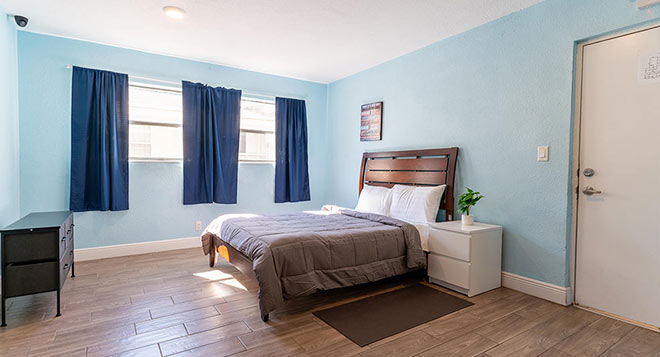
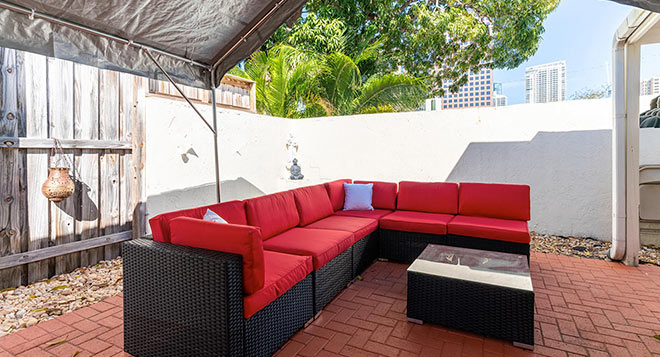
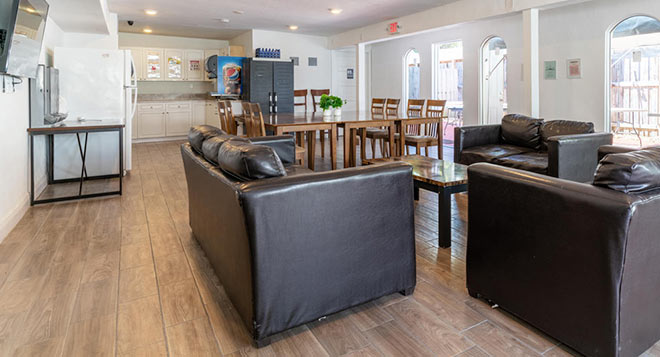
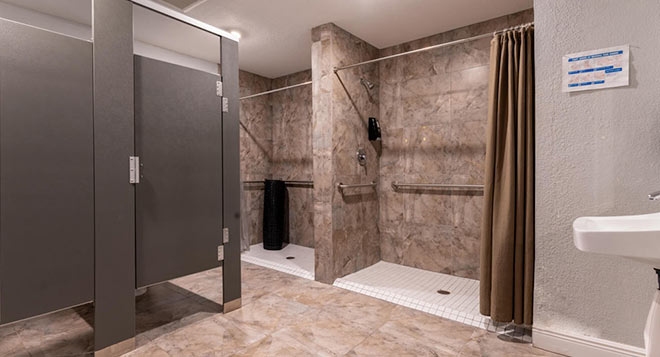
Inside Still Mind
Tour our Fort Lauderdale facility
A 30-bed residential community with shared rooms, catered meals, and green space, where interpersonal skills get practiced on real people.
Coverage Varies by Plan
Does insurance cover treatment for borderline personality disorder?
Many plans include residential mental health benefits that cover borderline personality disorder treatment. Still Mind's admissions team verifies your specific coverage at no cost before admission, with no obligation. Still Mind also holds an active Tricare contract.
Often Seen Alongside
What conditions occur with borderline personality disorder?
Borderline personality disorder rarely appears alone. It most often co-occurs with depression, anxiety disorders, post-traumatic stress disorder, and substance use disorders. These are the conditions Still Mind most frequently treats alongside borderline personality disorder in Fort Lauderdale.
Anxiety DisorderChronic anxiety tracks the abandonment fear at the center of BPD
DepressionDepressive episodes deepen the chronic emptiness BPD produces
Bipolar DisorderThe condition most often confused with BPD, separated by episode duration
Post-Traumatic Stress DisorderChildhood trauma is the strongest environmental contributor to BPD
Narcissistic Personality DisorderAnother Cluster B personality disorder, sometimes diagnosed with BPD
Psychotic BreakFor the transient paranoid ideation and dissociation BPD can produce under stress
Common Questions
Borderline personality disorder treatment FAQ
What is borderline personality disorder?
Borderline personality disorder is a personality disorder defined by pervasive instability in emotions, relationships, self-image, and impulse control. Mood shifts last hours to a few days and are usually triggered by interpersonal events. Diagnosis requires 5 of 9 DSM-5 criteria.
What is the difference between borderline personality disorder and bipolar disorder?
Borderline personality disorder produces mood shifts that last hours to a few days and follow interpersonal triggers. Bipolar disorder produces discrete episodes that last days to weeks. BPD responds to DBT skills training; bipolar disorder responds to mood-stabilizing medication.
What is quiet BPD?
Quiet BPD is a presentation of borderline personality disorder in which symptoms turn inward instead of outward. Anger becomes self-directed, splitting happens silently, and distress stays masked. It is not a separate DSM-5 diagnosis, and it carries the same self-harm risk.
What is splitting in BPD?
Splitting is all-or-nothing thinking about people and situations. A person with borderline personality disorder moves from idealizing someone to devaluing them, sometimes inside a single conversation. DBT interpersonal effectiveness and distress tolerance skills target splitting directly.
What causes borderline personality disorder?
Borderline personality disorder has three main contributors: genetics, brain function, and childhood environment. Childhood trauma, neglect, and invalidating environments are the strongest environmental contributors. Emotional sensitivity is heritable. Substance use frequently accompanies the emotional crises.
How is borderline personality disorder treated at Still Mind?
Still Mind treats borderline personality disorder with dialectical behavior therapy as the anchor: formal DBT skills training, 7-day psychiatric coverage, and physician-initiated 1:1 safety monitoring. Most clients are admitted at LOCUS Level 5 acuity, and the average length of stay is about 42 days.
Is borderline personality disorder curable?
Borderline personality disorder remits more often than any other personality disorder. Symptoms respond to DBT skills, and most people no longer meet diagnostic criteria after sustained treatment. Recovery is measured in stable relationships and reduced self-harm, not in a single cure.
Is there borderline personality disorder treatment in Fort Lauderdale, FL?
Yes. Still Mind provides residential borderline personality disorder treatment in Fort Lauderdale, Florida, at 208 SE 8th St. The program serves adults 18+ from Broward County, across Florida, and out of state, with formal DBT and 7-day psychiatric coverage.
Does insurance cover residential treatment for borderline personality disorder?
Many plans include residential mental health benefits that cover borderline personality disorder treatment. Still Mind's admissions team verifies your specific coverage at no cost before admission, with no obligation. Still Mind also holds an active Tricare contract. Call (561) 782-1672 or use the verification form above.