



Psychosis vs schizophrenia are not the same thing.
Psychosis is a symptom state characterized by a break from reality, while schizophrenia is a specific DSM-5-TR neurodevelopmental disorder that causes psychosis as one of its core features.
This distinction shapes diagnosis, prognosis, and treatment in profound ways. Many conditions: including bipolar disorder, severe major depressive disorder, substance use, and medical illnesses: produce psychotic episodes without meeting the criteria for schizophrenia, making accurate differential diagnosis essential for appropriate care.
Key Takeaways
- Psychosis is a symptom cluster: not a diagnosis: characterized by hallucinations, delusions, and disorganized thinking that can arise from dozens of medical, psychiatric, and substance-related causes.
- Schizophrenia is a DSM-5-TR diagnosis requiring two or more criterion A symptoms for at least one month, with continuous signs of the disorder persisting for six months, including periods of prodromal or residual symptoms.
- The National Institute of Mental Health reports the lifetime prevalence of schizophrenia at approximately 0.25–0.64%, making it far less common than the broader population of individuals who experience at least one psychotic episode across their lifetime.
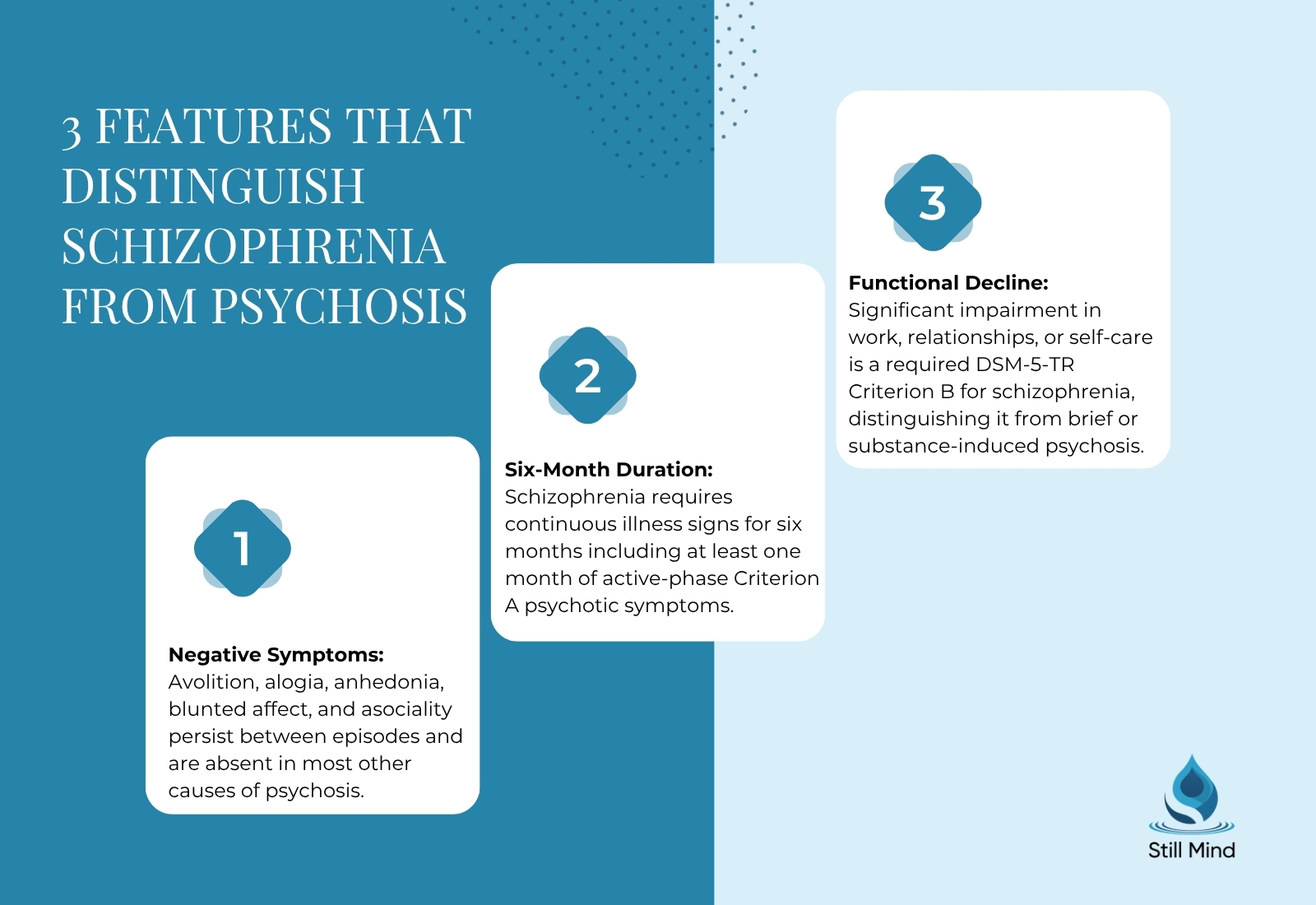
- Negative symptoms: blunted affect, avolition, alogia, anhedonia, and asociality: are the defining clinical feature that separates schizophrenia from most other causes of psychosis and drive the majority of long-term functional impairment.
- Approximately 20–30% of individuals who experience a first episode of psychosis will not experience a second episode; for schizophrenia, the course is typically chronic with episodic positive symptom exacerbations over a lifetime without sustained treatment.
What Are Psychosis and Schizophrenia?
Understanding what separates these two terms requires clarity about the difference between a symptom state and a psychiatric diagnosis.
Defining Psychosis: A Symptom State, Not a Diagnosis
Psychosis describes a set of symptoms in which an individual loses contact with shared reality through perceptual disturbances, false beliefs, or disordered thinking: without specifying a cause or a diagnostic category.
Core psychotic symptoms:
- Hallucinations: Sensory perceptions occurring without external stimulus: most commonly auditory (hearing voices) in psychiatric psychosis, but also visual, olfactory, tactile, and gustatory modalities; hallucinations are experienced as real by the person having them.
- Delusions: Fixed, false beliefs that are held with conviction despite evidence to the contrary and that fall outside the person’s cultural or religious context; common types include persecutory (being followed or poisoned), grandiose, referential (events referring specifically to oneself), and erotomanic.
- Disorganized thinking: Fragmented, tangential, or incoherent thought patterns that disrupt communication: formally assessed through speech as loose associations, thought blocking, neologisms, and word salad.
- Grossly disorganized or catatonic behavior: Behavior that is severely disorganized, unpredictable, or frozen: ranging from agitation and inappropriate affect to catatonic behavior including mutism, posturing, and waxy flexibility.
Defining Schizophrenia: A Chronic Neurodevelopmental Disorder
Schizophrenia is a specific psychiatric disorder classified under the DSM-5-TR schizophrenia spectrum and other psychotic disorders section, defined by duration, functional impairment, and the presence of negative symptoms alongside psychotic features.
DSM-5-TR diagnostic criteria for schizophrenia:
- Criterion A: Two or more of the following for a significant portion of time during a one-month period (or less if treated): delusions, hallucinations, disorganized speech, grossly disorganized or catatonic behavior, or negative symptoms; at least one must be item 1 (delusions), 2 (hallucinations), or 3 (disorganized speech).
- Criterion B: Significant functional decline from prior levels in work, interpersonal relations, or self-care since onset.
- Criterion C: Continuous signs of the disturbance for at least six months, including at least one month of Criterion A symptoms.
- Criterion D: Schizoaffective disorder, depressive disorder with psychotic features, and bipolar disorder with psychotic features have been ruled out.
- Criterion E: The disturbance is not attributable to substance use, medication, or another medical condition.
The Critical Relationship Between the Two
Schizophrenia always involves psychosis: but psychosis does not always indicate schizophrenia.
Conditions that cause psychosis without schizophrenia:
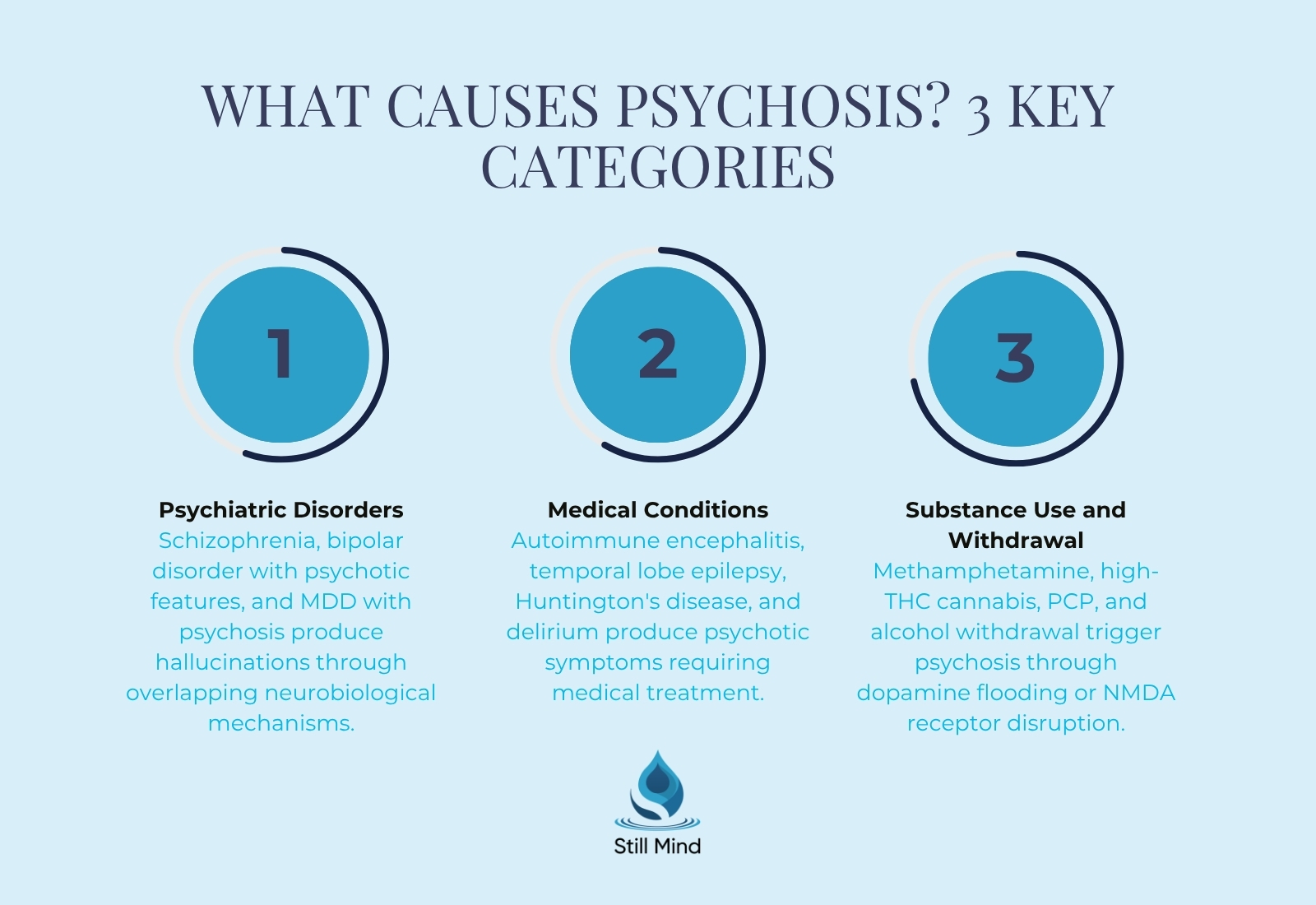
- Bipolar disorder with psychotic features: Psychotic symptoms emerge during severe manic or depressive episodes and resolve with mood stabilization; the bipolar disorder diagnosis takes precedence when mood episodes clearly precede or surround psychotic symptoms.
- Major depressive disorder with psychotic features: Severe depressive episodes produce mood-congruent delusions (worthlessness, guilt, somatic complaints) and hallucinations that remit with antidepressant and antipsychotic treatment.
- Brief psychotic disorder: A DSM-5-TR diagnosis requiring psychotic symptoms lasting at least one day but less than one month, with return to full premorbid functioning: by definition, this cannot meet the six-month duration criterion for schizophrenia.
- Schizophreniform disorder: Symptoms meeting schizophrenia Criterion A lasting between one and six months; if symptoms persist beyond six months, the diagnosis is updated to schizophrenia.
- Substance-induced psychotic disorder: Cannabis-induced psychosis, methamphetamine psychosis, and alcohol-related psychosis resolve when the substance is cleared, though cannabis-induced psychosis carries a significant risk of conversion to schizophrenia in genetically vulnerable individuals.
- Medical conditions: Delirium, autoimmune encephalitis (anti-NMDA receptor encephalitis), Huntington’s disease, Wilson’s disease, and temporal lobe epilepsy all produce psychotic symptoms requiring medical rather than psychiatric treatment.
What Causes Psychosis Versus What Causes Schizophrenia?
The causes of psychosis vary by underlying condition, while schizophrenia has a more specific and well-characterized neurobiological and genetic etiology.
Causes of Psychosis Across Multiple Conditions
Psychosis triggers by category:
- Neurobiological disruption: Any process that disrupts dopaminergic signaling in the mesolimbic pathway: including substance intoxication, severe sleep deprivation, metabolic encephalopathy, and autoimmune inflammation: can produce psychotic symptoms by mimicking the dopamine hyperactivity associated with positive psychotic symptoms.
- Mood disorder severity: Bipolar I disorder produces psychotic mania when mood dysregulation reaches sufficient neurobiological intensity to disrupt reality testing through limbic-prefrontal circuit disruption; these are mood-congruent psychotic features that differ phenomenologically from schizophrenia-spectrum psychosis.
- Trauma and stress: Severe psychological trauma, including PTSD, can produce dissociative episodes with pseudohallucinations and paranoid ideation that resemble but differ mechanistically from primary psychotic disorders.
- Substance pharmacology: Dopamine agonists (amphetamines, cocaine), glutamate antagonists (ketamine, PCP), and high-THC cannabis all produce psychosis through distinct receptor mechanisms; methamphetamine psychosis directly simulates schizophrenia’s positive symptom profile through massive dopamine release in the mesolimbic pathway.
Neurobiological Causes of Schizophrenia
Eugen Bleuler, the Swiss psychiatrist who coined the term “schizophrenia” in 1911 (replacing Emil Kraepelin’s earlier designation “dementia praecox”), described the disorder’s core as a fragmentation of psychic functions: a conceptualization that anticipated modern understanding of its distributed neural network pathology.
Primary neurobiological mechanisms:
- Mesolimbic dopamine hyperactivity: Excessive dopamine D2 receptor activation in the mesolimbic pathway (ventral tegmental area to nucleus accumbens) generates positive symptoms: delusions, hallucinations, and disorganized thinking; this pathway is the primary target of all antipsychotic medications.
- Mesocortical dopamine hypoactivity: Reduced dopamine signaling in the mesocortical pathway (ventral tegmental area to prefrontal cortex) produces negative symptoms and cognitive deficits: blunted affect, avolition, and working memory impairment: explaining why D2 antagonists effectively treat positive symptoms but minimally address negative symptoms and cognition.
- NMDA receptor hypofunction: Glutamate system disruption through N-methyl-D-aspartate (NMDA) receptor hypofunction produces both positive and negative symptoms, and explains why phencyclidine (PCP): an NMDA antagonist: produces a schizophrenia-like syndrome more completely than dopamine agonists alone.
- Neuroanatomical changes: Reduced gray matter volume in the dorsolateral prefrontal cortex, superior temporal gyrus, and hippocampus; enlarged lateral ventricles; and dysconnectivity between the prefrontal cortex and limbic structures characterize schizophrenia’s structural brain pathology on neuroimaging.
Genetic and Environmental Factors in Schizophrenia
Etiology of schizophrenia:
- Genetic heritability: Schizophrenia heritability is estimated at 60–80% based on twin and family studies; the genetic architecture of schizophrenia involves hundreds of common variants of small effect plus rare copy number variants (CNVs) such as 22q11.2 deletion syndrome, which carries a 25–30% lifetime risk of psychosis.
- Neurodevelopmental disruption: Second-trimester prenatal maternal infection (influenza, rubella, toxoplasmosis), malnutrition, and obstetric complications increase schizophrenia risk by disrupting fetal neural migration and cortical organization during sensitive periods.
- Cannabis and urban environment: Regular cannabis use during adolescence doubles the risk of schizophrenia in genetically vulnerable individuals; urban birth and childhood, migration, and childhood adversity independently elevate risk through stress-sensitization of dopamine systems.
How Duration and Course Distinguish Psychosis from Schizophrenia
Duration is the single most operationally important differentiator between transient psychosis and schizophrenia in clinical diagnosis.
The Six-Month Threshold That Separates Schizophrenia
Duration criteria across psychotic spectrum disorders:
- Brief psychotic disorder: 1 day to <1 month of psychotic symptoms, with full recovery; often triggered by extreme stress.
- Schizophreniform disorder: 1–6 months of schizophrenia-like symptoms; approximately one-third of cases progress to schizophrenia after six months.
- Schizophrenia: >6 months of continuous illness signs, including at least one month of active-phase psychotic symptoms; the diagnosis is often confirmed retrospectively after the six-month mark is reached.
- Schizoaffective disorder: An uninterrupted period of illness with both mood episodes (manic or depressive) and psychotic symptoms that exceed the duration of mood episodes; schizoaffective disorder sits on the diagnostic boundary between schizophrenia and mood disorders with psychotic features.
The Prodromal Phase: When Psychosis Is Approaching
Schizophrenia is often preceded by a prodromal phase: sometimes lasting months to years: in which subthreshold psychotic symptoms and functional decline appear before the first frank psychotic episode.
Prodromal warning signs:
- Attenuated psychotic symptoms: Unusual perceptual experiences (hearing muffled voices, seeing shadows), odd beliefs that the person partially recognizes as strange, and referential thinking that does not yet meet the threshold for a delusion.
- Cognitive changes: Deteriorating attention, working memory difficulties, and slowed processing speed that exceed normal variation and disrupt academic or occupational functioning.
- Social withdrawal and declining self-care: Withdrawal from previously valued relationships, abandonment of hobbies, and deteriorating hygiene: overlapping with negative symptoms but occurring before active psychosis is established. The five stages of psychosis describe this progression in clinical detail.
Psychosis vs. Schizophrenia Symptoms: What Looks the Same and What Differs
Both conditions share positive psychotic symptoms in their acute phases, but the presence of negative symptoms and cognitive deficits during non-psychotic periods distinguishes schizophrenia from most other causes of psychosis.
Shared Positive Symptoms: What Both Look Like From the Outside
Positive symptoms common to both:
- Auditory hallucinations: In schizophrenia, Schneiderian first-rank symptoms: voices commenting on the person’s actions, multiple voices speaking to each other, and thought withdrawal or insertion: carry particular diagnostic weight; these differ from the voices that may accompany severe depression, which are typically critical or nihilistic in content.
- Persecutory delusions: The fixed belief of being monitored, plotted against, or harmed appears across schizophrenia, substance-induced psychosis, and delusional disorder; differentiation requires duration assessment and evidence of functional decline.
- Disorganized speech and behavior: Loosening of associations (derailment), tangential thinking, and poverty of speech appear in acute psychotic episodes regardless of etiology.
Negative Symptoms: The Defining Feature of Schizophrenia
Negative symptoms represent a diminution or absence of normally present functions and are the primary driver of long-term disability in schizophrenia: they respond poorly to dopamine D2 antagonist antipsychotics and are absent or minimal in most other causes of psychosis.
The five primary negative symptoms (DSM-5-TR):
- Blunted affect: Reduced emotional expression in facial expression, voice tone, and eye contact: the person appears emotionally flat even when experiencing internal distress.
- Alogia: Poverty of speech: brief, empty replies and reduced verbal output that reflects impoverished thought generation rather than unwillingness to communicate.
- Avolition: Severe reduction in goal-directed activity: the inability to initiate and persist in self-care, work, or social activities; differs from depression in that the person is not distressed about their lack of motivation in the same way.
- Anhedonia: Diminished pleasure from previously enjoyed activities; in schizophrenia, this often reflects impaired anticipatory pleasure (difficulty imagining future enjoyment) rather than consummatory pleasure loss.
- Asociality: Decreased interest in social relationships and activities, often indistinguishable from social isolation unless the full clinical picture is considered.
How Clinicians Distinguish Psychosis from Schizophrenia: Assessment Tools
The PANSS (Positive and Negative Syndrome Scale), developed by Kay, Fiszbein, and Opler in 1987, provides a validated 30-item structured rating of positive symptoms (7 items), negative symptoms (7 items), and general psychopathology (16 items) used to measure severity and treatment response in schizophrenia spectrum disorders.
| Feature | Psychosis (General) | Schizophrenia Specifically |
|---|---|---|
| Duration | Can be hours, days, or weeks | Minimum 6 months continuous signs |
| Positive symptoms | Present during active episode | Present (required for diagnosis) |
| Negative symptoms | Rare or absent in non-schizophrenia psychosis | Core diagnostic feature; persists between episodes |
| Cognitive deficits | Mild or absent outside acute phase | Persistent; affects working memory, processing speed, executive function |
| Functional decline | Varies by cause; often reverses | Required criterion; often does not return to premorbid baseline |
| Cause | Multiple (medical, substance, mood, stress) | Specific neurodevelopmental disorder |
| Assessment scale | BPRS (Brief Psychiatric Rating Scale) | PANSS (Positive and Negative Syndrome Scale) |
| Prognosis | Often good; depends on etiology | Typically chronic; variable with sustained treatment |
Treatment for Psychosis and Schizophrenia
Treatment approaches diverge based on whether psychosis is acute and cause-specific or part of the chronic schizophrenia disease process requiring long-term maintenance.
Acute Psychosis Treatment
Acute phase management:
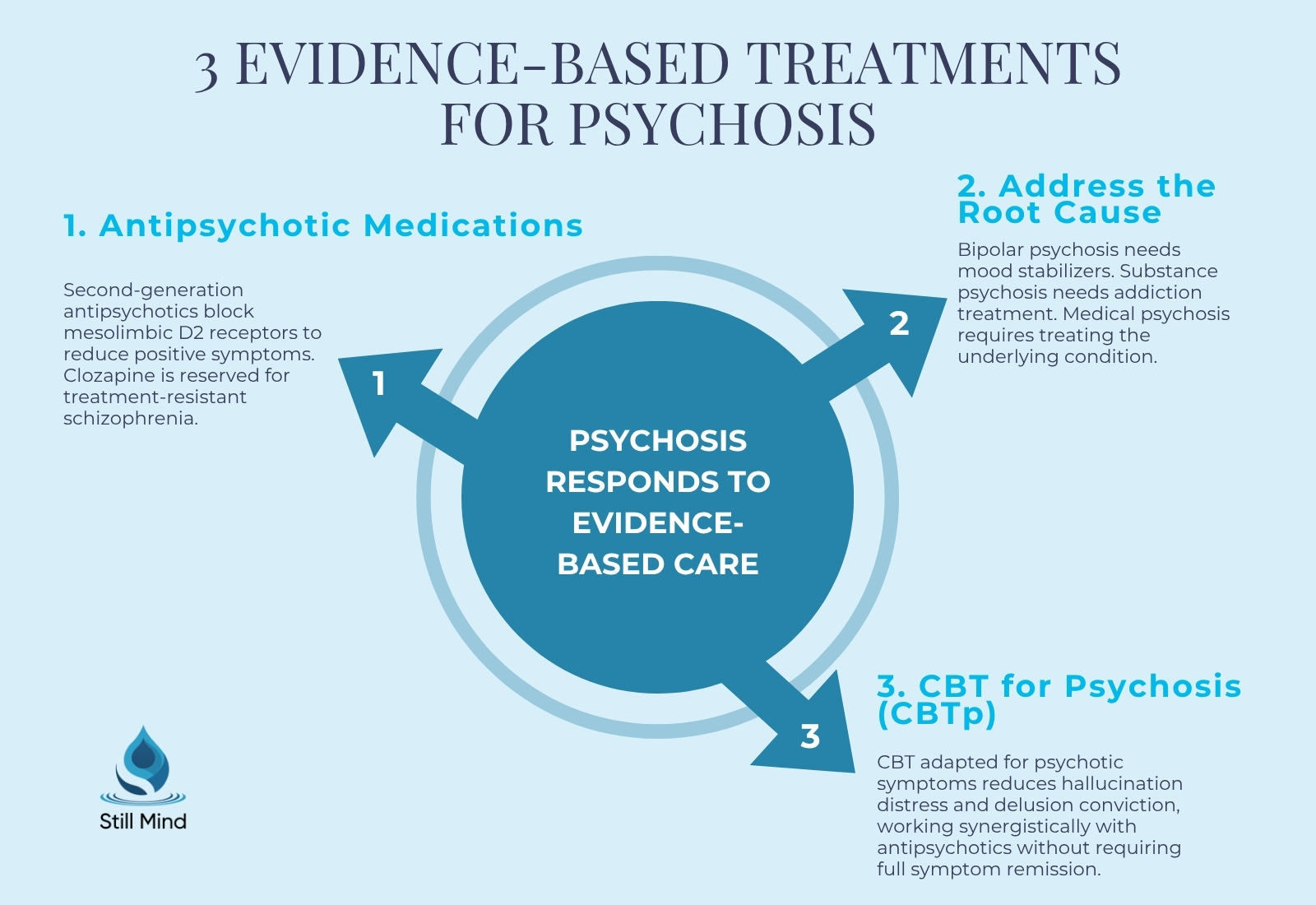
- Antipsychotic medications: Second-generation (atypical) antipsychotics: risperidone, olanzapine, quetiapine, ziprasidone, and aripiprazole: are first-line for acute psychosis regardless of etiology, producing D2 receptor blockade in the mesolimbic pathway to suppress positive symptoms.
- First-generation antipsychotics: Haloperidol and chlorpromazine remain indicated for acute agitation management but carry higher extrapyramidal side effect risk (dystonia, tardive dyskinesia) that limits long-term use.
- Addressing the underlying cause: Substance-induced psychosis requires addiction-focused treatment; medical psychosis requires treatment of the underlying condition; psychotic breaks in bipolar disorder respond to mood stabilization with lithium or anticonvulsants alongside antipsychotics.
Schizophrenia: Long-Term Treatment Approach
Maintenance treatment for schizophrenia:
- Antipsychotic maintenance: Sustained antipsychotic treatment reduces relapse risk by approximately 64% compared to discontinuation; clozapine, the most efficacious antipsychotic available, is reserved for treatment-resistant schizophrenia (failure of two adequate antipsychotic trials) due to its risk of agranulocytosis requiring blood count monitoring.
- Long-acting injectable antipsychotics (LAIs): Depot formulations of risperidone, paliperidone, aripiprazole, and olanzapine eliminate the adherence problems that drive the majority of schizophrenia relapses, providing consistent plasma levels without reliance on daily oral dosing.
- Psychosocial rehabilitation: Social skills training, supported employment, and assertive community treatment (ACT): a multidisciplinary team-based approach delivering services in community settings: address the functional deficits that antipsychotics alone cannot resolve.
Emerging and Investigational Treatments
Novel therapeutic approaches:
- KarXT (xanomeline-trospium): The first antipsychotic with a non-dopaminergic mechanism to receive FDA approval (2024), targeting muscarinic M1/M4 receptors in the brain; this represents the first genuinely new mechanistic approach to psychosis treatment in seven decades.
- Cognitive remediation therapy: Structured neurocognitive training programs targeting working memory, attention, and processing speed improve functional outcomes in schizophrenia independent of positive symptom reduction.
- Transcranial magnetic stimulation (TMS): Theta-burst TMS targeting the left temporoparietal junction is under active investigation for reducing auditory hallucinations in treatment-resistant cases.
Treatment for Psychosis and Schizophrenia at Still Mind
Still Mind provides structured residential mental health treatment for individuals experiencing psychosis spectrum disorders, including schizophrenia, schizoaffective disorder, and first-episode psychosis requiring intensive stabilization.
Residential Mental Health Treatment
Residential care for psychosis:
- Acute stabilization: Residential treatment provides the structured, supervised environment necessary for safe antipsychotic initiation, medication optimization, and symptom monitoring during the most vulnerable phase of psychotic illness.
- Medication management: Psychiatric evaluation and antipsychotic selection are individualized based on symptom profile, prior medication history, side effect tolerance, and metabolic risk factors. [CLIENT INPUT NEEDED: Specific psychiatric staffing model and medication management protocols at Still Mind.]
- 24-hour clinical observation: Residential structure allows continuous monitoring of response to antipsychotic treatment, early identification of adverse effects, and adjustment of the treatment plan as the clinical picture evolves.
Cognitive Behavioral Therapy for Psychosis
CBT for psychosis (CBTp) at Still Mind:
- Evidence base: Cognitive behavioral therapy adapted for psychosis (CBTp) produces significant reductions in positive symptom severity: particularly delusion conviction and hallucination distress: according to multiple meta-analyses, working synergistically with antipsychotic pharmacotherapy.
- Mechanism: CBTp helps patients develop alternative, less threatening explanations for anomalous perceptions, reducing the distress and behavioral consequences of hallucinations without requiring full symptom remission.
- Social cognition training: Interventions targeting theory of mind, facial emotion recognition, and attributional bias address the social cognitive deficits that impair interpersonal functioning in schizophrenia independently of positive symptom severity. [CLIENT INPUT NEEDED: Specific CBTp delivery format, session frequency, and therapist credentialing at Still Mind.]
Dual Diagnosis Care for Co-Occurring Substance Use
Integrated dual diagnosis treatment:
- Cannabis and psychosis: Cannabis use disorder co-occurs in approximately 27% of individuals with schizophrenia; ongoing cannabis use after a first psychotic episode significantly increases relapse risk and reduces antipsychotic response, making dual diagnosis treatment that addresses both substance use and psychosis concurrently essential for recovery.
- Methamphetamine-induced psychosis: Extended methamphetamine psychosis that does not resolve with sobriety requires evaluation for schizophrenia conversion, with integrated addiction and psychiatric treatment provided simultaneously rather than sequentially.
- Motivational interviewing: MI-based approaches reduce substance use in schizophrenia spectrum disorders by addressing ambivalence about change without confrontation: particularly important given that insight into illness is often impaired and adversarial approaches drive treatment disengagement. Contact Still Mind’s admissions team to discuss assessment and placement for psychosis spectrum conditions.
Frequently Asked Questions
How is psychosis different from schizophrenia?
Psychosis is a symptom state: a break from reality involving hallucinations, delusions, or disorganized thinking: that can result from dozens of different causes. Schizophrenia is one specific psychiatric disorder that always involves psychosis but is distinguished by its chronic six-month duration requirement, mandatory functional decline, and the presence of negative symptoms that persist even when active psychosis remits.
What does permanent psychosis look like?
Persistent psychosis: most commonly seen in treatment-resistant schizophrenia: involves ongoing auditory hallucinations and delusions that remain despite adequate antipsychotic trials. Behaviorally, it produces social isolation, reduced self-care, and continuous functional impairment. Many individuals experience partial symptom suppression with medication but not full remission; clozapine produces the best outcomes for this presentation, with approximately 30–60% of treatment-resistant patients responding to it when other antipsychotics have failed.
What are the warning signs of psychosis?
Early warning signs include social withdrawal, declining academic or work performance, suspiciousness or paranoid thinking, unusual perceptual experiences (muffled voices, visual distortions), difficulty concentrating, and reduced self-care: collectively called the prodrome. These signs can precede full psychosis by months to years and represent the highest-yield window for early intervention, which produces significantly better long-term outcomes than treatment initiated after the first frank psychotic break.
Does psychosis go away permanently?
For many causes of psychosis, complete resolution is possible. Brief psychotic disorder, substance-induced psychosis, and mood disorder psychosis typically resolve fully with appropriate treatment of the underlying condition. For schizophrenia, complete and permanent remission of all psychotic symptoms is uncommon; approximately 20–30% of patients achieve sustained remission, while most experience episodic positive symptom exacerbations managed with maintenance antipsychotic treatment.
Can psychosis lead to schizophrenia?
A first episode of psychosis carries a 16–20% risk of converting to a schizophrenia diagnosis within 2 years, based on longitudinal follow-up studies. Risk factors for conversion include longer duration of untreated psychosis before treatment, younger age at first episode, cannabis use, prodromal negative symptoms before the first episode, and family history of schizophrenia spectrum disorders. Early intervention programs targeting first-episode psychosis significantly reduce conversion risk and improve long-term outcomes.
Is schizophrenia vs psychosis: which is worse?
Schizophrenia typically carries a more serious long-term prognosis than most other causes of psychosis because of its chronic course, persistent negative symptoms, and cognitive deficits that impair functioning even during periods of reduced positive symptom activity. Other causes of psychosis: particularly brief psychotic disorder and mood disorder psychosis: often resolve fully with treatment. However, the severity of any individual’s experience depends more on treatment access, early intervention, and social support than on the specific diagnosis alone.
How is schizophrenia diagnosed?
Schizophrenia is diagnosed clinically through structured psychiatric interview, with no laboratory test or neuroimaging study confirming the diagnosis directly. The PANSS (Positive and Negative Syndrome Scale) and BPRS (Brief Psychiatric Rating Scale) quantify symptom severity, while medical workup: blood tests, neuroimaging, and EEG: rules out organic causes of psychosis before a schizophrenia diagnosis is established. DSM-5-TR criteria require the full six-month duration and functional decline, so the diagnosis is often made retrospectively after the illness duration threshold is reached.
Can bipolar disorder cause psychosis?
Bipolar I disorder produces psychotic features: most commonly grandiose or persecutory delusions and auditory hallucinations: in approximately 50–70% of patients during severe manic episodes. Depressive psychosis in bipolar disorder features mood-congruent delusions of guilt, worthlessness, or nihilism. These psychotic features resolve as mood episodes are treated; the core distinction from schizophrenia is that psychosis in bipolar disorder is temporally bound to mood episodes rather than occurring independently of mood state.
References
- National Institute of Mental Health. (2024). Schizophrenia. https://www.nimh.nih.gov/health/topics/schizophrenia
- American Psychiatric Association. (2022). Diagnostic and statistical manual of mental disorders (DSM-5-TR). American Psychiatric Publishing.
- Kay, S. R., Fiszbein, A., & Opler, L. A. (1987). The Positive and Negative Syndrome Scale (PANSS) for schizophrenia. Schizophrenia Bulletin, 13(2), 261–276.
- Leucht, S., Tardy, M., Komossa, K., Heres, S., Kissling, W., Salanti, G., & Davis, J. M. (2012). Antipsychotic drugs versus placebo for relapse prevention in schizophrenia: A systematic review and meta-analysis. The Lancet, 379(9831), 2063–2071.
- Bleuler, E. (1911). Dementia praecox or the group of schizophrenias (J. Zinkin, Trans.). International Universities Press. (Original work published 1911)
- Substance Abuse and Mental Health Services Administration. (2024). First-episode psychosis and co-occurring substance use disorders: Integrated treatment approaches. https://www.samhsa.gov
- Murray, R. M., Quattrone, D., Natesan, S., van Os, J., Nordentoft, M., Bhattacharyya, S., Freeman, D., & McGuire, P. (2016). Should psychiatrists be more cautious about the long-term prophylactic use of antipsychotics? British Journal of Psychiatry, 209(5), 361–365.
- Centers for Disease Control and Prevention. (2023). Mental health data and statistics. https://www.cdc.gov/mentalhealth/data_publications