


Cluster A personality disorders are a group of three DSM-5-TR conditions united by a pattern of odd, eccentric, or withdrawn thinking and behavior. They are paranoid personality disorder, schizoid personality disorder, and schizotypal personality disorder.
People with Cluster A disorders often appear socially detached, deeply distrustful, or unusually eccentric to others. Most do not recognize their own behavior as unusual. That disconnect is part of what makes these conditions difficult to identify and treat.
Highlights
- More than 9% of U.S. adults meet criteria for at least one personality disorder, according to the National Institute of Mental Health.
- A systematic review found approximately 3.8% of the global population lives with a Cluster A personality disorder, making it the most prevalent personality disorder cluster worldwide (Winsper et al., 2020).
- All three Cluster A disorders are linked to the schizophrenia spectrum through shared genetic, neurobiological, and symptom features.
- Personality disorders are ego-syntonic in many cases, meaning individuals often do not experience their own behavior as problematic, which delays diagnosis and treatment.
- Psychotherapy, particularly cognitive behavioral therapy, is the primary evidence-based treatment for all three Cluster A conditions.
What Are the Three Personality Disorder Clusters?
The DSM-5-TR organizes all 10 recognized personality disorders into three clusters based on shared features. Understanding where Cluster A sits within this framework is essential context for diagnosis and treatment planning.
| Cluster | Label | Personality Disorders | Core Feature |
|---|---|---|---|
| Cluster A | Odd / Eccentric | Paranoid, Schizoid, Schizotypal | Distorted thinking, social detachment, mistrust |
| Cluster B | Dramatic / Erratic | Antisocial, Borderline, Histrionic, Narcissistic | Emotional dysregulation, impulsivity, dramatic behavior |
| Cluster C | Anxious / Fearful | Avoidant, Dependent, Obsessive-Compulsive | Pervasive anxiety, fear of rejection or loss of control |
Cluster A disorders share proximity to the schizophrenia spectrum. They do not involve a break from reality the way schizophrenia does, but they share genetic overlaps and similar neurobiological underpinnings. People can also present with traits that span multiple clusters, which is why comprehensive clinical evaluation is essential.
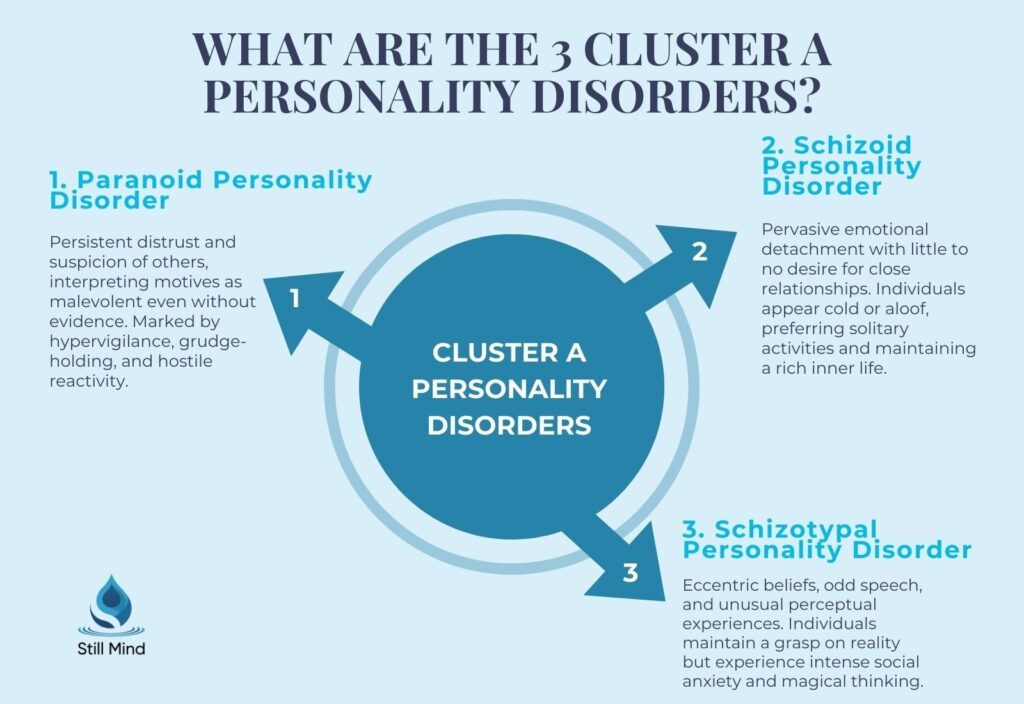
Paranoid Personality Disorder (PPD)
Paranoid personality disorder is characterized by a pervasive and enduring pattern of distrust and suspicion toward others. People with PPD interpret the motives of others as malicious, threatening, or deceptive without sufficient evidence. This is not occasional wariness. It is a consistent, inflexible pattern that began in early adulthood and persists across most areas of life.
DSM-5-TR Diagnostic Criteria for PPD
A diagnosis of paranoid personality disorder requires four or more of the following, beginning by early adulthood and present in multiple contexts:
- Suspects, without sufficient basis, that others are exploiting, harming, or deceiving them
- Is preoccupied with unjustified doubts about the loyalty or trustworthiness of friends or associates
- Is reluctant to confide in others due to fear that information will be used against them
- Reads demeaning or threatening meanings into benign remarks or events
- Persistently bears grudges and is unforgiving of perceived insults or slights
- Perceives attacks on their character or reputation that others do not see and reacts quickly with anger or counter-attack
- Suspects recurrent, unjustified infidelity in romantic or sexual partners
These symptoms must not occur exclusively during the course of schizophrenia, bipolar disorder, depressive disorder with psychotic features, or another psychotic disorder, and must not be attributable to a medical condition.
Key Features and Presentation
People with PPD are often described as guarded, hostile, and litigious. They may appear outwardly engaged while maintaining deep internal suspicion. Pathological jealousy is common. They may gravitate toward like-minded groups and develop rigid ideological beliefs.
Unlike delusional disorder, paranoid personality disorder does not involve fixed, fully formed delusions. The suspicion is pervasive and patterned rather than organized around a specific false belief.
Prevalence and Demographics
PPD is estimated to affect 2.3% to 4.4% of the general population. It is more common in men than women and is more prevalent in those with a family history of schizophrenia.
Schizoid Personality Disorder (ScPD)
Schizoid personality disorder is characterized by a persistent pattern of detachment from social relationships and a restricted range of emotional expression. People with ScPD are often genuine loners, not because they are anxious around others, but because they have little desire for connection.
This distinguishes schizoid personality disorder from avoidant personality disorder, where the person strongly desires connection but is held back by fear of rejection.
DSM-5-TR Diagnostic Criteria for ScPD
A diagnosis requires four or more of the following, present from early adulthood across multiple contexts:
- Neither desires nor enjoys close relationships, including family
- Almost always chooses solitary activities
- Has little, if any, interest in sexual experiences with another person
- Takes pleasure in few, if any, activities
- Lacks close friends or confidants other than first-degree relatives
- Appears indifferent to the praise or criticism of others
- Shows emotional coldness, detachment, or flat affect
These symptoms must not occur exclusively during schizophrenia, bipolar or depressive disorder with psychotic features, another psychotic disorder, or autism spectrum disorder.
Key Features and Presentation
People with ScPD are typically described as emotionally cold, aloof, or indifferent. They often function adequately in solitary work environments. They may maintain a rich inner fantasy life despite appearing completely withdrawn externally.
Research from NCBI identifies paranoid, schizotypal, and avoidant personality disorders as the most common comorbidities with schizoid personality disorder. There is also a documented association with elevated suicide risk, driven by the cumulative psychological pain of prolonged social isolation.
Prevalence and Demographics
Schizoid personality disorder is estimated to affect approximately 3.1% to 4.9% of the general population. It is more frequently diagnosed in men.
Schizotypal Personality Disorder (STPD)
Schizotypal personality disorder is the most well-researched of the three Cluster A conditions. It is characterized by acute discomfort in close relationships, cognitive and perceptual distortions, and eccentric behavior. It sits in the middle of the schizophrenia spectrum, more severe than schizoid personality disorder but distinct from schizophrenia itself.
People with STPD experience interpersonal discomfort with a sense of being fundamentally different or alien from others. Unlike schizoid personality disorder, where there is a lack of desire for connection, people with STPD often want connection but are impeded by anxiety, suspicion, and distorted thinking.
DSM-5-TR Diagnostic Criteria for STPD
A diagnosis requires five or more of the following, present from early adulthood across multiple contexts:
- Ideas of reference (excluding delusions of reference)
- Odd beliefs or magical thinking that influences behavior and is inconsistent with subcultural norms
- Unusual perceptual experiences, including bodily illusions
- Odd thinking and speech
- Suspiciousness or paranoid ideation
- Inappropriate or constricted affect
- Behavior or appearance that is odd, eccentric, or peculiar
- Lack of close friends or confidants other than first-degree relatives
- Excessive social anxiety that does not diminish with familiarity and tends to be associated with paranoid fears
These symptoms must not occur exclusively during schizophrenia, bipolar or depressive disorder with psychotic features, another psychotic disorder, or autism spectrum disorder.
Key Features and Presentation
People with STPD often have unusual beliefs, such as a conviction that their thoughts affect external events, that they can perceive others’ emotions, or that coincidences carry personal significance. Speech may be vague, tangential, or oddly abstract.
Schizophrenia develops in approximately 10% of people with schizotypal personality disorder over time, particularly those with prominent cognitive disorganization. Schizoaffective disorder also shares neurobiological features with STPD.
Prevalence and Demographics
STPD is estimated to affect approximately 3.9% of the general population. It is more common in biological relatives of people with schizophrenia, strongly supporting a genetic link.
Cluster A vs. Cluster B Personality Disorders
A common source of clinical confusion is distinguishing Cluster A from Cluster B presentations, particularly when patients have overlapping features or co-occurring conditions.
| Feature | Cluster A | Cluster B |
|---|---|---|
| Core quality | Odd, eccentric, withdrawn | Dramatic, emotional, erratic |
| Emotional pattern | Flat, restricted, or suspicious | Intense, volatile, or manipulative |
| Relationship pattern | Avoidant or mistrustful | Chaotic, intense, or exploitative |
| Insight into behavior | Often limited or absent | Variable; may rationalize behavior |
| Schizophrenia spectrum link | Yes, especially STPD | No direct link |
| Common comorbidities | Anxiety, depression, social isolation | Depression, substance use, self-harm |
| Examples | Paranoid, Schizoid, Schizotypal | Borderline, Narcissistic, Antisocial |
What Causes Cluster A Personality Disorders?
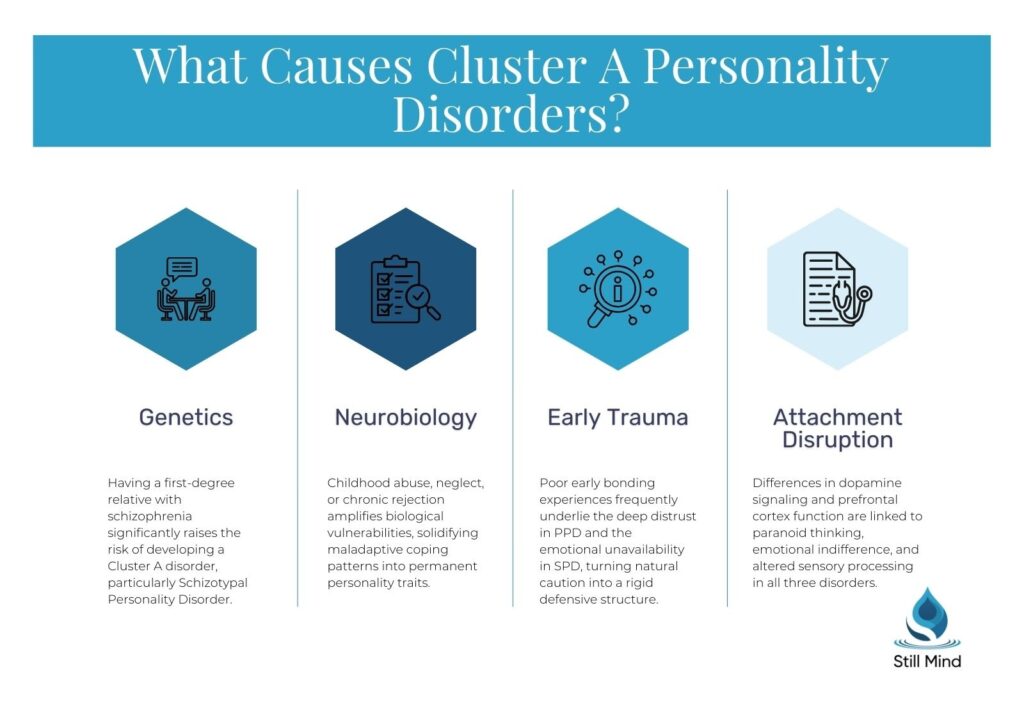
No single cause has been identified for any Cluster A disorder. Research points consistently to an interaction between genetic vulnerability and environmental experience.
Genetic and Biological Factors
All three Cluster A disorders have elevated prevalence among first-degree relatives of people with schizophrenia, confirming a genetic contribution. Neurobiological research has identified structural brain differences in Cluster A populations, including altered amygdala functioning in paranoid personality disorder and reduced frontal lobe volume in schizotypal personality disorder.
Dopamine dysregulation, which plays a central role in schizophrenia, is also implicated in Cluster A presentations, particularly schizotypal personality disorder.
Childhood Trauma and Environmental Factors
Early adverse experiences significantly increase risk. Research links emotional abuse and neglect in childhood to the development of paranoid and schizotypal traits. Physical abuse in childhood is associated with elevated schizoid personality disorder risk. Verbal abuse in childhood is associated with a threefold increase in the likelihood of developing paranoid, narcissistic, or obsessive-compulsive personality disorders.
Family dysfunction, parental substance use, social isolation in early development, and lack of secure attachment all contribute to the distorted relational patterns that define Cluster A disorders.
Temperament
Children who display early traits of unusual thinking, emotional flatness, or extreme sensitivity to social threat may be more vulnerable to developing Cluster A conditions when environmental stressors compound their baseline temperament.
How Are Cluster A Personality Disorders Diagnosed?
Diagnosis requires a comprehensive clinical evaluation conducted by a licensed mental health professional. There are no blood tests or brain imaging studies that confirm a personality disorder diagnosis.
The evaluation reviews the individual’s long-term behavioral history, interpersonal patterns, occupational functioning, and symptom presentation across multiple contexts and settings. To receive a personality disorder diagnosis, the patterns must be pervasive, inflexible, and present since at least early adulthood.
Clinicians must also rule out other conditions that can produce similar presentations, including autism spectrum disorder, schizophrenia, delusional disorder, social anxiety disorder, and mood disorders with psychotic features.
Cluster A disorders are also frequently missed because affected individuals are unlikely to seek help voluntarily. Many live in social isolation and have limited insight into how their behavior affects others.
Comorbidities Commonly Seen with Cluster A Disorders
Cluster A personality disorders rarely occur in isolation. Identifying and treating co-occurring conditions is essential for comprehensive care.
Common comorbidities include:
- Major depressive disorder – Social isolation, rejection, and occupational impairment elevate depression risk significantly across all three Cluster A disorders.
- Anxiety disorders – Social anxiety and generalized anxiety are frequently co-occurring, particularly in schizotypal and paranoid presentations.
- Substance use disorders – Alcohol and cannabis use are commonly documented comorbidities, often used as self-medication for social anxiety or emotional dysregulation.
- Other personality disorders – Co-occurrence across clusters is common. Schizoid and schizotypal disorders frequently co-occur with avoidant personality disorder (Cluster C).
- Schizophrenia spectrum disorders – A minority of individuals with schizotypal personality disorder progress to schizophrenia or schizoaffective disorder over time.
Treatment for Cluster A Personality Disorders
People with Cluster A disorders often resist treatment. Mistrust, preference for isolation, and poor insight are all barriers to engagement. When treatment is accessible and delivered within a trusting therapeutic relationship, outcomes are meaningful.
1. Cognitive Behavioral Therapy (CBT)
Cognitive behavioral therapy is the most widely used and evidence-supported treatment across all three Cluster A disorders. For paranoid personality disorder, CBT focuses on testing paranoid assumptions, reducing hypervigilance, and building distress tolerance. For schizotypal personality disorder, CBT targets reality testing, identifying magical thinking, and improving attention to social cues. For schizoid presentations, CBT can gently explore the costs of social avoidance and support incremental engagement.
2. Supportive Psychotherapy
Building a consistent, non-threatening therapeutic relationship is often the primary therapeutic mechanism with Cluster A clients. Supportive therapy prioritizes trust, empathic attunement, and gradual engagement over challenging existing beliefs. For individuals who are highly mistrustful, this is typically the necessary foundation before any structured technique can be effectively applied.
3. Social Skills Training
Social skills training is particularly effective for schizotypal personality disorder. It addresses practical communication deficits, nonverbal cue recognition, appropriate self-disclosure, and conversational engagement. Group formats can also provide low-stakes social practice, though highly paranoid individuals may not be appropriate for group therapy.
4. Dialectical Behavior Therapy (DBT)
Dialectical behavior therapy is used when Cluster A presentations involve significant emotional dysregulation, particularly when paranoid or schizotypal features produce interpersonal crises or impulsive behavior. DBT’s skills modules in distress tolerance and interpersonal effectiveness are directly applicable.
5. Medication
No medications are FDA-approved specifically for any Cluster A personality disorder. All pharmacological use is off-label and adjunctive to psychotherapy. Evidence is strongest for schizotypal personality disorder, where low-dose antipsychotics such as risperidone and olanzapine have demonstrated benefit for cognitive-perceptual symptoms including magical thinking, ideas of reference, and social anxiety. Antidepressants may address co-occurring depression or anxiety across all three disorders.
6. Residential Mental Health Treatment
For individuals whose Cluster A symptoms produce severe functional impairment, psychosis-adjacent episodes, or significant psychiatric comorbidity, residential mental health treatment provides structured, intensive care. A residential setting allows for comprehensive diagnostic evaluation, medication stabilization under close monitoring, and immersive therapeutic programming in a safe environment.
When to Seek Help
Many people with Cluster A personality disorders have spent years without a diagnosis or with an incorrect one. Consider seeking a professional evaluation if you or someone you know:
- Consistently mistrusts others without clear reason, even in close relationships
- Has no desire for social connection and functions primarily in isolation
- Holds unusual or magical beliefs that influence daily decisions
- Has experienced multiple failed relationships, jobs, or social situations with no clear external cause
- Has been told by multiple people that their thinking or behavior is unusual or difficult to understand
If you are concerned about yourself or someone you care about, our team at Still Mind Florida can help. We provide evidence-based residential mental health treatment in Fort Lauderdale for adults navigating complex personality and behavioral health conditions. Contact our admissions team to speak with a specialist.
Frequently Asked Questions
What are the 3 Cluster A personality disorders?
The three Cluster A personality disorders are paranoid personality disorder, schizoid personality disorder, and schizotypal personality disorder. All three are defined in the DSM-5-TR and share features of odd or eccentric thinking, social withdrawal or mistrust, and impaired interpersonal functioning. They are grouped together because of their proximity to the schizophrenia spectrum.
What is the difference between Cluster A and Cluster B personality disorders?
Cluster A disorders are characterized by odd, eccentric, and withdrawn behavior rooted in mistrust or social detachment. Cluster B disorders are characterized by dramatic, emotionally intense, and erratic behavior. Cluster A is linked to the schizophrenia spectrum; Cluster B is not. Borderline, narcissistic, antisocial, and histrionic disorders fall in Cluster B.
Which Cluster A disorder is most common?
Paranoid personality disorder has the highest estimated prevalence among the three, affecting approximately 2.3% to 4.4% of the general population. Overall, Cluster A as a group is estimated to affect approximately 3.8% of the global population across all three disorders combined.
Can Cluster A personality disorders be treated?
Yes. While treatment engagement can be challenging due to limited insight and mistrust of clinicians, effective interventions exist. Cognitive behavioral therapy is the primary evidence-based treatment. Low-dose antipsychotics can reduce cognitive-perceptual symptoms in schizotypal personality disorder. Early diagnosis and consistent therapeutic relationships improve long-term outcomes significantly.
Are Cluster A personality disorders related to schizophrenia?
Yes, but they are not the same condition. All three Cluster A disorders share genetic and neurobiological features with schizophrenia spectrum conditions. Schizotypal personality disorder is considered part of the schizophrenia spectrum. Approximately 10% of people with STPD develop schizophrenia over time. However, people with Cluster A disorders remain grounded in reality and do not typically experience the sustained psychosis that defines schizophrenia.
What causes Cluster A personality disorders?
No single cause is confirmed. Research points to genetic vulnerability, particularly in families with schizophrenia history, combined with early adverse experiences such as emotional abuse, neglect, or social isolation in childhood. Neurobiological factors including dopamine dysregulation and structural brain differences also contribute. The interaction between inherited predisposition and environmental stressors is the most supported explanation.
References
- American Psychiatric Association. (2022). Diagnostic and statistical manual of mental disorders (5th ed., text rev.). American Psychiatric Publishing.
- Cleveland Clinic. (2022). Schizotypal personality disorder. Cleveland Clinic.
- HelpGuide. (2025). Cluster A personality disorders: Symptoms, treatment, support. HelpGuide.
- Lee, R. (2017). Mistrustful and misunderstood: A review of paranoid personality disorder. Current Behavioral Neuroscience Reports, 4(2), 151-165.
- Levi-Belz, Y., Roe, D., Krivoy, A., and Rosenfeld, B. (2019). Beyond the mental pain: A case-control study on the contribution of schizoid personality disorder symptoms to medically serious suicide attempts. Comprehensive Psychiatry, 90, 1-7.
- National Institute of Mental Health. (2023). Personality disorders. U.S. Department of Health and Human Services.
- Rosell, D. R., Futterman, S. E., McMaster, A., and Siever, L. J. (2014). Schizotypal personality disorder: A current review. Current Psychiatry Reports, 16(7), 452.
- Winsper, C., Bilgin, A., Thompson, A., Marwaha, S., Chanen, A. M., Singh, S. P., Wang, A., and Furtado, V. (2020). The prevalence of personality disorders in the community: A global systematic review and meta-analysis. British Journal of Psychiatry, 216(2), 69-78.
- Yelland, G. W., Iverson, G. L., and Brooks, B. L. (2019). Cluster A personality disorders. In StatPearls. National Center for Biotechnology Information.