


Extreme mood swings are sudden, intense shifts in emotional state that go far beyond everyday highs and lows. One moment, you feel elated or energized. Next, you are overwhelmed by sadness, rage, or despair.
Most people experience some variation in mood. But when these emotional swings are severe, frequent, or interfere with your relationships and daily life, they may signal an underlying mental health condition that warrants professional evaluation.
Highlights
- An estimated 40 to 60% of individuals with depression, anxiety, or OCD report significant mood instability as part of their symptom experience (Mission Connection Healthcare, 2025).
- Bipolar disorder, one of the most well-known causes of extreme mood swings, affects approximately 4.4% of U.S. adults during their lifetime, according to the National Institute of Mental Health.
- Extreme mood swings are not a standalone diagnosis but a symptom that can point to over a dozen distinct mental and physical health conditions.
- Women are disproportionately affected by hormonally driven mood disorders such as PMDD and perimenopause-related mood instability.
- Without treatment, severe mood instability increases the risk of self-harm, damaged relationships, job loss, and substance use.
What Are Extreme Mood Swings?
A mood swing is a sudden or unexplained shift in emotional state. Extreme mood swings are defined by their intensity, speed, and impact on functioning. They move beyond normal fluctuations and can cycle from euphoria to despair within hours or days.
The term “mood instability” is used clinically to describe a pattern where emotions vary more than what is considered typical. Not all mood swings indicate a mood disorder. But persistent, disruptive swings that affect your ability to work, maintain relationships, or manage daily responsibilities are a reason to seek evaluation.
Normal Mood Changes vs. Extreme Mood Swings
| Feature | Normal Mood Changes | Extreme Mood Swings |
|---|---|---|
| Duration | Hours; resolve naturally | Days or longer; may linger without clear reason |
| Trigger | Identifiable life event | Often unpredictable or disproportionate to trigger |
| Intensity | Mild to moderate | Severe; feels uncontrollable |
| Functioning | Little to no impact | Disrupts work, relationships, or daily routine |
| Frequency | Occasional | Recurrent; becomes a recognizable pattern |
| Associated symptoms | None or minimal | Sleep changes, appetite shifts, impulsivity, rage |
What Causes Extreme Mood Swings?
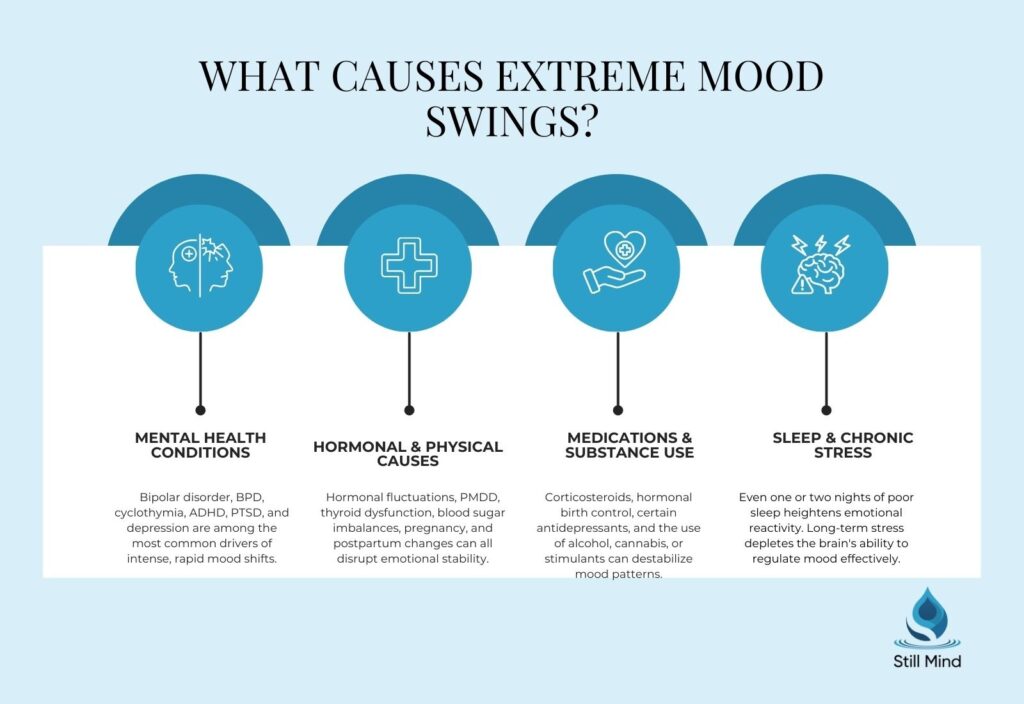
Extreme mood swings rarely have a single cause. They are most often driven by a combination of mental health conditions, physical health factors, hormonal changes, and substance use. Identifying the underlying cause is essential for effective treatment.
Mental Health Conditions
Mental health disorders are the most common drivers of severe and recurrent mood instability. The following conditions frequently present with extreme emotional shifts.
1. Bipolar Disorder
Bipolar disorder is characterized by alternating episodes of mania or hypomania and depression. Manic episodes bring elevated energy, reduced need for sleep, impulsivity, and euphoria. Depressive episodes bring profound sadness, fatigue, and hopelessness. These cycles can last days to weeks and significantly impair functioning.
Bipolar I involves full manic episodes that may include psychosis. Bipolar II involves hypomania paired with depressive episodes. Cyclothymic disorder produces milder, chronic mood fluctuations that still disrupt daily life and carry a risk of progressing to full bipolar disorder.
2. Borderline Personality Disorder (BPD)
Borderline personality disorder is strongly associated with rapid and intense emotional shifts. People with BPD can move from feeling warmth and affection to rage or despair within minutes, often triggered by real or perceived relationship stressors. This pattern of emotional dysregulation is one of the defining features of the condition.
3. Major Depression and Depressive Disorders
Depression is not always a flat, consistent low mood. Some individuals experience mood variability alongside their depressive symptoms, including irritability, sudden crying, and brief windows of apparent normalcy followed by deep emotional crashes. Seasonal affective disorder (SAD) and persistent depressive disorder (dysthymia) can also produce noticeable mood fluctuations.
4. Anxiety Disorders
Anxiety disorders frequently co-occur with mood instability. Chronic anxiety creates a heightened baseline of emotional arousal that makes sudden mood shifts more likely. Panic attacks, social anxiety, and generalized anxiety disorder can all produce sharp emotional changes that feel like extreme swings to those experiencing them.
5. Post-Traumatic Stress Disorder (PTSD)
People living with PTSD often experience emotional reactivity, hyperarousal, and rapid shifts between numbness and overwhelming distress. Trauma-related mood instability is frequently misidentified as bipolar disorder due to its episodic, intense quality.
6. Disruptive Mood Dysregulation Disorder (DMDD)
Disruptive mood dysregulation disorder is diagnosed in children and adolescents who display severe, recurrent temper outbursts and a persistently irritable or angry baseline mood. It is distinct from bipolar disorder and requires a separate diagnostic approach.
7. ADHD
Attention-deficit/hyperactivity disorder is associated with emotional dysregulation and rejection-sensitive dysphoria. People with ADHD can experience intense mood shifts in response to frustration, perceived failure, or rejection that appear disproportionate to the situation and resolve relatively quickly.
8. Schizophrenia and Schizoaffective Disorder
Psychotic disorders can produce significant mood disturbance alongside perceptual symptoms. Schizoaffective disorder specifically combines features of schizophrenia with prominent mood episodes, either depressive or manic.
Hormonal Causes
Hormonal fluctuations are a major but frequently underdiagnosed driver of extreme mood changes, particularly in women.
- Premenstrual dysphoric disorder (PMDD) involves severe mood symptoms in the luteal phase of the menstrual cycle, including depression, irritability, rage, and emotional lability.
- Perimenopause and menopause bring significant estrogen fluctuations that directly affect serotonin and dopamine regulation, producing mood instability, anxiety, and depression.
- Postpartum depression and psychosis cause rapid and intense mood shifts following childbirth, sometimes with psychotic features that require urgent care.
- Thyroid disorders (both hyperthyroidism and hypothyroidism) affect mood regulation and can produce anxiety, irritability, depression, and emotional volatility.
Physical and Medical Causes
Several non-psychiatric medical conditions are known to affect mood stability:
- Traumatic brain injury (TBI) can alter the brain structures that govern emotional regulation.
- Neurological conditions, including dementia, multiple sclerosis, and Parkinson’s disease, frequently cause mood lability and emotional outbursts.
- Cardiovascular and respiratory disease can produce secondary depression and anxiety.
- Blood sugar dysregulation, particularly in diabetes, is associated with irritability and mood volatility correlated with glucose spikes and drops.
- Chronic pain and chronic illness create an ongoing psychological burden that directly affects emotional regulation capacity.
Substance and Medication-Related Causes
Alcohol, stimulants, cannabis, and many prescription medications can produce or worsen extreme mood swings:
- Alcohol disrupts sleep architecture and depresses serotonergic activity, increasing emotional reactivity.
- Stimulant drugs can produce intense euphoria followed by depression and irritability during withdrawal.
- Cannabis can worsen anxiety-driven mood instability in predisposed individuals.
- Corticosteroids, hormonal contraceptives, SSRIs, and ADHD medications can all affect mood as a known side effect. Mood changes related to prescribed medications should always be discussed with a prescribing clinician.
Warning Signs That Mood Swings Are Becoming Serious
Not all mood variability requires clinical intervention. The following warning signs indicate that your mood swings have moved into territory that warrants evaluation:
- Mood episodes last for days at a time and do not clearly resolve.
- Your emotional shifts feel completely outside your control.
- Relationships at home, work, or socially are regularly disrupted by your mood changes.
- You are sleeping far more or far less than usual during mood episodes.
- You notice significant appetite changes or unexplained weight fluctuation alongside mood shifts.
- You engage in impulsive or risky behaviors (spending, substance use, reckless driving) during elevated moods.
- You experience prolonged periods of sadness, numbness, or inability to feel pleasure.
- You or others around you notice your mood cycling between extremes on a regular basis.
- You have thoughts of self-harm or suicide during low mood periods.
- Others in your life are expressing concern about your emotional stability.
When Should You Seek Help for Extreme Mood Swings?
Seek professional help if your mood swings are frequent, severe, or interfering with any area of your life. You do not need to wait for a crisis moment to reach out.
Seek help immediately if you experience:
- Suicidal thoughts or impulses toward self-harm (call or text 988)
- A period of mania in which you are not sleeping, spending recklessly, or feeling unusually grandiose
- A depressive crash so severe that it is preventing you from eating, working, or caring for yourself or your dependents
- Psychotic symptoms, such as hallucinations or delusions, during a mood episode
Schedule a clinical evaluation if you notice:
- Mood swings that have lasted more than two weeks in a pattern
- Family members or close friends expressing concern about your emotional behavior
- A history of mood instability that has been untreated or only partially treated
- Mood changes you suspect may be linked to a new medication, substance use, or hormonal shift
How Are Mood-Related Conditions Diagnosed?
Diagnosis begins with a comprehensive clinical evaluation. A qualified mental health provider will assess the frequency, intensity, duration, and context of your mood episodes. They will also review your personal and family psychiatric history, current medications, sleep patterns, and any substance use.
Physical health evaluation is a standard part of the process. A physician will often order thyroid function tests, metabolic panels, and other labs to rule out medical causes before confirming a psychiatric diagnosis.
The DSM-5-TR provides diagnostic criteria for all major mood disorders. Getting an accurate diagnosis is critical because treatments differ significantly across conditions. Antidepressants alone, for example, can trigger manic episodes in individuals with undiagnosed bipolar disorder.
Treatment Options for Extreme Mood Swings
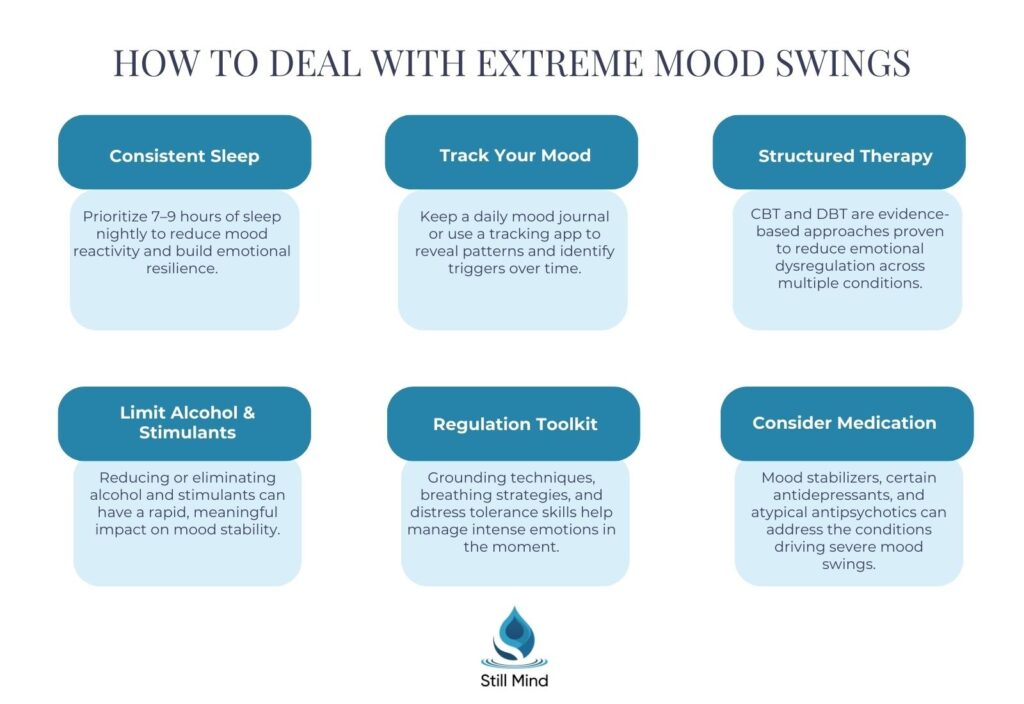
Treatment is tailored to the underlying cause. Most people with clinically significant mood instability benefit from a combination of therapy, medication, and lifestyle support.
1. Psychotherapy
Cognitive behavioral therapy (CBT) helps identify thought patterns and cognitive distortions that fuel emotional dysregulation. It builds skills for recognizing triggers, reframing automatic thoughts, and tolerating distress without reacting impulsively.
Dialectical behavior therapy (DBT) was originally developed for borderline personality disorder but is now widely used for any condition involving severe emotional dysregulation. It teaches skills in mindfulness, distress tolerance, emotion regulation, and interpersonal effectiveness.
Interpersonal and social rhythm therapy (IPSRT) is specifically used for bipolar disorder. It stabilizes daily routines (sleep, meals, activity) that directly influence mood episode frequency and severity.
2. Medication
Medication management depends entirely on the diagnosis. Common categories include:
- Mood stabilizers (lithium, valproate, lamotrigine) for bipolar disorder and cyclothymia.
- Antidepressants for depressive disorders and PTSD, often combined with other agents.
- Atypical antipsychotics for bipolar disorder, schizoaffective disorder, and treatment-resistant depression.
- Anti-anxiety medications and beta blockers for anxiety-driven mood instability.
- Hormonal therapies for PMDD and perimenopause-related mood disorders.
3. Residential Mental Health Treatment
For individuals whose mood instability is severe, treatment-resistant, or putting their safety at risk, residential mental health treatment provides 24-hour structured care. A residential setting allows for comprehensive evaluation, medication stabilization, and intensive therapy without the triggers and stressors of everyday life.
4. Lifestyle and Self-Management Strategies
Evidence-based lifestyle strategies support mood stability across all conditions:
- Consistent sleep schedule (7 to 9 hours per night) directly reduces mood instability.
- Regular aerobic exercise activates serotonin and dopamine systems.
- Mood journaling helps identify patterns, triggers, and early warning signs of an impending episode.
- Reducing alcohol and caffeine intake removes common chemical drivers of emotional volatility.
- Mindfulness and breathwork practices build the capacity to observe emotional shifts without immediately reacting to them.
Getting Help at Still Mind Florida
If extreme mood swings are affecting your life and you are not sure where to start, our team at Still Mind Florida is here to help. We provide comprehensive residential mental health treatment in Fort Lauderdale for adults dealing with bipolar disorder, depression, BPD, PTSD, and complex mood disorders. Contact our admissions team to speak with a specialist about your options.
Frequently Asked Questions
What causes sudden, extreme mood swings?
Sudden extreme mood swings are most commonly caused by bipolar disorder, borderline personality disorder, PTSD, hormonal changes such as PMDD or perimenopause, thyroid dysfunction, blood sugar instability, or substance use. Some medications also trigger rapid emotional shifts as a side effect. A clinical evaluation is the most reliable way to identify the cause.
Are extreme mood swings a sign of bipolar disorder?
They can be, but not always. Bipolar disorder produces distinct episodes of mania or hypomania and depression lasting days to weeks. Many other conditions, including BPD, anxiety disorders, PMDD, and PTSD, also cause significant mood variability. Accurate diagnosis requires a professional evaluation.
Can anxiety cause extreme mood swings?
Yes. Anxiety creates heightened emotional arousal that makes sudden shifts in mood more likely. Panic attacks, social anxiety, and generalized anxiety disorder can all produce sharp emotional changes. Anxiety and mood disorders also frequently co-occur, which can intensify emotional dysregulation.
What is the difference between mood swings and emotional dysregulation?
Mood swings refer to shifts between distinct emotional states, such as from happiness to sadness. Emotional dysregulation is a broader term describing difficulty managing the intensity, duration, or expression of emotions in general. Both can overlap, and both are treatable.
When are mood swings serious enough to see a doctor?
See a doctor if your mood swings last more than a few days, interfere with your relationships or work, feel completely outside your control, or involve thoughts of self-harm. You should seek immediate help if you are experiencing suicidal ideation, a severe manic episode, or psychotic symptoms.
Can extreme mood swings be treated without medication?
In some cases, yes. Mood instability driven primarily by lifestyle factors, stress, or mild anxiety may respond well to psychotherapy, sleep regulation, and behavioral strategies alone. However, conditions like bipolar disorder, PMDD, and schizoaffective disorder typically require medication as part of a comprehensive treatment plan.
References
- American Psychiatric Association. (2022). Diagnostic and statistical manual of mental disorders (5th ed., text rev.). American Psychiatric Publishing.
- Cleveland Clinic. (2025). Mood swings: What they are and causes. Cleveland Clinic.
- Cleveland Clinic. (2025). Mood disorders: What they are, symptoms, and treatment. Cleveland Clinic.
- Gillett, G., Watson, G., Saunders, K. E., and McGowan, N. M. (2021). Sleep and circadian rhythm actigraphy measures, mood instability and impulsivity: A systematic review. Journal of Psychiatric Research, 144, 66-79.
- Mission Connection Healthcare. (2025). Mood swings: Treatment for sudden mood shifts in adults. Mission Connection Healthcare.
- National Institute of Mental Health. (2023). Bipolar disorder. U.S. Department of Health and Human Services.
- National Institute of Mental Health. (2024). Mood disorders. U.S. Department of Health and Human Services.
- American Psychiatric Association. (2023). What are bipolar disorders? Psychiatry.org.