




Secondary trauma is the emotional and psychological distress that develops from indirect exposure to another person’s traumatic experience. You do not have to live through a traumatic event to be affected by it.
Therapists, nurses, social workers, first responders, and family members of trauma survivors are all at risk. The condition is real, clinically recognized, and treatable. Knowing the signs early makes a significant difference in recovery.
Highlights
- Up to 26% of therapists working with traumatized populations and up to 50% of child welfare workers report symptoms of secondary traumatic stress, according to the National Child Traumatic Stress Network.
- Secondary traumatic stress symptoms mirror those of PTSD, including intrusive thoughts, hypervigilance, avoidance, and emotional numbing.
- Secondary trauma, vicarious trauma, compassion fatigue, and burnout are related but distinct conditions, each requiring a different clinical response.
- The National Association of Social Workers reports up to 70% of social workers will experience compassion fatigue during their careers.
- Early recognition and structured self-care significantly reduce severity and long-term impact.
What Is Secondary Trauma?
Secondary trauma, formally known as secondary traumatic stress (STS), is a trauma response that develops in people who are exposed to detailed accounts of another person’s traumatic experiences. It was first defined by Dr. Charles Figley as “the natural, consequent behaviors and emotions resulting from knowledge about a traumatizing event experienced by a significant other.”
It is not weakness. It is not burnout. It is an involuntary psychological response to repeated empathic exposure to suffering, grief, violence, or abuse over time.
The DSM-5-TR acknowledges indirect trauma exposure as a valid pathway to developing PTSD-like symptoms, specifically when exposure is intense, repeated, or emotionally activating. Secondary traumatic stress is classified separately from primary PTSD but shares its core symptom clusters.
Secondary Trauma vs. Vicarious Trauma vs. Compassion Fatigue vs. Burnout
These four terms are often used interchangeably but describe distinct experiences. Understanding the differences helps with accurate self-assessment and selecting the right intervention.
| Concept | Core Definition | Primary Feature | Onset |
|---|---|---|---|
| Secondary Traumatic Stress | PTSD-like symptoms from indirect trauma exposure | Intrusion, avoidance, hyperarousal | Often sudden after a specific exposure |
| Vicarious Trauma | Cumulative shift in worldview from working with trauma | Changed beliefs about safety, meaning, self | Gradual; builds over time |
| Compassion Fatigue | Emotional and physical exhaustion from caregiving | Reduced empathy, emotional depletion | Gradual; linked to over-functioning |
| Burnout | Chronic job-related exhaustion and disengagement | Cynicism, reduced accomplishment, detachment | Gradual; organizational in origin |
Secondary traumatic stress tends to have a faster onset and more acute symptoms. Vicarious trauma represents a deeper, cumulative shift in how the helper sees the world. Compassion fatigue reflects depletion of empathic resources. Burnout is largely organizational. A person can experience more than one simultaneously.
Symptoms of Secondary Trauma
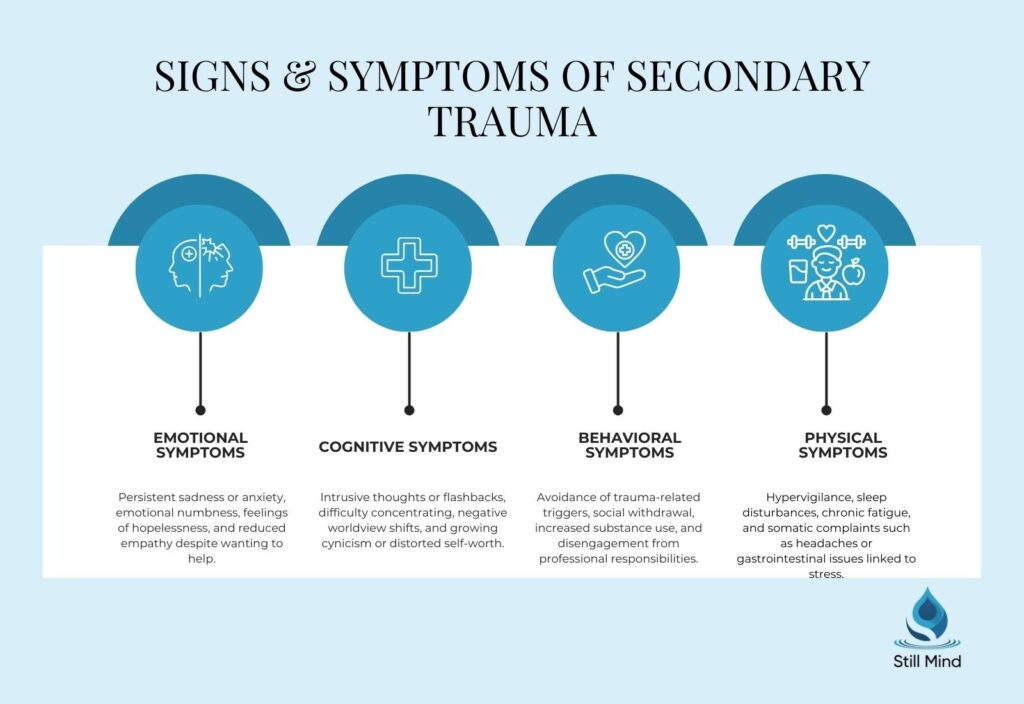
Secondary traumatic stress symptoms closely mirror those of PTSD. They often appear after a specific difficult client case or after sustained exposure to traumatic material over weeks or months.
Intrusion Symptoms
- Intrusive thoughts or mental images related to someone else’s traumatic experience
- Nightmares or disturbing dreams involving clients, patients, or traumatic scenarios
- Emotional flashbacks triggered by sounds, smells, or situations connected to the exposure
- Distressing physical reactions when reminded of the traumatic content
Avoidance Symptoms
- Avoiding conversations, people, or settings that are reminders of the trauma
- Emotional numbing or feeling detached from your own feelings
- Loss of interest in activities that previously brought meaning or pleasure
- Feeling cut off from close relationships or unable to be fully present with loved ones
Hyperarousal Symptoms
- Difficulty falling or staying asleep
- Irritability, angry outbursts, or disproportionate emotional reactions
- Difficulty concentrating at work or during conversations
- Persistent hypervigilance, including heightened startle response
- Chronic physical tension, headaches, or somatic complaints with no clear medical cause
Cognitive and Behavioral Changes
- Negative changes in beliefs about safety, trust, control, or human nature
- Increased cynicism, pessimism, or a sense that the world is fundamentally dangerous
- Questioning the meaning or value of your work
- Withdrawing from professional relationships or supervision
- Making errors in clinical judgment due to emotional saturation or detachment
These symptoms can emerge alongside emotional dysregulation and may be mistaken for personal stress, depression, or relationship difficulties.
Who Is at Risk of Secondary Traumatic Stress?
Secondary trauma is an occupational hazard for anyone in a helping or caregiving role. It is not a sign of inexperience or personal fragility. It is a predictable consequence of sustained empathic engagement with trauma survivors.
High-Risk Professions
- Mental health therapists and counselors working with trauma, abuse, or crisis populations
- Social workers and child protective services workers, particularly those handling abuse cases
- Emergency room nurses and physicians exposed to acute injury, death, and suffering
- First responders, including paramedics, firefighters, and law enforcement officers
- Victim advocates and domestic violence counselors
- Oncology and palliative care providers
- Teachers and school counselors working in high-trauma school environments
- Journalists and humanitarian aid workers covering violence, disaster, or conflict zones
Family and Informal Caregivers
Secondary trauma is not limited to professionals. Family members, partners, and close friends of trauma survivors are also vulnerable, particularly those supporting someone with PTSD, complex trauma, or severe mental illness.
Living with or providing primary care to someone who has been victimized, abused, or who is in active psychological crisis creates conditions for secondary traumatic stress to develop over time.
Risk Factors That Increase Vulnerability
Not everyone exposed to traumatic material develops secondary trauma. Certain factors increase susceptibility significantly:
- Personal trauma history – Those with unresolved trauma of their own are at heightened risk of being activated by others’ experiences.
- High caseload with predominantly traumatized clients – Research shows professionals whose caseloads are 60% or more trauma-exposed clients are at substantially elevated risk.
- Lack of clinical supervision – Providers with weekly supervision report 40% lower compassion fatigue rates than those with monthly or no supervision.
- Social isolation at work or outside of it – Lack of peer support removes a critical buffer against cumulative exposure.
- Empathic over-identification – High empathy without adequate emotional boundaries accelerates the absorption of traumatic material.
- Inadequate training – Being placed in helping roles without preparation for trauma exposure significantly increases risk.
- Unprocessed grief or loss – Active personal grief reduces the psychological bandwidth available to process others’ pain.
- Organizational dysfunction – Poor leadership, excessive administrative burden, lack of autonomy, and inadequate resources all amplify secondary traumatic stress.
Understanding these risk factors also matters for understanding what burnout is and how it differs from the trauma-specific response of secondary traumatic stress.
The Impact of Secondary Trauma on Professional Functioning
Secondary traumatic stress does not stay confined to emotional symptoms. It has documented organizational and clinical consequences.
Professionally, secondary trauma is associated with increased absenteeism, impaired clinical judgment, reduced quality of care, higher staff turnover, and strained workplace relationships. For mental health providers, it can also compromise the therapeutic alliance and lead to counter-transference patterns that are harmful to clients.
Personally, chronic secondary traumatic stress increases risk of depression and anxiety disorders, relationship breakdown, substance use, and, in severe cases, suicidal ideation. The overlap with rumination is significant, as those with secondary trauma frequently replay traumatic narratives they have absorbed from others.
How Is Secondary Trauma Diagnosed?
Secondary traumatic stress does not have a standalone DSM-5-TR diagnosis. It is assessed under the PTSD criteria, specifically through Criterion A, which includes indirect exposure via learning about trauma experienced by someone close to the individual, or through repeated professional exposure to traumatic details.
A clinical evaluation includes a detailed review of occupational history, symptom onset timeline, and assessment of PTSD-parallel symptom clusters. Clinicians use validated instruments including the Secondary Traumatic Stress Scale (STSS) and the Professional Quality of Life Scale (ProQOL) to measure STS severity.
Accurate assessment also screens for co-occurring conditions, including depression, anxiety, substance use, and unresolved personal trauma, which frequently compound secondary traumatic stress.
Treatment for Secondary Traumatic Stress
Recovery from secondary trauma is achievable with the right combination of clinical support, organizational changes, and personal self-care strategies.
1. Trauma-Focused Therapy
EMDR therapy is highly effective for addressing secondary traumatic stress because it directly processes the traumatic memories and emotional associations that are driving symptoms. It is particularly suited when specific client cases or traumatic exposures can be identified as trigger points.
Cognitive behavioral therapy helps challenge distorted cognitions about safety, self-worth, and the world that develop through repeated trauma exposure. It builds skills for recognizing early warning signs of secondary traumatic stress and developing more adaptive cognitive responses.
Dialectical behavior therapy is useful when secondary trauma has produced significant emotional dysregulation or is compounding pre-existing mental health conditions.
2. Clinical Supervision
Regular clinical supervision is the single most evidence-based organizational protection against secondary traumatic stress. Trauma-informed supervision provides a structured space to process difficult client material, normalize responses, and maintain professional perspective. Providers with weekly supervision report significantly lower STS rates compared to those supervised monthly or not at all.
3. Psychoeducation
Understanding secondary trauma is itself therapeutic. Psychoeducation helps helpers recognize their symptoms as a legitimate, expected occupational response rather than a personal failure. This reduces shame, increases help-seeking, and improves treatment engagement.
4. Medication
Medication is not a first-line treatment for secondary traumatic stress but may support recovery when co-occurring depression, anxiety, or full PTSD criteria are present. Antidepressants, anxiolytics, and sleep aids may be used as part of a broader treatment plan under a psychiatrist’s guidance.
5. Residential Mental Health Treatment
In cases where secondary traumatic stress has produced full PTSD-level symptoms, severe depression, or significant functional impairment, residential mental health treatment provides intensive, structured care. A residential setting removes the ongoing exposure trigger, allows for comprehensive assessment, and supports deep trauma processing without the demands of daily professional life.
Prevention and Self-Care Strategies
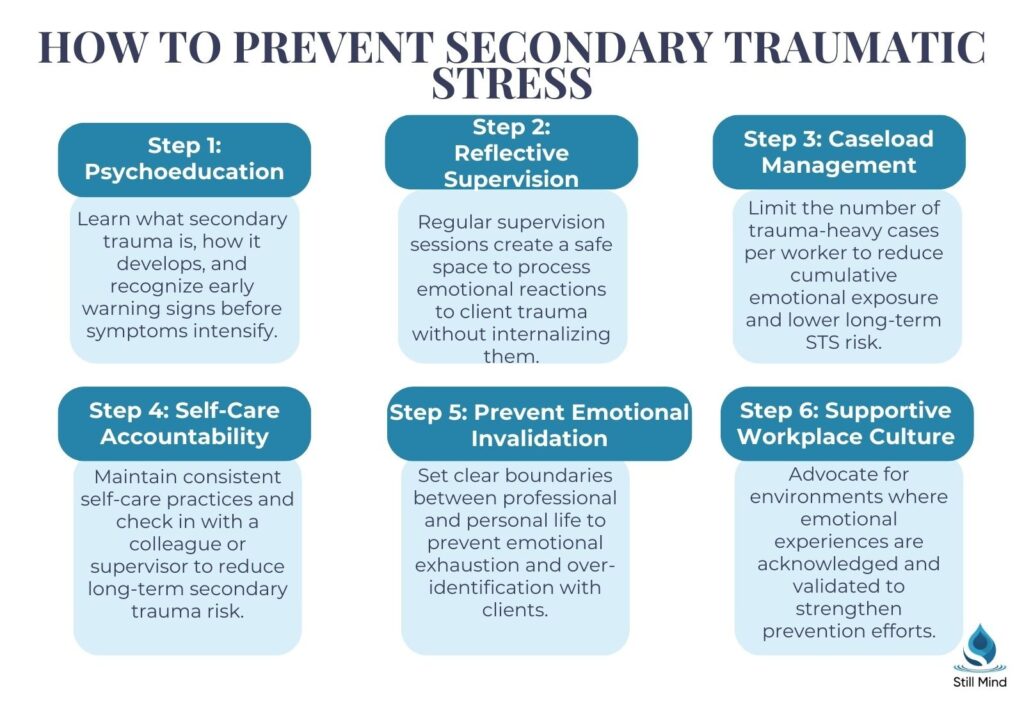
Prevention operates at two levels: individual and organizational. Both are essential.
Individual Strategies
- Maintain clear boundaries between professional and personal identity.
- Engage in regular reflective practice such as journaling or personal therapy.
- Build peer support networks where secondary trauma can be named and normalized.
- Schedule genuine disconnection from work content outside of clinical hours.
- Develop somatic awareness practices such as breathwork, yoga, or mindfulness to regulate the nervous system after traumatic exposure.
- Seek personal therapy proactively, not only in crisis.
Organizational Strategies
- Provide regular, trauma-informed clinical supervision.
- Cap caseloads for high-trauma workers.
- Offer Employee Assistance Programs and mental health days.
- Normalize conversations about secondary trauma at the team level.
- Reduce administrative burden and provide genuine autonomy over scheduling.
- Create formal processes for after-action debriefing following critical incidents.
Getting Help at Still Mind Florida
If secondary traumatic stress is affecting your mental health, your professional functioning, or your relationships, treatment works. Still Mind Florida provides evidence-based residential mental health care in Fort Lauderdale for adults managing trauma-related conditions, including secondary traumatic stress, PTSD, depression, and anxiety. Contact our admissions team to speak with a specialist about your options.
Frequently Asked Questions
What is the difference between secondary trauma and PTSD?
PTSD results from firsthand traumatic exposure. Secondary traumatic stress develops through indirect exposure, typically by hearing detailed accounts of another person’s trauma. Both share symptom clusters of intrusion, avoidance, and hyperarousal. Secondary traumatic stress may meet full PTSD diagnostic criteria in severe cases, which is why the DSM-5-TR includes indirect exposure as a valid trauma pathway.
Can family members develop secondary trauma?
Yes. Secondary traumatic stress is not limited to professionals. Family members and partners of trauma survivors, particularly those supporting someone with PTSD, abuse history, or severe mental illness, are at significant risk. The sustained nature of caregiving and emotional proximity to a survivor’s distress creates the conditions for secondary traumatic stress to develop.
How is secondary trauma different from compassion fatigue?
Secondary traumatic stress involves PTSD-like symptoms that often emerge quickly after a specific or intense exposure. Compassion fatigue describes a more gradual emotional depletion and reduced capacity for empathy from the cumulative cost of caring. Both can co-occur. Secondary trauma is more acute and symptom-specific; compassion fatigue is more about emotional exhaustion and resource depletion over time.
What professions are most at risk for secondary traumatic stress?
Mental health therapists, social workers, emergency room and ICU nurses, first responders, child protective services workers, domestic violence advocates, oncology providers, and journalists covering traumatic events are among those at highest risk. Any professional with sustained, repeated exposure to survivors of trauma, violence, or abuse is occupationally vulnerable.
Can secondary trauma be treated effectively?
Yes. Secondary traumatic stress is highly treatable with the right support. EMDR therapy, cognitive behavioral therapy, trauma-informed supervision, and psychoeducation all produce meaningful outcomes. When symptoms are severe, residential mental health treatment can provide the intensive care needed for full recovery.
How long does secondary traumatic stress last without treatment?
Without intervention, secondary traumatic stress can become chronic and may evolve into full PTSD, major depression, or significant anxiety disorders. Duration varies by individual and exposure level. Early recognition and treatment consistently produce better outcomes than delayed care. Some individuals experience symptoms for months or years if the condition goes unaddressed.
References
- Administration for Children and Families. (2024). Secondary traumatic stress. U.S. Department of Health and Human Services.
- American Psychiatric Association. (2022). Diagnostic and statistical manual of mental disorders (5th ed., text rev.). American Psychiatric Publishing.
- Figley, C. R. (1995). Compassion fatigue: Coping with secondary traumatic stress disorder in those who treat the traumatized. Brunner/Mazel.
- Figley, C. R. (2002). Compassion fatigue: Psychotherapists’ chronic lack of self-care. Journal of Clinical Psychology, 58(11), 1433-1441.
- iCanotes. (2025). Vicarious trauma, compassion fatigue, and burnout: A therapist’s guide. iCanotes.
- National Child Traumatic Stress Network. (2023). Secondary traumatic stress. NCTSN.
- Office for Victims of Crime. (2024). What is vicarious trauma? Vicarious Trauma Toolkit. U.S. Department of Justice.
- Pearlman, L. A., and Saakvitne, K. W. (1995). Trauma and the therapist: Countertransference and vicarious traumatization in psychotherapy with incest survivors. W. W. Norton.
- Stamm, B. H. (2010). The concise ProQOL manual (2nd ed.). ProQOL.org.