

Schizophrenia Treatment · Fort Lauderdale, Florida
Schizophrenia Treatment in Fort Lauderdale, FL
Still Mind is a residential schizophrenia treatment center in Fort Lauderdale, Florida, for adults 18+ whose psychotic symptoms have outpaced outpatient care. Residential treatment gives psychosis the daily psychiatric supervision outpatient care cannot. Our stabilization-first model pairs 7-day psychiatric coverage with a board-certified psychiatrist on-site every weekday and on-call on weekends.
LOCUS 5 highest-acuity care on admission
7-day psychiatric coverage
Formal CBT & DBT tracks
On-site brain mapping & TMS
If you or someone with you is in immediate danger, call 911 or the 988 Suicide & Crisis Lifeline at 988.
Verify Your Insurance Benefits
Free & confidential. Takes about 60 seconds, no obligation.
Before anything else
Take One Breath With Us
If you have landed here, today is probably heavy. Before you read about programs and insurance, try one guided breath cycle, the same paced breathing our clinicians teach on day one. In for four. Hold for four. Out for six.
Ready
Tap begin when you are
Stabilization Comes First
How does Still Mind treat schizophrenia?
Still Mind treats schizophrenia with a stabilization-first residential model: 7-day psychiatric coverage, antipsychotic medication management, formal CBT and DBT tracks, and on-site brain mapping. Most clients are admitted at LOCUS Level 5 acuity, and the average length of stay is about 42 days.
Antipsychotic medication management
Second-generation antipsychotics are the first-line medication for schizophrenia. Daily psychiatric review lets dosing be adjusted against symptom response and side effects in days rather than months.
7-day psychiatric coverage
A board-certified psychiatrist is on-site every weekday and on-call around the clock on weekends. Acute psychosis changes fast, so the medical response cannot pause for a weekend.
Formal CBT & DBT tracks
Manualized cognitive-behavioral and dialectical-behavior therapy run alongside six hours of daily group therapy and weekly individual and family sessions.
On-site brain mapping & TMS
Quantitative EEG brain mapping and transcranial magnetic stimulation are administered on-site, which is rare at the residential psychiatric level.
Safety monitoring for high-risk psychosis
Physician-initiated one-to-one monitoring covers command hallucinations and suicidal thoughts, released only by a doctor, never by convenience.
Integrated dual-diagnosis care
Substance use that accompanies psychosis is treated in the same program, not referred out to a separate one. Stimulants and cannabis both worsen psychotic symptoms.
Primary Program
Residential Mental Health Treatment
24/7 stabilization-first psychiatric care for adults in an active psychotic episode. Includes 7-day psychiatric coverage, formal CBT and DBT, and on-site brain mapping and TMS.
See the residential program → When Substance Use Is Also PresentCo-Occurring Disorders / Dual Diagnosis
Substance use disorders are among the most common conditions to accompany schizophrenia. This program treats both within one integrated plan instead of two separate ones.
See the dual-diagnosis program →Understanding the Condition
What is schizophrenia?
Schizophrenia is a psychotic disorder defined by delusions, hallucinations, and disorganized thinking that continue for at least 6 months. Symptoms fall into three clusters: positive, negative, and cognitive. Untreated psychosis tends to recur and erode daily functioning.
Diagnosis requires 2 or more core symptoms, at least one of which must be delusions, hallucinations, or disorganized speech. Onset typically falls between the late teens and the early 30s, and arrives earlier in men than in women. Psychotic disorders make up roughly 30% of Still Mind's residential admissions.
What are the positive and negative symptoms of schizophrenia?
Positive symptoms add experiences that were not there before:
DelusionsHallucinationsDisorganized speechDisorganized or catatonic behavior
Negative symptoms remove capacities that were there before:
Reduced emotional expressionAvolitionAlogiaAnhedoniaSocial withdrawal
Cognitive symptoms affect thinking itself:
Impaired working memoryReduced attentionImpaired executive function
Positive symptoms respond fastest to antipsychotic medication. Negative and cognitive symptoms respond more slowly, which is why 42 days of structure does more than a 5-day hospital admission. A first episode of psychosis often presents as a psychotic break before any diagnosis has been made.
If you or someone you love is having thoughts of suicide, call or text 988 (Suicide & Crisis Lifeline) now. If you are in immediate danger, call 911.
Two Minutes · Private · Nothing Is Stored
Is residential care the right level of care?
Residential care fits when psychotic symptoms make daily life unsafe, when outpatient treatment and antipsychotic medication have stopped holding, or when a recent crisis required emergency care. This six-question self-check indicates whether an admissions conversation is warranted.
Six honest questions, answered privately on this page. At the end, we will tell you plainly whether a conversation with our admissions team makes sense for you or someone you love with schizophrenia.
Level-of-Care Self-Check
This self-check is educational, not a diagnosis or medical advice. Only a licensed clinician can determine the right level of care. Your answers never leave this page.
Diagnosis & Subtypes
What is the difference between schizophrenia and schizoaffective disorder?
Schizophrenia is defined by psychosis without a dominant mood component. Schizoaffective disorder requires a major mood episode, manic or depressive, present for most of the illness, plus at least 2 weeks of psychosis occurring independently of that mood episode.
The 2-week rule is the practical test clinicians apply. If psychosis only ever appears during a mood episode, the diagnosis is a mood disorder with psychotic features. If psychosis persists after the mood episode lifts, and mood episodes still dominate the timeline, the diagnosis is schizoaffective disorder. Schizoaffective disorder is roughly one third as common as schizophrenia.
What are the types of schizophrenia?
DSM-5 eliminated the 5 schizophrenia subtypes in 2013: paranoid, disorganized, catatonic, undifferentiated, and residual. They were removed because they proved unstable over time and did not predict treatment response. Clinicians now describe schizophrenia as one spectrum diagnosis rated by symptom severity, and catatonia is coded as a specifier rather than a subtype.
What is the difference between schizoaffective bipolar type and depressive type?
Bipolar type requires at least one manic episode, so treatment pairs an antipsychotic with a mood stabilizer. Depressive type involves major depressive episodes only, so treatment pairs an antipsychotic with an antidepressant. Bipolar type shares much of its presentation with bipolar disorder treatment, and depressive type overlaps with severe depression.
SchizophreniaSchizoaffective disorderBipolar typeDepressive typeCatatonia specifierFirst-episode psychosisTreatment-resistant schizophrenia
Both diagnoses need a psychiatric team that manages psychosis and mood together rather than sequentially, which is what the daily structure of a residential mental health treatment program makes possible.
Admissions team standing by right now
Schizophrenia is treatable
Psychosis can make everything feel out of reach. With the right stabilization-first care, it does not have to stay that way. Our admissions team is available now for a confidential conversation about whether Still Mind's residential schizophrenia program in Fort Lauderdale is the right next step for you or someone you love.
✓ Confidential & HIPAA-compliant
✓ Insurance verified at no cost
✓ Out-of-state admissions welcome
✓ Joint Commission accredited
Causes & Risk Factors
What causes schizophrenia?
Schizophrenia has three main contributors: genetics, brain development and chemistry, and environmental stressors. Heritability is high, and a first-degree relative raises risk substantially. Cannabis use, birth complications, and severe stress raise onset risk in vulnerable people.
Biological & geneticSchizophrenia is among the most heritable psychiatric conditions, and a parent or sibling with the diagnosis raises risk substantially. Dopamine signalling is the pathway every antipsychotic medication acts on.
NeurodevelopmentalComplications during pregnancy and birth, including maternal infection and oxygen deprivation, raise risk. Symptoms usually emerge 20 years later, between the late teens and the early 30s.
Environmental & substance useCannabis use in adolescence, stimulant use, severe stress, and social isolation each raise onset risk and trigger relapse. Substance use is the single most common condition to accompany schizophrenia.
Because substance use both triggers psychosis and follows from it, treating one without the other produces relapse. Read how the program approaches dual diagnosis treatment when schizophrenia and a substance use disorder are present together.
Prognosis
Is schizophrenia curable?
Schizophrenia is a lifelong condition, not a curable one, but it is treatable. With consistent antipsychotic medication, daily structure, and therapy, many people reach sustained remission of psychotic symptoms. Residential treatment restores that stability when outpatient care has not held.
The goal of treatment is durable remission, not a one-time fix. Medication adherence is the single strongest predictor of staying well, and stopping medication is the most common cause of relapse. Long-acting injectable antipsychotics, given every 1 to 6 months, exist for exactly that reason. Residential care rebuilds adherence, sleep, and routine in a supervised setting, then hands them off through a step-down plan so the stability holds after discharge.
LOCUS 5Highest voluntary acuity level on admission
7 daysWeekly psychiatric coverage
~42 daysAverage length of stay
30 bedsShared residential community
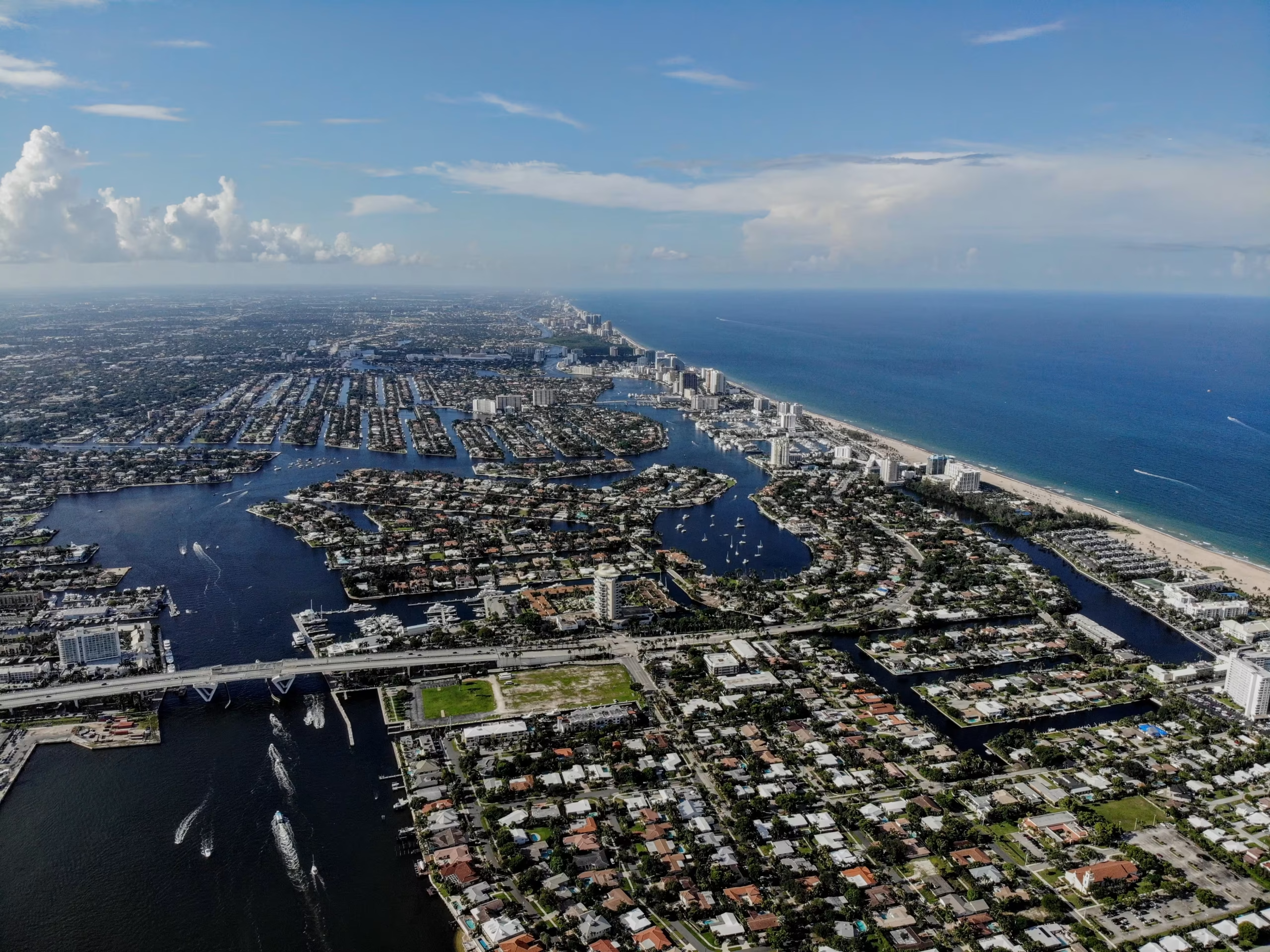
Broward County, Florida
How to find a schizophrenia treatment center near Fort Lauderdale, FL
Look for four things in a treatment center: a board-certified psychiatrist on staff, residential or inpatient licensing, antipsychotic medication management, and accreditation. Still Mind meets all four and verifies insurance before admission.
Still Mind sits at 208 SE 8th St, Fort Lauderdale, FL 33316, minutes from downtown and the airport. Admission is straightforward for Broward County and nearby communities including Hollywood, Pompano Beach, Plantation, and Davie.
Most clients travel from out of state. Choosing a center away from home removes the substance access and social stressors that drive relapse, and the admissions team coordinates arrival, lodging, and transportation. Call to confirm whether Still Mind is the right fit for your situation.
How do you help someone with schizophrenia who refuses treatment?
Refusal is usually a symptom rather than a choice, because psychosis impairs insight into being ill. Three approaches work: keep contact without arguing about the delusion, name the concrete problems the person does recognize such as sleep loss or job risk, and involve their psychiatrist early. Still Mind admits voluntarily. Involuntary psychiatric examination in Florida runs through a separate legal pathway, the Baker Act, initiated by a physician, a mental health professional, or law enforcement.
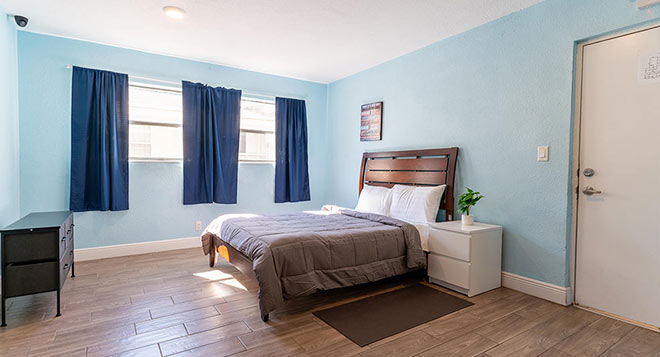
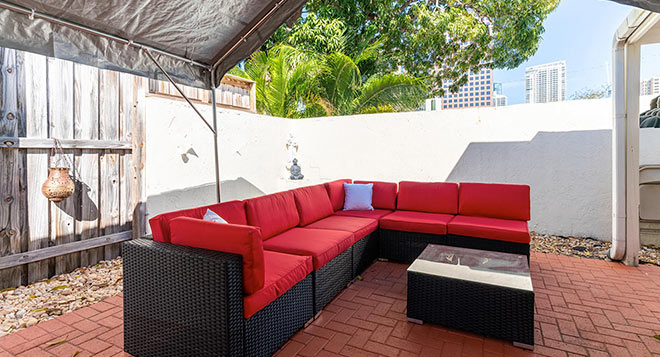
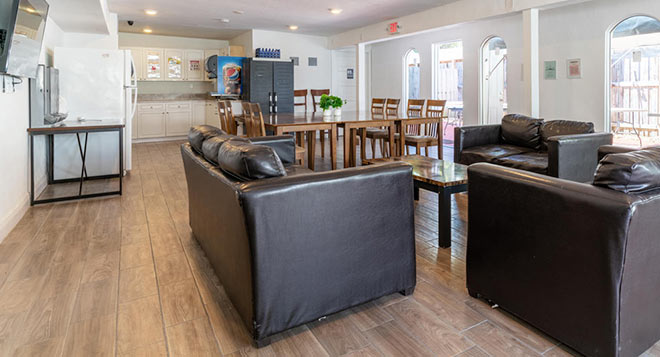
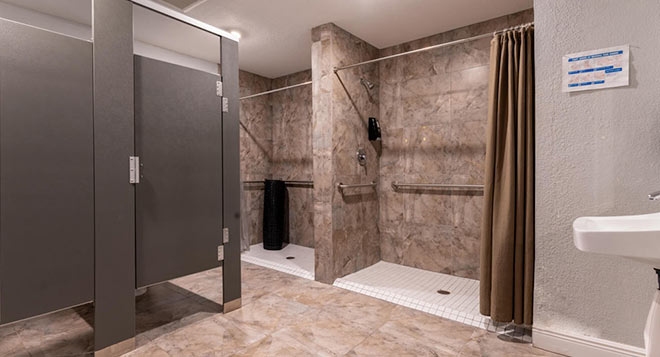
Inside Still Mind
Tour our Fort Lauderdale facility
A 30-bed residential community with shared rooms, green space, and calm indoor areas built for stabilization.
Coverage Varies by Plan
Does insurance cover treatment for schizophrenia?
Many plans include residential mental health benefits for schizophrenia. Still Mind's admissions team verifies your specific coverage at no cost before admission, with no obligation. Still Mind also holds an active Tricare contract.
Often Seen Alongside
What conditions occur with schizophrenia?
Schizophrenia rarely appears alone. It most often co-occurs with depression, substance use disorders, anxiety disorders, and post-traumatic stress disorder. These are the conditions Still Mind most frequently treats alongside schizophrenia in Fort Lauderdale.
Anxiety DisorderParanoid delusions and anxiety amplify each other during psychosis
DepressionPost-psychotic depression commonly follows an acute episode
Bipolar DisorderMania with psychotic features is the main differential to rule out
Borderline Personality DisorderBrief stress-related paranoia can resemble early schizophrenia
Post-Traumatic Stress DisorderTrauma raises psychosis risk, and flashbacks are mistaken for hallucinations
Psychotic BreakHow a first episode of schizophrenia most often presents
Common Questions
Schizophrenia treatment FAQ
What is schizophrenia?
Schizophrenia is a psychotic disorder defined by delusions, hallucinations, and disorganized thinking that continue for at least 6 months. Symptoms fall into three clusters: positive, negative, and cognitive. Untreated psychosis tends to recur and erode daily functioning.
What is the difference between schizophrenia and schizoaffective disorder?
Schizophrenia is defined by psychosis without a dominant mood component. Schizoaffective disorder requires a major mood episode, manic or depressive, present for most of the illness, plus at least 2 weeks of psychosis occurring independently of that mood episode.
What causes schizophrenia?
Schizophrenia has three main contributors: genetics, brain development and chemistry, and environmental stressors. Heritability is high, and a first-degree relative raises risk substantially. Cannabis use, birth complications, and severe stress raise onset risk in vulnerable people.
How is schizophrenia treated at Still Mind?
Still Mind treats schizophrenia with a stabilization-first residential model: 7-day psychiatric coverage, antipsychotic medication management, formal CBT and DBT tracks, and on-site brain mapping. Most clients are admitted at LOCUS Level 5 acuity, and the average length of stay is about 42 days.
Is schizophrenia curable?
Schizophrenia is a lifelong condition, not a curable one, but it is treatable. With consistent antipsychotic medication, daily structure, and therapy, many people reach sustained remission of psychotic symptoms. Residential treatment restores that stability when outpatient care has not held.
Is there schizophrenia treatment in Fort Lauderdale, FL?
Yes. Still Mind provides residential schizophrenia treatment in Fort Lauderdale, Florida, at 208 SE 8th St. The program serves adults 18+ from Broward County, across Florida, and out of state, with 7-day psychiatric coverage and insurance verified before admission.
Does insurance cover residential treatment for schizophrenia?
Many plans include residential mental health benefits. Still Mind's admissions team verifies your specific coverage at no cost before admission, with no obligation. Still Mind also holds an active Tricare contract. Call (561) 782-1672 or use the verification form above.