


Self-Harm & Suicidal Ideation Treatment · Fort Lauderdale, Florida
Self-Harm and Suicidal Ideation Treatment in Fort Lauderdale, FL
Still Mind is a residential treatment center in Fort Lauderdale, Florida for adults 18+ living with self-harm urges or suicidal thoughts. When staying safe has become a daily effort, outpatient appointments once a week are not enough. Our safety-first model pairs physician-initiated 1:1 monitoring with 24/7 supervision and a board-certified psychiatrist on-site every weekday.
Physician-released 1:1 safety monitoring
7-day psychiatric coverage
Formal DBT & CBT tracks
LOCUS 5 acuity on admission
If you or someone with you is in immediate danger, call 911 or the 988 Suicide & Crisis Lifeline at 988. Support is available 24/7.
Verify Your Insurance Benefits
Free & confidential. Takes about 60 seconds, no obligation.
Before anything else
Take One Breath With Us
If you have landed here, today is probably heavy. Before you read about programs and insurance, try one guided breath cycle, the same paced breathing our clinicians teach on day one. In for four. Hold for four. Out for six.
Ready
Tap begin when you are
Safety Comes First
How does Still Mind treat self-harm and suicidal ideation?
Still Mind treats self-harm and suicidal ideation with a safety-first residential model: physician-initiated 1:1 monitoring, 7-day psychiatric coverage, and formal DBT and CBT tracks. Most clients are admitted at LOCUS Level 5 acuity, and the average length of stay is about 42 days.
Physician-initiated 1:1 safety monitoring
One-to-one observation is started by a doctor and released only by a doctor, never by staffing convenience. This is the clinical core of how Still Mind holds risk.
7-day psychiatric coverage
A board-certified psychiatrist is on-site every weekday and on-call around the clock on weekends. Risk gets reassessed daily rather than at the next available appointment.
Formal DBT track
Dialectical behavior therapy is the anchor therapy for self-harm and suicidal ideation. Distress tolerance and emotion regulation skills replace the urge with a usable alternative.
Treating what sits underneath
Self-harm and suicidal thoughts are symptoms. Psychiatric medication management targets the depression, bipolar disorder, or trauma driving them, alongside formal CBT.
On-site brain mapping & TMS
Quantitative EEG brain mapping and transcranial magnetic stimulation are administered on-site, which matters most for depression that has not responded to medication alone.
Integrated dual-diagnosis care
Alcohol and substance use lower the threshold for acting on urges. Both conditions are treated in the same program, not referred out to a separate one.
Primary Program
Residential Mental Health Treatment
24/7 supervised psychiatric care for adults whose self-harm urges or suicidal thoughts have outpaced outpatient support. Includes 7-day psychiatric coverage, 1:1 safety monitoring, and formal DBT.
See the residential program → When Substance Use Is Also PresentCo-Occurring Disorders / Dual Diagnosis
Intoxication removes the pause between an urge and an action. This program treats substance use and suicidal ideation within one integrated plan instead of two separate ones.
See the dual-diagnosis program →Understanding the Condition
What are self-harm and suicidal ideation?
Self-harm is injury a person inflicts on their own body to cope with emotional pain, without suicidal intent. Suicidal ideation is thinking about ending one's own life. Both signal distress that has outrun a person's coping capacity.
Clinicians group the two under one heading, self-injurious thoughts and behaviors, because they share a driver and frequently appear in the same person. Neither is a standalone diagnosis. Both are symptoms of a treatable psychiatric condition, and both respond to the right level of care.
What is the difference between self-harm and suicidal ideation?
Self-harm is a behavior with no intent to die. Its purpose is relief from emotional pain, which is why it often continues in private for years. Suicidal ideation is a thought about ending one's life, and it requires no injury at all. The clinical link between them matters: a history of self-harm raises the risk of a later suicide attempt, so self-harm is never treated as a phase to wait out.
Signs of self-harm:
Urges to hurt yourselfCovering the body in warm weatherWithdrawal from people who used to helpEmotional pain with no way to release it
Signs of suicidal ideation:
Persistent hopelessnessFeeling like a burden to othersWishing to be deadThoughts of ending your own lifeGiving away possessions or saying goodbye
If you or someone you love is having thoughts of suicide, call or text 988 (Suicide & Crisis Lifeline) now. Counselors answer 24/7. If you are in immediate danger, call 911.
Two Minutes · Private · Nothing Is Stored
Is residential care the right level of care?
Residential care is the right level of care when suicidal thoughts or self-harm urges persist despite outpatient treatment, when daily functioning has broken down, or when staying safe alone has stopped feeling possible. This self-check takes two minutes.
Six honest questions, answered privately on this page. At the end, we will tell you plainly what we think the next step is for you or someone you love.
Level-of-Care Self-Check
This self-check is educational, not a diagnosis or medical advice. Only a licensed clinician can determine the right level of care. Your answers never leave this page. If you are in crisis right now, call or text 988.
Passive & Active
What is the difference between passive and active suicidal ideation?
Passive suicidal ideation is wishing to be dead without intent or a plan to act. Active suicidal ideation includes intent, and often a forming plan. Both require clinical assessment. Active ideation is a psychiatric emergency.
Passive ideation is the version people minimise. It sounds like not wanting to wake up, or wanting the pain to stop rather than wanting to die. That phrasing gets dismissed as venting, by the person and by the people around them. Clinically it is a warning, because passive ideation can move to active ideation within days when stress increases or sleep collapses.
Passive ideationActive ideationIntentPlanChronic ideationAcute ideationSelf-harm without suicidal intent
Clinicians also separate chronic ideation, present in the background for months or years, from acute ideation that spikes after a specific event. Chronic ideation is where dialectical behavior therapy earns its place, because it builds skills a person keeps using long after discharge. Acute ideation is where 24/7 supervision matters most, and it is the reason Still Mind runs residential mental health treatment in Fort Lauderdale rather than a day program alone.
Admissions team standing by right now
Self-harm and suicidal ideation are treatable
What feels permanent right now is a symptom of something treatable. Our admissions team is available for a confidential conversation about whether Still Mind's residential program in Fort Lauderdale is the right next step for you or someone you love. If you need to talk to someone this minute, 988 answers 24/7.
✓ Confidential & HIPAA-compliant
✓ Insurance verified at no cost
✓ Out-of-state admissions welcome
✓ Joint Commission accredited
Causes & Risk Factors
What causes self-harm and suicidal ideation?
Self-harm and suicidal ideation have three main contributors: an underlying psychiatric condition, trauma history, and acute life stress. Depression, bipolar disorder, and borderline personality disorder are the conditions most often underneath. Substance use lowers the threshold for acting on urges.
An underlying psychiatric conditionDepression, bipolar disorder, borderline personality disorder, and post-traumatic stress disorder are the conditions most often driving self-injurious thoughts and behaviors. Treating the symptom without treating the condition underneath produces relapse.
Trauma and emotional dysregulationChildhood trauma, abuse, and neglect are strongly associated with self-harm in adulthood. Self-harm functions as emotion regulation for people who were never taught another way to discharge overwhelming feeling.
Acute stress, isolation, and substance useLoss, relationship breakdown, financial collapse, and sleep loss raise risk within days. Alcohol and drug use raise it further by removing the pause between an urge and an action.
Most Still Mind clients arrive with more than one condition at once. Read how the program handles dual diagnosis treatment when substance use and suicidal ideation occur together, and how borderline personality disorder treatment addresses the emotion dysregulation underneath repeated self-harm.
Prognosis
Do suicidal thoughts go away?
Suicidal thoughts go away when the condition driving them is treated. They are a symptom, not a permanent state. Treating the underlying depression, bipolar disorder, or trauma reduces the thoughts, and DBT skills give people a way to survive the urges.
Suicidal ideation tracks the condition beneath it. As depression lifts or a mood episode stabilises, the thoughts recede. What treatment adds is a second layer of protection for the periods when they return: a written safety plan, distress tolerance skills from cognitive behavioral therapy and DBT, and named people to contact before the urge peaks. Residential care builds that layer in a supervised setting, then hands it off through a step-down plan so the protection holds after discharge.
LOCUS 5Highest voluntary acuity level on admission
7 daysWeekly psychiatric coverage
~42 daysAverage length of stay
30 bedsShared residential community
Broward County, Florida
How to find a self-harm and suicidal ideation treatment center near Fort Lauderdale, FL
Look for four things in a treatment center: 24/7 on-site supervision, a board-certified psychiatrist on staff, residential or inpatient licensing, and a formal DBT program. Still Mind meets all four and verifies insurance before admission.
Still Mind sits at 208 SE 8th St, Fort Lauderdale, FL 33316, minutes from downtown and the airport. Admission is straightforward for Broward County and nearby communities including Hollywood, Pompano Beach, Plantation, and Davie.
Ask two questions when you call any center: who decides when one-to-one monitoring ends, and is DBT delivered as a formal manualised track or as a handful of borrowed worksheets. The answers separate a program built to hold risk from one that is not.
Most clients travel from out of state. Distance from the environment where the urges built removes the daily triggers, and the admissions team coordinates arrival, lodging, and transportation.
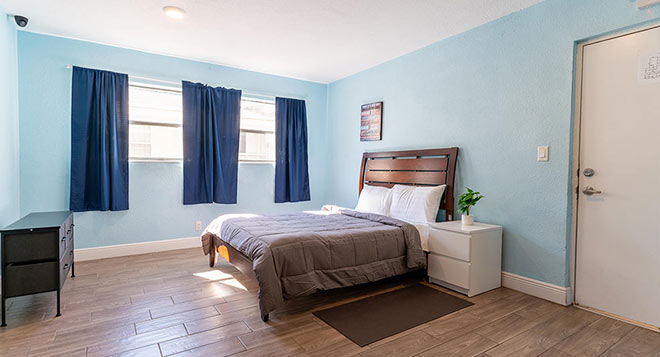
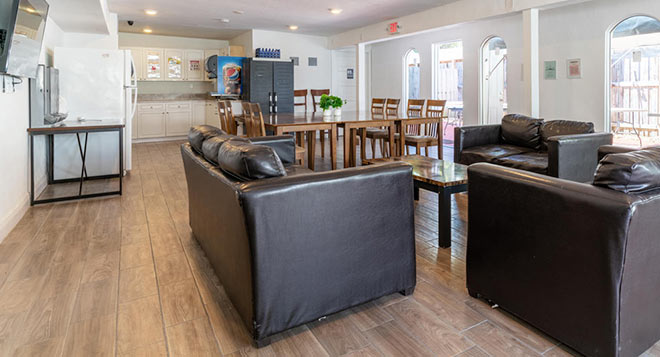
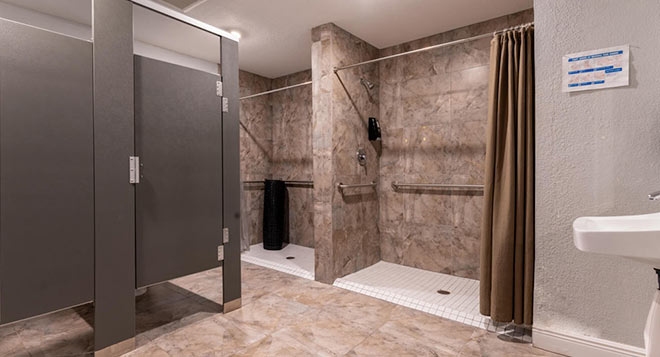
Inside Still Mind
Tour our Fort Lauderdale facility
A 30-bed residential community with shared rooms, green space, and calm indoor areas, staffed around the clock.

Coverage Varies by Plan
Does insurance cover treatment for self-harm and suicidal ideation?
Most plans include residential mental health benefits, and suicidal ideation frequently meets medical-necessity criteria for that level of care. Still Mind verifies your specific coverage at no cost before admission, with no obligation, and holds an active Tricare contract.
Often Seen Alongside
What conditions occur with self-harm and suicidal ideation?
Self-harm and suicidal ideation are symptoms rather than standalone diagnoses, so they almost always accompany another condition. Depression, bipolar disorder, borderline personality disorder, and post-traumatic stress disorder are the conditions Still Mind most often treats alongside them.
Anxiety DisorderPanic and unrelenting worry are common triggers for self-harm urges
DepressionThe condition most often underneath suicidal ideation
Bipolar DisorderDepressive episodes carry the highest suicide risk in the mood-disorder group
Borderline Personality DisorderRepeated self-harm is a diagnostic feature, and DBT treats both
Post-Traumatic Stress DisorderTrauma history is strongly associated with self-harm in adulthood
Body DysmorphiaBody-focused distress can escalate into self-directed injury
Common Questions
Self-harm and suicidal ideation treatment FAQ
What is the difference between self-harm and suicidal ideation?
Self-harm is injury a person inflicts on their own body to cope with emotional pain, without suicidal intent. Suicidal ideation is thinking about ending one's own life. The two are separate, they frequently occur together, and self-harm raises the risk of a later suicide attempt.
What is passive suicidal ideation?
Passive suicidal ideation is wishing to be dead without intent or a plan to act. It sounds like not wanting to wake up, or wanting the pain to stop. Passive ideation still requires clinical assessment, because it can shift to active ideation quickly.
How does Still Mind treat self-harm and suicidal ideation?
Still Mind treats self-harm and suicidal ideation with a safety-first residential model: physician-initiated 1:1 monitoring, 7-day psychiatric coverage, and formal DBT and CBT tracks. Most clients are admitted at LOCUS Level 5 acuity, and the average length of stay is about 42 days.
What causes self-harm and suicidal ideation?
Self-harm and suicidal ideation have three main contributors: an underlying psychiatric condition, trauma history, and acute life stress. Depression, bipolar disorder, and borderline personality disorder are the conditions most often underneath. Substance use lowers the threshold for acting on urges.
Do suicidal thoughts go away?
Suicidal thoughts go away when the condition driving them is treated. They are a symptom, not a permanent state. Treating the underlying depression, bipolar disorder, or trauma reduces the thoughts, and DBT skills give people a way to survive the urges.
Is there self-harm and suicidal ideation treatment in Fort Lauderdale, FL?
Yes. Still Mind provides residential self-harm and suicidal ideation treatment in Fort Lauderdale, Florida, at 208 SE 8th St. The program serves adults 18+ from Broward County, across Florida, and out of state, with 24/7 supervision and insurance verified before admission.
Does insurance cover residential treatment for self-harm and suicidal ideation?
Most plans include residential mental health benefits, and suicidal ideation frequently meets medical-necessity criteria for that level of care. Still Mind verifies your specific coverage at no cost before admission, with no obligation, and holds an active Tricare contract.