




Narcissistic collapse is a psychological crisis where an individual with narcissistic traits experiences a complete breakdown of their inflated self-image and defense mechanisms.
The crisis leads to severe emotional dysregulation, aggressive behaviors, and potential danger to themselves or others. The collapse occurs when the person’s grandiose self-perception can no longer be maintained in the face of overwhelming evidence contradicting their superiority or specialness.
During a narcissistic collapse, the individual loses access to their typical coping strategies of manipulation, blame-shifting, and grandiosity. The result is a raw exposure of underlying shame, vulnerability, and rage that they have spent years or decades suppressing. This psychological state creates significant risk for violence, self-harm, substance abuse, and complete functional deterioration.
So what exactly happens when someone’s narcissistic defenses completely crumble, and how can you recognize when someone is heading toward this dangerous psychological precipice?
Key Takeaways
- Narcissistic collapse manifests in two primary presentations: explosive type with rage, threats, and violence, or implosive type with severe depression, withdrawal, and suicidal ideation, both requiring immediate professional intervention.
- The Substance Abuse and Mental Health Services Administration reports that personality disorder crises constitute a substantial portion of mental health emergencies requiring crisis intervention services nationwide.
- Major triggers include loss of narcissistic supply, public humiliation or exposure, relationship rejection, career or financial failure, aging or illness, and legal consequences that shatter their self-image.
- The acute phase typically lasts several days, but extended crisis periods can persist for weeks to months without proper treatment, with professional stabilization significantly reducing recovery time.
- Safety risks during collapse include violence toward others, self-harm or suicide attempts, reckless behaviors, and substance abuse, making immediate safety planning and professional intervention critical.
What Happens in a Narcissistic Collapse?
A narcissistic collapse represents the complete breakdown of an individual’s narcissistic defense system when faced with undeniable evidence that contradicts their grandiose self-image. The person experiences a psychological crisis where their usual strategies of blame, manipulation, and superiority claims no longer work to maintain their inflated sense of self.
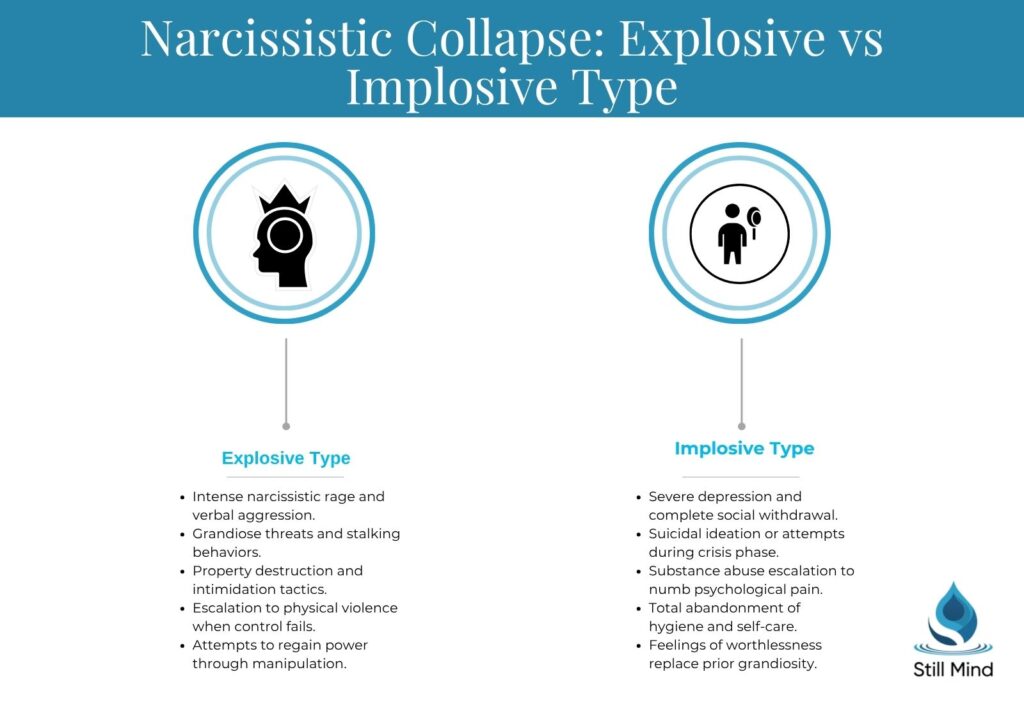
Explosive Type Presentation
The explosive type of narcissistic behavior involves intense narcissistic rage, verbal or physical aggression, and threats toward others. These individuals may make grandiose threats, engage in stalking behaviors, or escalate to physical violence when their attempts to restore their image fail. Property destruction and attempts to regain control through intimidation or manipulation are common features of this presentation type.
Implosive Type Presentation
The implosive type presents with severe depression, complete social withdrawal, and suicidal ideation or attempts. These individuals may disappear from social contacts, stop maintaining basic hygiene, and lose the ability to work or function. Substance abuse escalation and total abandonment of self-care characterize this collapse pattern. They often express feelings of worthlessness or hopelessness that represents the opposite extreme of their previous grandiosity.
The Substance Abuse and Mental Health Services Administration tracks personality disorder crisis presentations and notes that both collapse types require immediate stabilization interventions to prevent escalation to more severe outcomes.
What Triggers a Narcissistic Collapse?
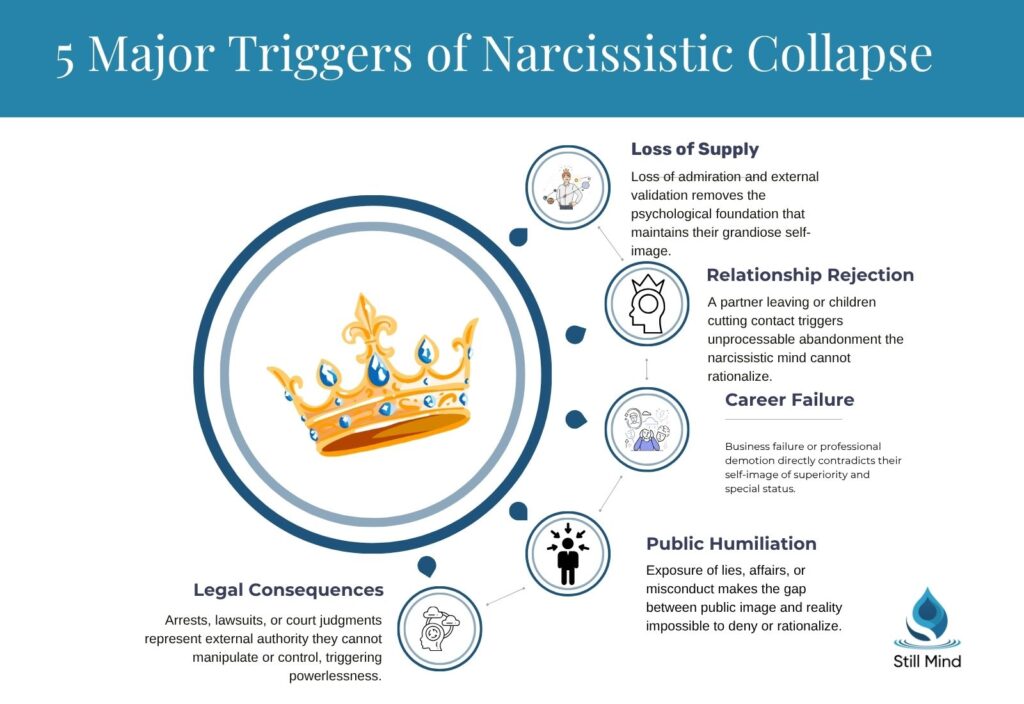
Loss of Narcissistic Supply
Loss of narcissistic supply serves as the most common trigger for collapse.
Narcissistic supply includes admiration, attention, control over others, special treatment, and validation of superiority. When these sources are suddenly removed through relationship endings, job loss, or social rejection, the individual’s psychological foundation crumbles. The person cannot function without constant external validation of their perceived specialness. Without these sources of affirmation, they face the unbearable reality of their actual limitations and flaws.
Public Humiliation and Exposure
Public humiliation or exposure represents another major trigger category. This includes being caught in lies, having affairs or misconduct exposed, facing legal charges, or experiencing professional disgrace. The gap between their public image and reality becomes impossible to deny or rationalize. Having their incompetence revealed publicly shatters the carefully constructed facade they have maintained to support their grandiose self-image.
Relationship and Career Failures
Relationship rejection triggers collapse when a significant other leaves, children cut off contact, or close friends withdraw support.
The narcissistic individual cannot process that someone they view as an extension of themselves would choose to leave. Career and financial failures such as business bankruptcy, professional demotion, or public financial struggles directly contradict their self-image of success and specialness. These failures force confrontation with their actual competence level rather than their inflated self-perception. Legal consequences including arrests, lawsuits, or court judgments represent external authority that they cannot manipulate or control, triggering feelings of powerlessness.
Physical Decline and Aging
Aging, illness, or physical decline forces confrontation with human limitations that narcissistic defenses cannot overcome. The reality of mortality and physical vulnerability directly contradicts beliefs about their specialness or invulnerability.
Duration and Progression of Narcissistic Collapse
Acute Crisis Phase
The acute phase of narcissistic collapse typically lasts several days to a week. During this initial crisis period, the individual experiences the most severe symptoms and highest risk behaviors. This phase requires immediate professional intervention to prevent escalation to violence, self-harm, or complete functional breakdown. The intensity of symptoms during this period can be overwhelming for both the individual and their family members.
Extended Crisis Periods
Extended crisis periods can persist for weeks to months when the collapse goes untreated.
During this phase, the individual may cycle between explosive rage episodes and depressive withdrawal. Gradual deterioration occurs in functioning across all life domains including work, relationships, and self-care. Factors affecting duration include the severity of the triggering event, availability of alternative narcissistic supply sources, and substance use patterns. Access to professional treatment significantly impacts recovery timeline and prevents chronic deterioration.
Professional Stabilization Impact
Professional stabilization significantly reduces recovery time by providing medication management for mood regulation and crisis intervention to address immediate safety concerns. Structured environment prevents further deterioration during the vulnerable crisis period. Without professional intervention, individuals may remain in extended crisis for months or develop chronic depression, substance use disorders, or engage in increasingly dangerous behaviors to restore their sense of superiority.
Warning Signs Someone Is Heading Toward Collapse
Behavioral Changes
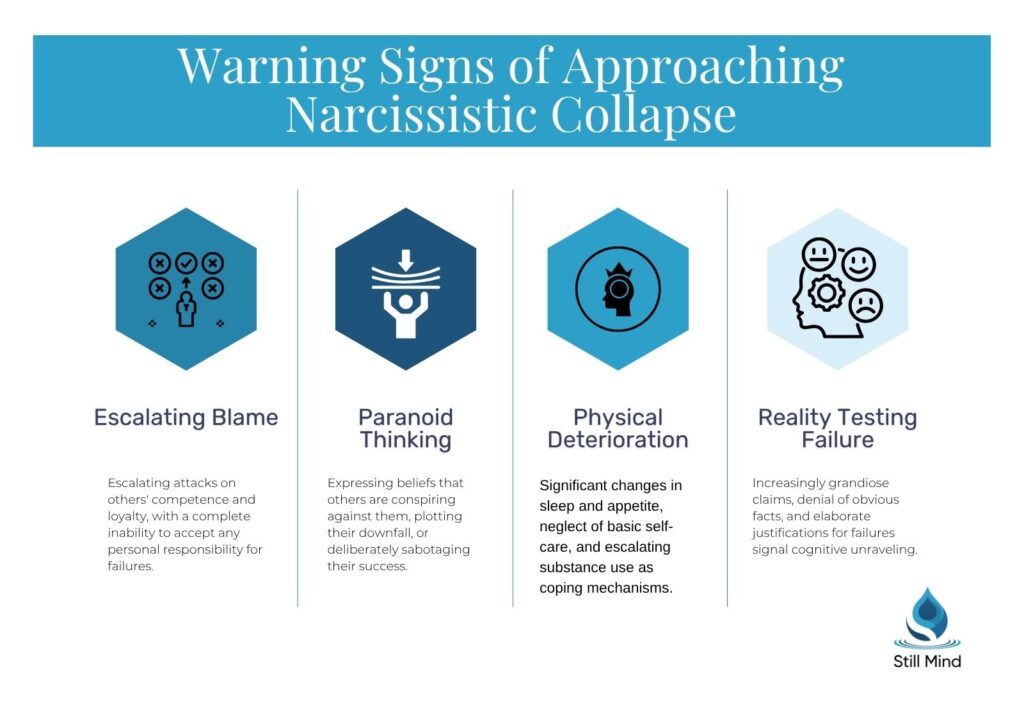
- Increased criticism and blame: escalating attacks on others’ competence, character, or loyalty combined with inability to accept any responsibility
- Paranoid thinking patterns: expressing beliefs that others are conspiring against them, plotting their downfall, or deliberately sabotaging their success
- Threatening statements: verbal threats toward specific individuals, expressions of revenge fantasies, or statements about teaching people lessons
Physical and Social Deterioration
- Sleep and appetite disruption: significant changes in eating patterns, insomnia or hypersomnia, and neglect of basic self-care routines
- Substance use escalation: increasing alcohol consumption, prescription drug misuse, or illicit substance use as coping mechanisms
- Social isolation patterns: withdrawing from previously valued relationships, cutting off family contact, or eliminating social supports
Cognitive Warning Signs
- Reality testing deterioration: making increasingly grandiose claims, denying obvious facts, or creating elaborate justifications for failures
Is a Narcissistic Collapse Dangerous?
Narcissistic collapse presents significant safety risks that require immediate professional assessment and intervention.
Violence and Aggression Risks
Violence toward others represents the most serious immediate threat, particularly targeting individuals the person blames for their collapse. Romantic partners, family members, employers, or perceived rivals face elevated risk during collapse episodes. The combination of impaired judgment, intense emotional dysregulation, and loss of normal inhibitions makes collapsed individuals capable of behaviors they would never consider during stable periods. Family members and others should prioritize their own safety and immediately contact mental health crisis services when warning signs appear.
Self-Harm and Suicide Risk
Self-harm and suicide risk escalates dramatically during collapse phases. The individual may view suicide as a way to punish others, gain sympathy, or escape overwhelming shame. The Centers for Disease Control and Prevention tracks crisis-related incidents and reports that personality disorder crises account for a substantial portion of emergency department visits involving threats, self-harm, and interpersonal violence.
Reckless and Dangerous Behaviors
Reckless behaviors during collapse include dangerous driving, financial sabotage, property destruction, sexual acting out, or deliberately endangering others. Substance abuse often escalates as the individual attempts to numb psychological pain or fuel aggressive behaviors. These combinations create unpredictable and potentially lethal situations for everyone involved in the person’s life.
| Collapse Type | Primary Behaviors | Safety Risks | Intervention Priority |
|---|---|---|---|
| Explosive | Rage, threats, aggression | Violence toward others | Immediate law enforcement |
| Implosive | Withdrawal, depression, isolation | Self-harm, suicide | Crisis mental health team |
| Mixed | Alternating rage and despair | Unpredictable violence | Psychiatric emergency |
What Should You Do If Someone You Know Is Collapsing?
Ensure Your Own Safety First
Maintain physical distance if the person is agitated and avoid confrontation or attempts to reason during active crisis.
Having an exit plan if you must interact with them is essential for your protection. Remove or secure any weapons, medications, or means of harm from the environment if safely possible. Your safety takes priority over helping the collapsed individual, as you cannot provide assistance if you become a target of their aggression or manipulation attempts.
Document Concerning Behaviors
Document concerning behaviors including specific threats made, witnessed aggressive acts, and substance use observed. Record any statements about self-harm or suicide with exact quotes when possible. This documentation provides crucial information for mental health professionals and law enforcement if intervention becomes necessary. Keep records in a safe location away from the collapsed individual’s access.
Contact Appropriate Crisis Services
Contact appropriate crisis services based on the immediate threat level. Call 911 for active violence, immediate threats, or suicide attempts in progress. Contact local crisis mental health teams for depression, withdrawal, or concerning statements without immediate danger. Many areas have mobile crisis units specifically trained in personality disorder emergencies. These professionals can assess the situation and determine the appropriate level of intervention needed.
Common Mistakes to Avoid
Avoid trying to argue with their distorted perceptions or offering reassurance about their specialness or superiority. Making promises you cannot keep or taking responsibility for their emotional state often escalates the crisis. These approaches create additional complications for professional intervention and may increase the danger level for everyone involved.
Why Stabilization Must Come Before Trauma Therapy
Individuals experiencing narcissistic collapse require comprehensive stabilization before any trauma-focused therapy can be effective or safe.
The acute crisis state involves severe emotional dysregulation that makes traditional therapeutic approaches counterproductive and potentially dangerous. Medication management serves as the foundation of stabilization, typically involving mood stabilizers to control emotional swings and antipsychotics for reality testing issues if present. Antidepressants address severe depression while sleep aids restore basic circadian rhythms necessary for psychological stability. Activities of daily living restoration focuses on re-establishing basic self-care and maintaining employment or educational responsibilities.
Risks of Premature Therapy
Attempting therapy during active narcissistic collapse often worsens symptoms by exposing underlying trauma and shame before the individual has developed sufficient emotional regulation skills. The person may use therapeutic insights to fuel further rage, blame the therapeutic process when progress feels slow, or become suicidal when confronted with the reality of their personality patterns. This premature exposure can lead to treatment dropout or therapeutic harm that makes future intervention more difficult.
Residential Treatment Benefits
Residential treatment programs provide structured supervision during the most dangerous collapse phases. These programs offer daily routines to rebuild functioning, medication monitoring and adjustment, and graduated exposure to therapeutic work only after stabilization is achieved. This stabilization-first approach significantly improves long-term treatment outcomes and reduces the risk of treatment dropout or therapeutic harm that can occur when therapy begins too early in the recovery process.
What Recovery Looks Like After Professional Intervention
Medication Stabilization Phase
The medication stabilization phase typically requires several weeks of consistent medication compliance before mood regulation improves sufficiently for therapeutic engagement. During this phase, individuals focus on basic functioning restoration rather than personality change or trauma processing.
Gradual Therapy Engagement
Therapy engagement begins gradually with psychoeducation about personality patterns and development of emotional regulation skills. Identification of trigger patterns and establishment of safety planning provide the foundation for more intensive therapeutic work. The National Institute of Mental Health emphasizes that personality disorder treatment requires long-term commitment with realistic expectations for change rather than cure. Progress is measured in improved functioning and reduced crisis episodes rather than complete personality transformation.
Ongoing Vulnerability Management
Ongoing vulnerability management becomes a lifelong process involving continued medication compliance when indicated and regular therapy sessions to maintain skills. Family involvement helps rebuild damaged relationships while development of alternative sources of self-esteem reduces dependence on narcissistic supply. Many individuals benefit from dialectical behavior therapy skills to manage emotional intensity and cognitive behavioral therapy to address distorted thinking patterns. Successful recovery focuses on harm reduction, improved functioning, and development of healthier coping mechanisms rather than fundamental personality change.
Realistic Recovery Expectations
Common misconceptions about recovery include expecting complete personality transformation or believing that insight alone will prevent future crises.
Assuming that medication can cure underlying personality patterns leads to unrealistic expectations and treatment disappointment. Recovery requires ongoing commitment to maintaining stability through multiple therapeutic modalities and lifestyle changes. Family members benefit from education about personality disorders and their own therapy to address the impact of living with someone prone to narcissistic collapse. This comprehensive approach provides the best foundation for long-term stability and improved quality of life.
Treatment for Narcissistic Personality Patterns and Crisis Stabilization
Residential Mental Health Treatment
Our comprehensive mental health treatment program provides stabilization for individuals experiencing narcissistic collapse or personality disorder crises. The residential setting offers immediate safety, medication management, and structured therapeutic programming designed to restore basic functioning before addressing underlying personality patterns.
Dual Diagnosis Treatment
Many individuals experiencing narcissistic collapse also struggle with co-occurring substance use disorders that complicate treatment and increase safety risks. Our dual diagnosis treatment program addresses both personality disorder symptoms and addiction simultaneously, providing integrated care that improves long-term recovery outcomes.
Dialectical Behavior Therapy
The dialectical behavior therapy program teaches essential emotional regulation skills that help individuals manage the intense shame and rage underlying narcissistic collapse. DBT skills provide practical tools for tolerating distress, improving interpersonal relationships, and reducing impulsive behaviors during crisis periods.
Cognitive Behavioral Therapy
Our cognitive behavioral therapy services help individuals identify and modify the distorted thinking patterns that contribute to narcissistic defenses and collapse episodes. CBT provides structured approaches for developing more realistic self-assessment and healthier coping mechanisms.
The Bottom Line
Narcissistic collapse represents a psychiatric emergency requiring immediate professional intervention to prevent violence, self-harm, and complete functional deterioration. The crisis occurs when narcissistic defenses fail completely, leaving the individual vulnerable to explosive rage or severe depression that poses serious safety risks.
If you or someone you care about is experiencing signs of narcissistic collapse, immediate professional intervention through our comprehensive mental health treatment program can prevent escalation to dangerous behaviors and begin the stabilization process necessary for recovery.
Frequently Asked Questions
What are the cycles of narcissistic collapse?
Narcissistic collapse follows a predictable cycle beginning with increasing stress and threats to the narcissistic self-image, followed by escalating defensive behaviors and blame-shifting. The acute collapse phase involves complete breakdown of defenses with explosive or implosive symptoms. Recovery involves gradual rebuilding of functioning, though without professional intervention, individuals often return to previous patterns and remain vulnerable to future collapses when new stressors emerge.
What does NPD collapse feel like?
Individuals experiencing narcissistic collapse report overwhelming shame and humiliation that feels unbearable, combined with intense rage toward those they blame for their situation. Many describe feeling completely empty or worthless while simultaneously maintaining anger about being treated unfairly. The internal experience involves loss of control over emotions and thoughts, with alternating desires for revenge and escape from psychological pain that can feel absolutely devastating.
Can someone recover from narcissistic collapse on their own?
Self-recovery from narcissistic collapse without professional intervention is extremely unlikely and potentially dangerous. The crisis involves severe emotional dysregulation and impaired judgment that prevents effective self-help strategies. Without medication management and professional stabilization, individuals typically either remain in extended crisis or develop maladaptive coping mechanisms including substance abuse, chronic depression, or increasingly dangerous behaviors that worsen their condition over time.
How is narcissistic collapse different from a regular breakdown?
Narcissistic collapse differs from typical mental health crises because it involves the complete failure of specific defense mechanisms related to grandiosity and superiority rather than general stress overwhelm. Regular breakdowns often involve anxiety, depression, or life circumstances, while narcissistic collapse specifically results from threats to inflated self-image. The recovery process also differs, requiring personality-focused treatment rather than standard crisis intervention approaches that address situational stressors.
Do people with narcissistic traits know they’re collapsing?
Most individuals experiencing narcissistic collapse have limited insight into their condition and typically blame external factors or other people for their crisis. They may recognize feeling overwhelmed or angry but rarely understand the role of their narcissistic defenses in creating the situation. This lack of insight contributes to treatment resistance and makes professional intervention more challenging, often requiring involuntary assessment when safety concerns arise due to their inability to recognize the severity.
How does family trauma therapy help after narcissistic collapse?
Family members affected by someone’s narcissistic collapse often benefit from specialized trauma therapy to address the psychological impact of living with personality disorder behaviors. This therapy helps family members understand the dynamics they’ve experienced, develop healthy boundaries, and process their own emotional reactions. However, family therapy with the collapsed individual should only occur after significant stabilization and never during active crisis periods when safety risks remain elevated.
What medications are used during narcissistic collapse stabilization?
Stabilization medications typically include mood stabilizers like lithium or anticonvulsants to control emotional volatility and aggressive outbursts. Antipsychotic medications may be prescribed for severe reality testing problems or paranoid thinking during crisis episodes. Antidepressants address the depressive component of implosive collapse, while sleep medications restore circadian rhythms disrupted by crisis stress. Medication selection depends on specific symptoms and requires careful monitoring by psychiatric professionals familiar with personality disorder presentations.
How long does it take to stabilize someone after narcissistic collapse?
Initial stabilization typically requires four to eight weeks of intensive treatment including medication optimization, safety planning, and basic functioning restoration. Achieving medication therapeutic levels takes several weeks, while rebuilding daily living skills and emotional regulation happens gradually during this period. Full stabilization sufficient for therapeutic engagement may take two to three months depending on collapse severity, substance use complications, and treatment compliance. Rushing this process increases risk of treatment failure or crisis recurrence.
References
- Centers for Disease Control and Prevention. (2024). Crisis-related incidents and emergency department visits. https://www.cdc.gov
- National Institute of Mental Health. (2024). Personality disorder treatment approaches and expectations. https://www.nimh.nih.gov
- Substance Abuse and Mental Health Services Administration. (2024). Personality disorder crisis presentations and intervention services. https://www.samhsa.gov