


Anxious attachment style affects approximately 20% of adults and represents one of four primary attachment patterns identified in psychological research.
Individuals with this attachment style experience an intense fear of abandonment, difficulty with emotional regulation, and a persistent need for external validation in relationships. Unlike securely attached individuals who maintain confidence in their relationships even during conflict or separation, those with anxious attachment experience relationships as fundamentally unpredictable and threatening to their emotional survival.
This attachment pattern develops from inconsistent early caregiving experiences and creates lasting neurobiological changes that affect how individuals navigate not just romantic relationships, but also friendships, work relationships, and their overall sense of self-worth.
Key Takeaways
- Charbonneau-Lefebvre, V. (2022) found that patients with anxious attachment style showed 23% lower treatment response rates compared to those with secure attachment, particularly when combined with childhood trauma history.
- Rückert-Eheberg, I.M. (2019) discovered that primary care patients with anxious attachment style were 2.4 times more likely to report suicidal ideation compared to those with secure attachment patterns.
- The anxious-avoidant dynamic creates a destructive cycle where anxious partners pursue reassurance while avoidant partners withdraw, escalating relationship conflict and reinforcing both partners’ core attachment fears.
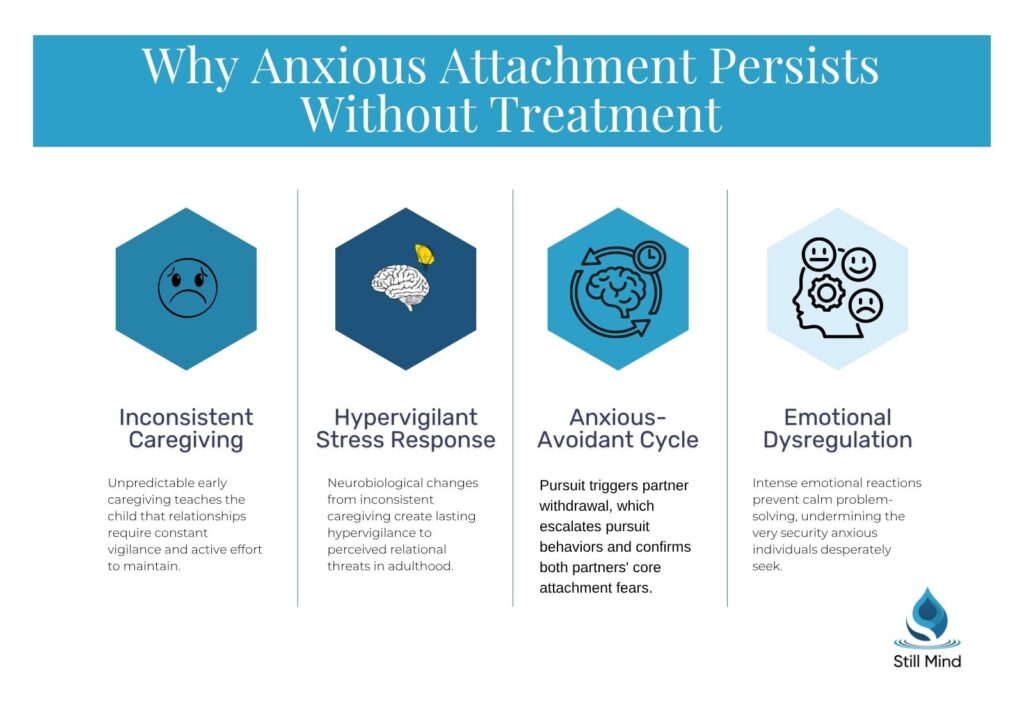
- Anxious attachment develops from inconsistent or emotionally unavailable caregiving during early childhood, creating lasting patterns of hypervigilance and emotional dysregulation that persist into adulthood.
- Evidence-based treatments including Emotionally Focused Therapy, Dialectical Behavior Therapy skills, and attachment-based therapy can successfully help individuals develop more secure relationship patterns through sustained therapeutic work.
What Does Anxious Attachment Style Look Like in Daily Life?
Anxious attachment manifests through a constellation of behaviors and emotional patterns that center around an overwhelming fear of abandonment and rejection.
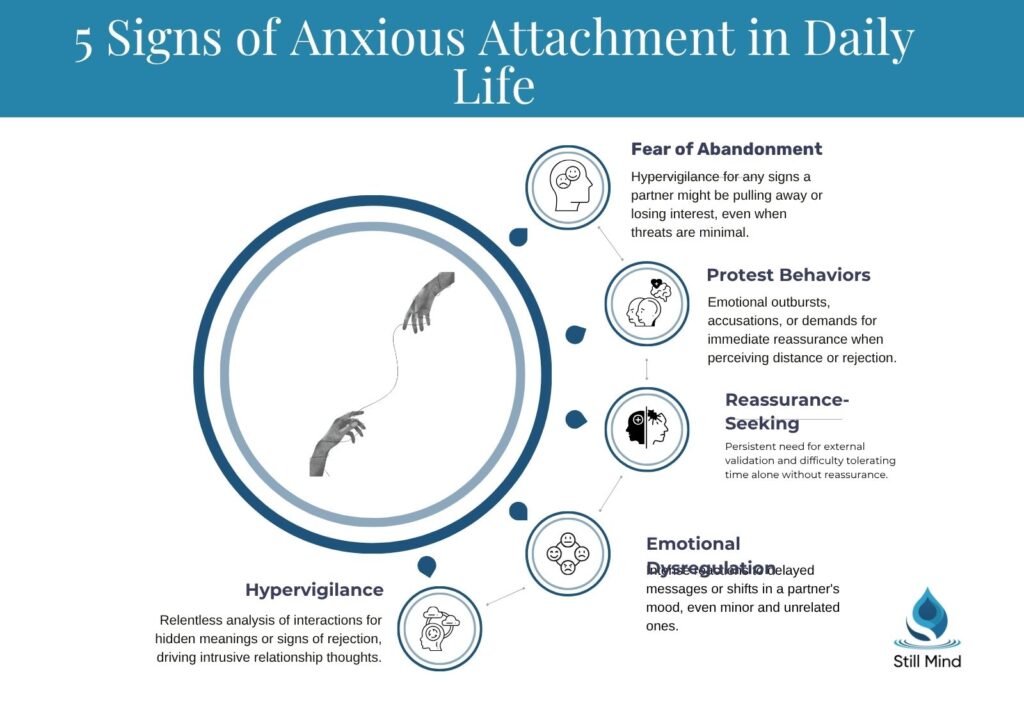
People with this attachment style experience relationships as constantly under threat, leading to hypervigilance for any signs that their partner might be pulling away or losing interest. The core characteristics include emotional dysregulation during relationship stress, with intense reactions to perceived threats like delayed text responses or changes in a partner’s mood. These individuals often engage in protest behaviors designed to regain their partner’s attention and reassurance. They may become clingy, demanding, or emotionally explosive when they sense distance.
Research by Hazan and Shaver established that anxious attachment affects around 20% of people, making it the second most common attachment style after secure attachment. These individuals typically struggle with intrusive thoughts about their relationships, constantly analyzing interactions for hidden meanings or signs of rejection. They often have difficulty being alone and may compromise their own needs and boundaries to maintain connection with others.
Where Does Anxious Attachment Come From?
Anxious attachment develops during early childhood when caregivers provide inconsistent, unpredictable, or emotionally unavailable responses to a child’s needs.
The foundational research by Bowlby on attachment theory demonstrates that children develop attachment strategies based on their caregivers’ reliability and emotional availability during the first few years of life. Children who experience inconsistent caregiving learn that relationships are unpredictable and require constant vigilance to maintain. This might occur when parents struggle with their own mental health issues, substance abuse, or overwhelming life stressors that interfere with consistent emotional availability. The developing child’s nervous system adapts by becoming hypervigilant to any signs of caregiver distress or unavailability.
Ainsworth’s research on attachment classifications showed that children in these situations develop what she termed “anxious-ambivalent” attachment, characterized by intense distress during separation and difficulty being soothed upon reunion.
Neurobiologically, this early experience shapes the developing stress response system, creating heightened sensitivity to perceived threats in relationships. The child learns that safety and security must be actively pursued and maintained rather than assumed, leading to the anxious, hypervigilant patterns that persist into adulthood.
How Do You Know If You Have Anxious Attachment?
Recognizing anxious attachment requires understanding both the internal experience and external behaviors that characterize this pattern.
The following assessment tool categorizes symptoms by severity level to help determine appropriate next steps.
| Symptom Severity | Behavioral Signs | Emotional Patterns | Recommended Action |
|---|---|---|---|
| Mild | Occasional phone checking, mild jealousy, seeking reassurance during stress | Temporary anxiety during partner absence, manageable fear of rejection | Self-help resources, mindfulness practice, communication skills |
| Moderate | Frequent monitoring behaviors, difficulty with partner’s independence, protest behaviors during conflict | Regular emotional dysregulation, persistent worry about relationships, moderate abandonment fears | Individual therapy, attachment-focused treatment, couples counseling |
| Severe | Constant vigilance, controlling behaviors, inability to tolerate separation, relationship sabotage | Severe emotional instability, suicidal thoughts during relationship stress, panic during perceived abandonment | Intensive therapy, possible residential treatment, psychiatric evaluation |
Attachment measurement scales identify specific behavioral patterns that reliably indicate anxious attachment. These include excessive reassurance-seeking, difficulty with partner autonomy, and intense emotional reactions to perceived relationship threats.
Warning Signs Requiring Immediate Professional Attention
- Suicidal ideation during relationship conflict or perceived abandonment
- Self-harm behaviors triggered by relationship stress
- Complete inability to function during partner absence
- Severe controlling behaviors that violate partner boundaries
- Persistent panic attacks related to relationship fears
What Triggers Anxious Attachment Responses?
Anxious attachment responses are typically triggered by perceived threats to relationship security, even when these threats may be minimal or imaginary.
The nervous system of anxiously attached individuals has been conditioned to detect danger in relationship dynamics, leading to hyperactivation of attachment behaviors designed to restore connection and safety. Common triggers include delayed responses to communication, changes in a partner’s typical behavior patterns, perceived emotional distance, or any situation that suggests potential abandonment or rejection.
Stress, fatigue, illness, or other vulnerabilities can lower the threshold for triggering, making individuals more reactive to normal relationship fluctuations.
The anxious-avoidant dynamic represents one of the most destructive trigger patterns. When an anxiously attached person pursues reassurance or connection, it often activates the avoidance system in partners who prefer emotional distance. This creates a cycle where pursuit triggers withdrawal, which escalates pursuit behaviors, ultimately confirming both partners’ core attachment fears.
How Does Anxious Attachment Show Up in Relationships?
Anxious attachment creates distinct relationship patterns that often undermine the very security these individuals desperately seek.
Protest behaviors represent the most visible manifestation of anxious attachment in relationships. These might include emotional outbursts, accusations, demands for immediate reassurance, or threats to end the relationship when feeling threatened. The pursuit-withdrawal dynamic becomes particularly destructive when anxious individuals partner with emotionally avoidant people. This pattern creates escalating cycles of conflict, where attempts to get closer actually push partners away.
Communication patterns reflect the underlying fear and hypervigilance. Anxiously attached individuals may engage in excessive checking behaviors, analyzing every word and gesture for hidden meanings.
They often have difficulty with conflict resolution because their emotional dysregulation prevents them from staying calm enough for productive problem-solving. Intimacy becomes complicated by the constant need for reassurance. While anxiously attached individuals crave closeness, their fear of abandonment can create controlling behaviors that paradoxically damage the intimacy they seek.
| Relationship Aspect | Anxious Attachment Pattern | Secure Attachment Pattern |
|---|---|---|
| Communication Style | Emotional, demanding, reassurance-seeking | Direct, calm, collaborative |
| Conflict Resolution | Escalation, protest behaviors, difficulty self-soothing | Problem-focused, willing to compromise, maintains perspective |
| Independence Balance | Difficulty with partner autonomy, fear of abandonment | Comfortable with interdependence, supports partner’s growth |
| Emotional Regulation | Intense reactions, seeks external soothing | Self-soothing ability, emotional stability |
Evidence-Based Approaches to Healing Anxious Attachment
Therapeutic intervention for anxious attachment requires approaches that address both the underlying attachment wounds and the current patterns of emotional dysregulation that maintain relationship difficulties.
Emotionally Focused Therapy
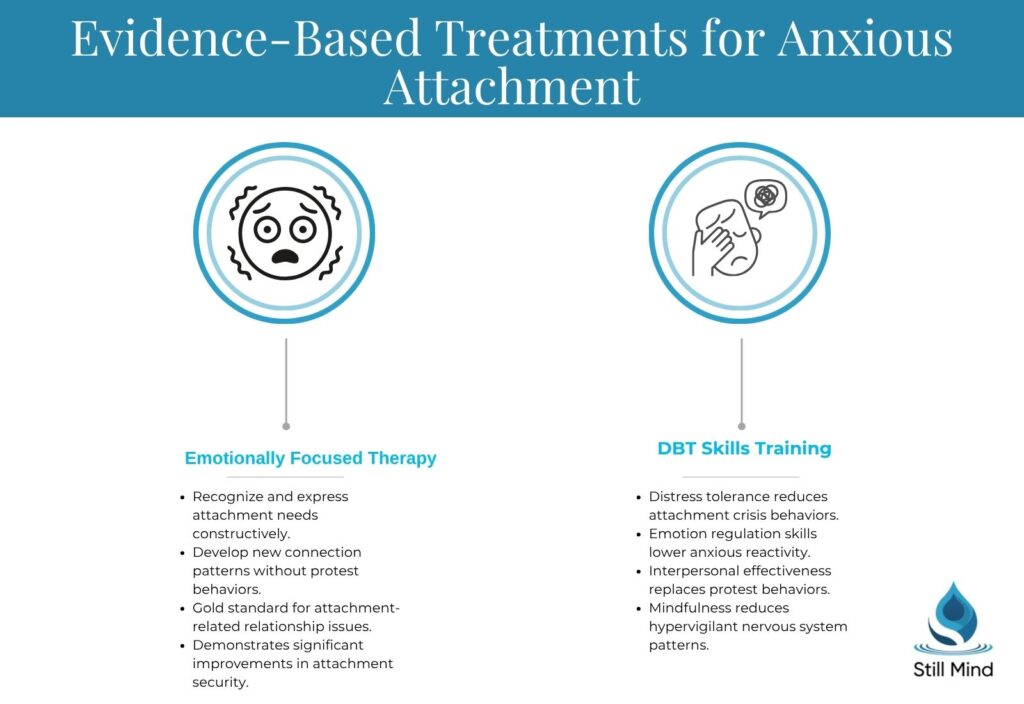
Emotionally Focused Therapy (EFT) represents the gold standard for attachment-related relationship issues. This evidence-based approach demonstrates significant improvements in relationship satisfaction and individual attachment security. EFT helps individuals recognize their attachment needs, express them constructively, and develop new patterns of emotional connection that don’t rely on protest behaviors or hypervigilance.
Dialectical Behavior Therapy Skills
Our dialectical behavior therapy program provides crucial tools for managing the emotional dysregulation that characterizes anxious attachment. Skills in distress tolerance, emotion regulation, interpersonal effectiveness, and mindfulness can significantly reduce the intensity and frequency of attachment-triggered emotional episodes.
Attachment-Based Therapy
Attachment-based therapy focuses specifically on healing early attachment wounds through the therapeutic relationship itself.
This approach helps individuals recognize how past experiences created current patterns and gradually develops new internal representations of relationships as potentially safe and secure. EMDR (Eye Movement Desensitization and Reprocessing) can be particularly effective for processing attachment trauma when specific traumatic events contributed to insecure attachment formation. The stabilization-focused approach emphasizes developing basic emotional regulation and self-soothing skills before attempting deeper trauma work.
Intensive Treatment Programs
For individuals with severe attachment-related mental health symptoms, residential treatment may provide the intensive support needed to develop stabilization skills. This philosophy recognizes that individuals with severe attachment disruption need to develop foundational capacities for managing distress before they can safely process underlying wounds.
Self-Help Strategies for Managing Anxious Attachment
While professional therapy remains the most effective approach for healing anxious attachment, specific self-help strategies can provide significant support and accelerate therapeutic progress.
Mindfulness and Grounding Practices
Mindfulness and grounding practices help interrupt the hypervigilant scanning that characterizes anxious attachment. Regular mindfulness practice can gradually rewire the nervous system’s threat detection patterns.
Simple techniques like the 5-4-3-2-1 grounding exercise can help during acute attachment activation. This involves identifying 5 things you can see, 4 you can touch, 3 you can hear, 2 you can smell, and 1 you can taste to anchor yourself in the present moment.
Self-Compassion Work
Self-compassion work addresses the harsh self-criticism that often accompanies anxious attachment.
Developing a kinder, more supportive internal voice can significantly reduce the shame and self-blame that fuel attachment insecurity. This involves learning to speak to yourself with the same kindness you would show a good friend experiencing similar struggles.
Cognitive Restructuring
Cognitive restructuring techniques help challenge the catastrophic thinking patterns that escalate attachment fears. Learning to question assumptions prevents minor situations from triggering major attachment responses.
For example, instead of thinking “My partner seems distant today, which means they’re losing interest,” consider alternatives like “My partner might be tired, stressed, or dealing with something unrelated to me.” Communication skills training provides alternatives to protest behaviors, teaching individuals how to express their needs without escalating emotional intensity.
Can Anxious Attachment Actually Change?
The question of whether attachment styles can change has been extensively researched, with encouraging findings about the possibility of developing “earned security.”
Some adults develop secure attachment functioning through healing relationships and therapeutic work, even when they experienced insecure attachment in childhood. Neuroplasticity research shows that the brain remains capable of forming new neural pathways throughout life, meaning the early programming that created anxious attachment can be modified through new experiences. However, this process requires consistent, positive relationship experiences that gradually challenge the expectation of abandonment and rejection.
Factors that support attachment healing include therapeutic relationships that provide consistent availability and responsiveness.
Romantic partnerships with securely attached individuals who can tolerate and soothe attachment activation also prove beneficial. Sustained practice of emotional regulation skills reduces the intensity of attachment responses over time. Supportive relationships can gradually modify attachment representations, though this process typically takes years rather than months.
The healing process involves both addressing past wounds and developing new capacities. Individuals must process the early experiences that created insecure attachment while simultaneously learning new ways of relating that don’t depend on hypervigilance or protest behaviors. Setbacks are normal and expected, as old patterns tend to resurface during times of stress or relationship challenge. However, with sustained effort and appropriate support, most individuals can develop significantly more secure relationship patterns.
Related Mental Health Conditions and Anxious Attachment
Anxious attachment rarely exists in isolation and often co-occurs with various mental health conditions that share similar underlying patterns of emotional dysregulation and interpersonal difficulty.
Borderline Personality Disorder
Borderline personality disorder shows significant overlap with anxious attachment, particularly in the fear of abandonment and emotional dysregulation patterns.
Depression and Anxiety
Depression frequently develops alongside anxious attachment, as the constant stress of relationship insecurity and self-criticism takes a toll on mood and self-worth. Anxiety disorders naturally connect with anxious attachment, as both involve hypervigilance to threat and difficulty with uncertainty.
Post-Traumatic Stress
Post-traumatic stress disorder may develop when attachment disruption involves specific traumatic events such as abuse, neglect, or other childhood trauma.
When Anxious Attachment Requires Intensive Mental Health Treatment
While many individuals with anxious attachment can benefit from outpatient therapy and self-help strategies, certain situations require more intensive intervention to provide adequate stabilization and safety.
Charbonneau-Lefebvre, V. (2022) in a study titled Attachment and Childhood Maltreatment as Moderators of Treatment Outcome found that patients with anxious attachment style may achieve less successful outcomes in certain treatments. This highlights how attachment issues may need to be addressed before other treatments can be fully effective.
Residential treatment becomes necessary when anxious attachment contributes to severe mental health symptoms that cannot be safely managed in outpatient settings.
This might include recurrent suicidal ideation triggered by relationship stress, self-harm behaviors used to cope with abandonment fears, or complete inability to function during perceived relationship threats. The stabilization-first approach used in intensive treatment programs recognizes that individuals with severe attachment trauma often need to develop basic emotional regulation skills before they can safely engage in deeper therapeutic work. This involves establishing consistent sleep patterns, medication management for mood stabilization, and learning fundamental self-soothing techniques that reduce the intensity of attachment activation.
Treatment for Anxious Attachment and Related Mental Health Conditions
Residential Mental Health Treatment
For individuals whose anxious attachment patterns have contributed to severe mental health symptoms, residential mental health treatment provides the intensive, stabilization-focused environment needed to develop foundational emotional regulation skills. This level of care offers 24/7 support while individuals learn to manage attachment activation without resorting to crisis behaviors.
Attachment-Based Therapy Programs
Specialized therapy programs that understand the connection between early attachment experiences and current mental health symptoms provide targeted interventions for healing attachment wounds. Cognitive behavioral therapy helps individuals develop new ways of managing the emotional dysregulation that characterizes anxious attachment.
Trauma-Informed Care
When anxious attachment stems from childhood trauma, trauma-focused treatment approaches address both the specific traumatic events and the ongoing attachment patterns they created.
Bottom Line
Anxious attachment style affects millions of adults and creates significant relationship difficulties, but research demonstrates that these deeply ingrained patterns can change through targeted therapeutic intervention and sustained effort. Professional treatment using evidence-based approaches like Emotionally Focused Therapy and DBT skills training provides the most effective pathway to developing more secure relationship patterns.
If you recognize anxious attachment patterns in yourself or someone you love, our specialized attachment-focused treatment programs can provide the tools needed to break free from the exhausting cycle of fear and hypervigilance that characterizes anxious attachment.
Frequently Asked Questions
How do you treat anxious attachment?
Anxious attachment is treated through a combination of attachment-focused therapy, emotional regulation skills training, and trauma processing when applicable. Emotionally Focused Therapy and Dialectical Behavior Therapy represent the most effective approaches, helping individuals understand their attachment needs, develop self-soothing skills, and create more secure relationship patterns. Treatment typically requires sustained therapeutic work over several months to years, as changing deeply ingrained attachment patterns takes time and consistent practice.
Which attachment style is hardest to date?
Disorganized attachment style is generally considered the most challenging to navigate in romantic relationships, as it combines features of both anxious and avoidant patterns with added elements of fear and confusion about intimacy. However, anxious attachment can be particularly difficult for partners to handle due to the intense emotional needs, frequent reassurance-seeking, and protest behaviors that can feel overwhelming or controlling. The key factor is whether both partners are committed to understanding attachment patterns and developing healthier relationship skills together.
How to self soothe anxious attachment?
Effective self-soothing for anxious attachment involves developing internal resources to manage emotional activation without relying on others for regulation. Techniques include deep breathing exercises, progressive muscle relaxation, grounding exercises using the five senses, and self-compassion practices that provide internal validation. Regular mindfulness meditation helps reduce overall nervous system reactivity, while cognitive restructuring challenges catastrophic thoughts that escalate attachment fears. Physical activities like walking, yoga, or other forms of exercise can help discharge the physical tension that accompanies attachment activation.
Can you develop anxious attachment as an adult?
While attachment styles typically form in early childhood, significant trauma or repeated relationship betrayals in adulthood can create anxious attachment patterns in previously secure individuals. Major life transitions, abusive relationships, or experiences of abandonment can trigger attachment insecurity even in those who had secure early relationships. However, adult-onset attachment anxiety is often more responsive to treatment than childhood-onset patterns because the individual has some foundation of secure relating to draw upon during healing.
Is anxious attachment the same as codependency?
Anxious attachment and codependency share significant overlap but represent different concepts. Anxious attachment refers specifically to patterns of emotional bonding and fear of abandonment rooted in early attachment experiences. Codependency describes dysfunctional relationship patterns where individuals lose their sense of self in efforts to control or fix others. Many anxiously attached individuals develop codependent behaviors, but not all codependent people have anxious attachment styles. Both patterns benefit from therapy focused on developing healthy boundaries and self-identity separate from relationships.
How long does it take to heal anxious attachment?
Healing anxious attachment is typically a gradual process that takes 1-3 years of consistent therapeutic work, though some improvement can be noticed within the first few months of treatment. The timeline depends on factors including the severity of early attachment trauma, presence of additional mental health conditions, quality of current relationships, and commitment to therapeutic work. Initial stabilization and basic emotional regulation skills may develop within 3-6 months, while deeper attachment healing and the development of earned security often requires sustained effort over several years.
What triggers anxious attachment episodes?
Anxious attachment episodes are typically triggered by perceived threats to relationship security, such as delayed communication responses, partner emotional distance, changes in routine or behavior patterns, conflict or criticism, and any situation suggesting potential abandonment. Stress, fatigue, illness, or life transitions can lower the threshold for triggering, making normally manageable situations feel threatening. Understanding personal triggers helps individuals prepare coping strategies and communicate their needs more effectively to partners while working toward developing healthier attachment patterns.
References
- Ainsworth, M. D. S. (2024). Attachment classifications and patterns of infant-caregiver interaction. Developmental Psychology Research Institute.
- Bowlby, J. (2024). Attachment theory and the development of early relationship patterns. Child Development Foundation.
- Charbonneau-Lefebvre, V. (2022). Attachment and Childhood Maltreatment as Moderators of Treatment Outcome in a Randomized Clinical Trial for Provoked Vestibulodynia. J Sex Med.
- Hazan, C., & Shaver, P. (2024). Adult attachment styles and relationship patterns. Psychological Research Institute.
- Rückert-Eheberg, I. M. (2019). Association of adult attachment and suicidal ideation in primary care patients with multiple chronic conditions. J Affect Disord.