



Attention deficit hyperactivity disorder (ADHD) is a neurodevelopmental disorder characterized by persistent patterns of inattention, hyperactivity, and impulsivity that interfere with daily functioning and development. It is one of the most common mental health conditions in both children and adults worldwide.
This article covers what ADHD is, its full clinical meaning, the three types recognized in the DSM-5, symptoms across age groups, causes, how diagnosis works, and the most effective treatment options available today.
Key Highlights
- Approximately 1 in 9 U.S. children (11.4%) have ever been diagnosed with ADHD, representing over 7 million children aged 3 to 17, according to the CDC’s 2022 National Survey of Children’s Health.
- The overall prevalence of current adult ADHD is estimated at 4.4%, with approximately one-third of children diagnosed with ADHD retaining the diagnosis into adulthood, per NIMH data.
- ADHD is classified as a neurodevelopmental disorder under the DSM-5, not simply a behavioral problem or a result of poor parenting.
- Nearly 78% of children with ADHD have at least one co-occurring condition, with almost half having a behavior or conduct problem and about 4 in 10 having anxiety, per CDC data.
- Combination treatment using both medication and behavioral therapy produces better outcomes than either approach alone, particularly for children with moderate to severe ADHD.
What Is Attention Deficit Hyperactivity Disorder?
Attention-deficit hyperactivity disorder, commonly referred to by its acronym ADHD, is a chronic neurodevelopmental condition that affects how the brain regulates attention, impulse control, and activity levels. The full form of ADHD reflects its three core symptom domains: inattention, hyperactivity, and impulsivity.
ADHD is not a failure of willpower or a product of parenting style. It reflects real, measurable differences in brain development and neurochemistry, particularly involving the dopamine and norepinephrine systems that govern executive function. The DSM-5 classifies it under neurodevelopmental disorders, alongside autism spectrum disorder and learning disorders.
Symptoms must be present before age 12, persist for at least six months, appear in multiple settings (home, school, work), and cause significant impairment to meet the clinical threshold for diagnosis. ADHD does not resolve automatically with age, though its presentation often shifts across the lifespan.
ADHD Full Form and ICD-10 Code
The full form of ADHD is Attention-Deficit/Hyperactivity Disorder. In the ICD-10 (International Classification of Diseases, 10th Revision), the primary code for ADHD is F90, with subcategories including F90.0 (predominantly inattentive type), F90.1 (predominantly hyperactive-impulsive type), F90.2 (combined type), and F90.9 (unspecified). The ICD-10-CM codes are used for insurance billing, healthcare documentation, and epidemiological tracking across the United States.
In the DSM-5, ADHD is classified under code 314.00 (predominantly inattentive presentation) or 314.01 (predominantly hyperactive-impulsive or combined presentation). Clinicians use DSM-5 criteria for diagnosis and ICD-10 codes for billing purposes.
Is ADHD a Mental Illness or Neurological Disorder?
ADHD occupies a unique clinical position. It is formally classified as a mental disorder under the DSM-5 because it involves significant impairment in psychological functioning. It is also accurately described as a neurodevelopmental or neurological condition because it originates in differences in brain development, structure, and chemistry rather than psychological trauma alone.
Both descriptions are clinically valid and serve different purposes. Calling it a mental illness supports access to mental health treatment and insurance coverage. Calling it a neurological condition reflects the biological reality of how and why it develops. Most contemporary experts describe ADHD as a neurodevelopmental disorder that falls within the broader mental health landscape.
Three Types of ADHD
The DSM-5 replaced the older term “subtypes” with “presentations,” acknowledging that a person’s ADHD profile can change over time. There are three recognized presentations based on which symptoms predominate over a six-month period.
Predominantly Inattentive Presentation
This presentation is characterized primarily by difficulty sustaining focus, staying organized, and following through on tasks. The person is not necessarily hyperactive. They may appear to daydream, lose things frequently, struggle to follow multi-step instructions, and miss details in schoolwork or professional tasks.
Inattentive ADHD is more likely to go undiagnosed, particularly in girls and women, because it does not produce the disruptive classroom behavior that typically prompts referrals. This presentation was formerly called ADD (Attention Deficit Disorder without Hyperactivity).
Predominantly Hyperactive-Impulsive Presentation
This presentation is defined by excess physical movement, difficulty staying seated, and impulsive decision-making. The person acts before thinking, interrupts conversations, struggles to wait their turn, and may seem driven by an internal motor that is difficult to switch off.
Pure hyperactive-impulsive ADHD without inattention is less common and tends to be more visible and diagnosed earlier, particularly in young boys. This is the stereotypical presentation most people picture when they hear “ADHD.”
Combined Presentation
The combined presentation involves significant symptoms from both the inattentive and hyperactive-impulsive categories. This is the most common clinical presentation across all ages. A person must meet the threshold of at least five symptoms (in adults) or six (in children) from each domain to receive this diagnosis.
ADHD Symptoms
ADHD symptoms fall into two main categories according to the DSM-5. Inattention symptoms and hyperactivity-impulsivity symptoms present differently depending on age, gender, and the cognitive demands of the environment.
5 Core Symptoms of Inattention
- Careless mistakes and poor attention to detail: Frequently making errors in schoolwork, reports, or routine tasks due to insufficient focus, rather than an inability to understand the material
- Difficulty sustaining attention: Struggling to maintain concentration through lectures, meetings, or lengthy reading sessions, especially when the content is not inherently engaging
- Easily distracted and forgetful: Losing track of tasks, forgetting appointments, misplacing keys and important items, and becoming sidetracked by unrelated stimuli
- Avoidance of mentally demanding tasks: Resisting or postponing tasks that require prolonged mental effort, such as paperwork, homework, or extended projects
- Failure to follow through: Starting tasks or conversations and not finishing them, not because of opposition but because attention drifts before completion
5 Core Symptoms of Hyperactivity and Impulsivity
- Fidgeting and difficulty remaining seated: Constant movement, squirming, tapping, or leaving one’s seat in situations where staying seated is expected
- Excessive talking and difficulty being quiet: Talking excessively in social situations or during activities that require restraint
- Acting before thinking: Blurting out answers, interrupting others, or making impulsive decisions with little regard for consequences
- Difficulty waiting: Struggling to wait in lines, take turns in conversations, or delay gratification in any meaningful way
- Intrusive behavior: Butting into others’ activities, finishing their sentences, or using others’ belongings without permission
Understanding the full picture of ADHD, including what goes unseen beneath the surface, is explored in depth in the ADHD iceberg model, which shows why the most impairing symptoms are often the least visible ones.
ADHD Symptoms in Adults vs. Children
| Symptom Area | How It Looks in Children | How It Looks in Adults |
|---|---|---|
| Hyperactivity | Running, climbing, constant physical movement | Inner restlessness, inability to relax, excessive talking |
| Inattention | Missing classroom instructions, incomplete homework | Missing deadlines, forgetting meetings, poor organization |
| Impulsivity | Blurting out answers, pushing in line, acting out | Impulsive spending, risky decisions, relationship friction |
| Emotional dysregulation | Tantrums, frustration intolerance, mood swings | Rejection sensitivity, low frustration tolerance, irritability |
| Focus issues | Difficulty in structured academic settings | Hyperfocus on interests, difficulty with routine obligations |
Adults with ADHD also commonly experience difficulties with object permanence, meaning things feel as though they do not exist when out of sight, which significantly affects memory for tasks, relationships, and responsibilities.
What Does ADHD Do to a Person?
ADHD affects nearly every domain of life when left unmanaged. Its impact extends well beyond difficulty focusing in school. People with ADHD are statistically more likely to experience academic underachievement, job instability, relationship difficulties, financial problems, and substance use compared to the general population.
Chronic criticism and repeated “failures” that are actually ADHD symptoms create a secondary layer of psychological impact. Many adults with ADHD develop low self-esteem, sensitivity to criticism, and significant anxiety or depression as a result of years of unrecognized or untreated symptoms. The American Psychiatric Association notes that adults with ADHD may experience heightened self-criticism that stems from consistently higher levels of external criticism throughout their development.
Emotional dysregulation is one of the most impairing, but least discussed, aspects of ADHD. Many people with ADHD struggle intensely with rejection-sensitive dysphoria, mood swings, and difficulty managing frustration, all of which affect close relationships and workplace performance. Understanding rejection sensitive dysphoria is key to recognizing how emotional pain in ADHD differs from typical moodiness.
Causes of ADHD
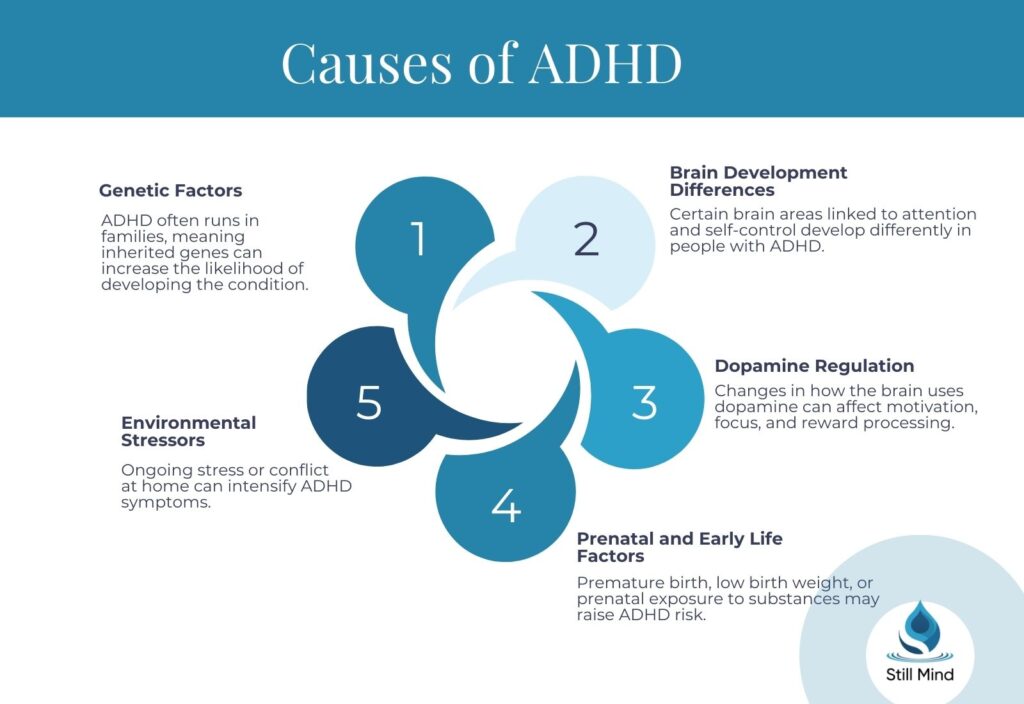
ADHD does not have a single confirmed cause. The current evidence points to a combination of genetic and environmental factors that influence brain development, particularly in circuits governing attention and impulse regulation.
- Genetics: ADHD runs strongly in families; if a parent has ADHD, a child has roughly a 50% chance of developing the disorder. Twin studies place heritability estimates between 70 and 80 percent
- Brain development differences: Neuroimaging research shows differences in the size, connectivity, and developmental timing of brain regions involved in executive function, including the prefrontal cortex
- Prenatal exposures: Maternal smoking, alcohol use, and exposure to certain toxins during pregnancy are associated with increased ADHD risk in the child
- Premature birth and low birth weight: Children born weighing less than 1,500 grams have elevated ADHD risk
- Environmental toxins: Early childhood lead exposure has been linked to ADHD-like symptoms and contributes to risk in exposed populations
- Iron deficiency and sleep disorders: Both can mimic or worsen ADHD symptoms and should be ruled out during evaluation
Sugar, poor parenting, excessive screen time, and vaccines do not cause ADHD. These are persistent myths not supported by clinical evidence.
How Is ADHD Diagnosed?
There is no single lab test, brain scan, or genetic test that diagnoses ADHD. Diagnosis is a clinical process based on DSM-5 criteria and typically involves multiple sources of information across multiple settings.
A comprehensive ADHD evaluation typically includes a detailed clinical interview about developmental and symptom history, standardized rating scales completed by the patient, parents, and teachers, a review of academic or occupational records, a medical history to rule out conditions that can mimic ADHD (such as thyroid disorders, sleep apnea, anxiety, depression, and learning disabilities), and sometimes neuropsychological testing.
For adults, the process is similar but adapted to adult life contexts. Proof that symptoms were present before age 12 is required, which is often gathered through childhood report cards, parent interviews, or retrospective self-report. Adults need to meet at least five symptoms in the relevant category, compared to six for children under 17. Understanding whether ADHD qualifies as a disability is important for adults seeking workplace or educational accommodations.
ADHD Symptoms and Treatment Options
Treatment for ADHD is most effective when it combines multiple approaches tailored to the individual’s age, symptom profile, and life context. The goal is not to change personality but to reduce impairment and improve daily functioning.
Medication
Stimulant medications, including amphetamines (Adderall) and methylphenidate (Ritalin, Concerta), are the most widely studied and effective pharmacological treatments for ADHD. They work by increasing dopamine and norepinephrine availability in the prefrontal cortex, improving attention regulation and impulse control. Non-stimulant options such as atomoxetine (Strattera) and guanfacine are used when stimulants are not appropriate or not tolerated.
NIMH notes that medication is the single most effective treatment for reducing core ADHD symptoms of impulsivity, inattention, and hyperactivity. However, medication alone does not address the behavioral, emotional, and organizational challenges that accompany ADHD.
Behavioral Therapy
Behavioral therapy is the recommended first-line treatment for children under six years old, before medication is considered. For school-age children and adults, it is most effective when combined with medication. Behavioral approaches teach practical coping strategies, organizational systems, time management skills, and ways to respond to frustration without impulsive behavior.
Cognitive behavioral therapy adapted for ADHD addresses not just behaviors but the underlying thought patterns, avoidance cycles, and emotional responses that make ADHD so impairing in daily life.
Parent Training and Family Support
For children with ADHD, parent behavior management training consistently produces strong outcomes. Parents learn to create structure, use positive reinforcement effectively, reduce conflict around homework and transitions, and advocate for their child in educational settings.
School and Workplace Accommodations
Formal accommodations can significantly reduce functional impairment. Common examples include extended test time, preferential seating, task chunking, reminder systems, and reduced-distraction testing environments. Under U.S. law, students with ADHD who qualify may be entitled to a 504 Plan or an Individualized Education Program (IEP).
ADHD and Co-Occurring Conditions
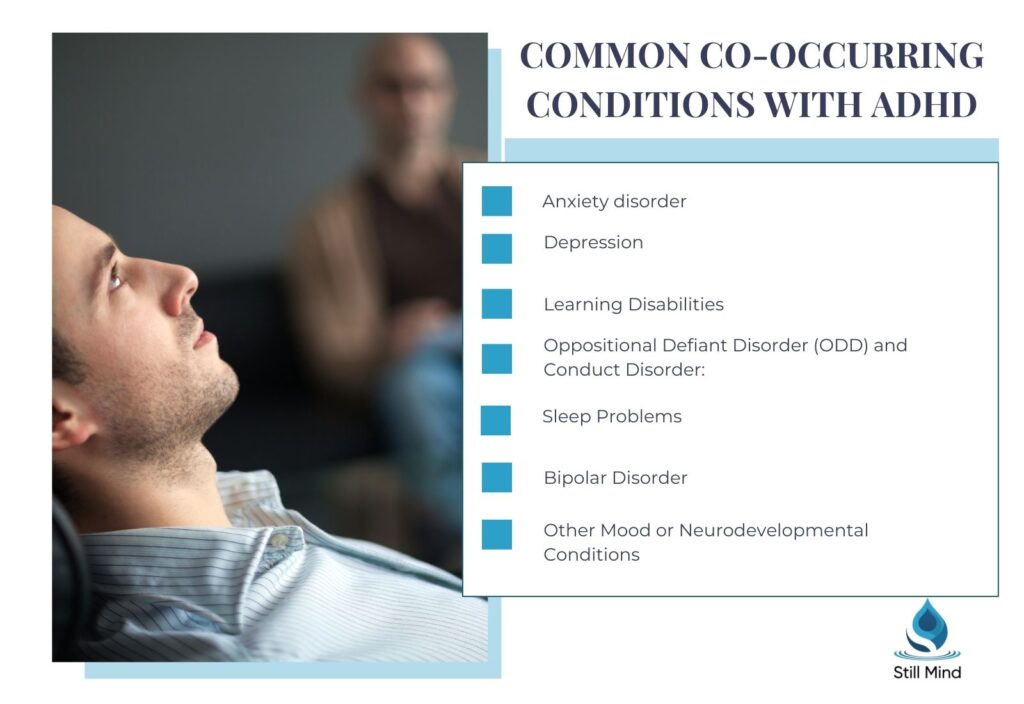
ADHD rarely presents in isolation. According to 2022 CDC data, nearly 78% of children with ADHD have at least one co-occurring condition. The most common include anxiety disorders (approximately 40% of children with ADHD), behavior or conduct problems (nearly 50%), depression, learning disabilities, and autism spectrum disorder.
Adults with ADHD face similar patterns. Co-occurring depression, anxiety, and substance use disorders are common and significantly complicate treatment if not identified. Conditions like anxiety disorders and depression can both mask ADHD and be driven by it, making an accurate assessment by a qualified clinician essential.
Frequently Asked Questions
What is attention deficit hyperactivity disorder?
ADHD is a neurodevelopmental disorder characterized by persistent inattention, hyperactivity, and impulsivity that impair functioning in two or more settings. It begins in childhood (symptoms must appear before age 12), often persists into adulthood, and is among the most researched psychiatric conditions in the world. It is caused by differences in brain development and neurochemistry, not by character flaws, laziness, or poor upbringing.
How do they test for ADHD in adults?
Adult ADHD is diagnosed through a clinical evaluation rather than a medical test. The process includes a structured clinical interview, completion of validated rating scales (such as the Adult ADHD Self-Report Scale), review of childhood history, and ruling out other conditions. A clinician looks for evidence that at least five inattentive or hyperactive-impulsive symptoms were present before age 12 and currently cause significant impairment in at least two life areas.
What are 5 symptoms of ADHD?
Five of the most recognized symptoms across both the inattentive and hyperactive-impulsive categories are: difficulty sustaining attention on non-preferred tasks, frequent loss of important items, acting impulsively without considering consequences, excessive fidgeting or restlessness, and difficulty completing tasks once started. These must be developmentally excessive and present across multiple settings to factor into a clinical diagnosis.
What does ADHD do to a person?
ADHD affects academic performance, work productivity, relationships, financial management, and self-esteem. Chronic impairment creates secondary effects, including anxiety, depression, and low self-worth. Adults with ADHD are at higher risk for job loss, relationship breakdown, and substance use disorders. With the right treatment, however, many people with ADHD manage symptoms effectively and lead high-functioning, productive lives.
Is ADHD a mental illness or a neurological disorder?
Both descriptions apply. ADHD is classified as a mental disorder in the DSM-5 because it causes clinically significant impairment in psychological functioning. It is also correctly called a neurodevelopmental or neurological condition because it originates in brain development differences, not emotional experience alone. Most clinicians use the term neurodevelopmental disorder as the most precise description of what ADHD actually is at the biological level.
Bottom Line
Attention-deficit hyperactivity disorder is a well-understood, highly treatable neurodevelopmental condition. Getting an accurate diagnosis and the right combination of treatment makes a measurable difference in quality of life for people of all ages.
If you or someone you care about is struggling with symptoms of ADHD alongside anxiety, depression, or other mental health challenges, Still Mind Florida offers comprehensive residential mental health treatment for adults. Our clinical team addresses ADHD and its co-occurring conditions with evidence-based, individualized care. Contact our admissions team to learn how we can help.
References
- American Psychiatric Association. (2013). Diagnostic and statistical manual of mental disorders (5th ed.). American Psychiatric Publishing.
- Centers for Disease Control and Prevention. (2024). Data and statistics on ADHD. Retrieved from https://www.cdc.gov/adhd/data/index.html
- Centers for Disease Control and Prevention. (2024). Diagnosing ADHD. Retrieved from https://www.cdc.gov/adhd/diagnosis/index.html
- National Institute of Mental Health. (2023). Attention-deficit/hyperactivity disorder (ADHD). Retrieved from https://www.nimh.nih.gov/health/topics/attention-deficit-hyperactivity-disorder-adhd
- National Institute of Mental Health. (2023). ADHD statistics. Retrieved from https://www.nimh.nih.gov/health/statistics/attention-deficit-hyperactivity-disorder-adhd
- Danielson, M. L., Claussen, A. H., Bitsko, R. H., et al. (2024). ADHD prevalence among U.S. children and adolescents in 2022: Diagnosis, severity, co-occurring disorders, and treatment. Journal of Clinical Child and Adolescent Psychology, 53(3), 343–360. Retrieved from https://pmc.ncbi.nlm.nih.gov/articles/PMC11334226/
- American Psychiatric Association. (2023). What is ADHD? Retrieved from https://www.psychiatry.org/patients-families/adhd/what-is-adhd
- Epstein, J. N., & Loren, R. E. (2013). Changes in the definition of ADHD in DSM-5: Subtle but important. Neuropsychiatry, 3(5), 455–458. Retrieved from https://pmc.ncbi.nlm.nih.gov/articles/PMC3955126/
- Substance Abuse and Mental Health Services Administration. (2016). DSM-5 changes: Implications for child serious emotional disturbance. SAMHSA. Retrieved from https://www.ncbi.nlm.nih.gov/books/NBK519712/
- National Center for Health Statistics. (2024). ADHD data brief no. 499. Centers for Disease Control and Prevention. Retrieved from https://www.cdc.gov/nchs/products/databriefs/db499.htm